Wind Farms | Vibepedia
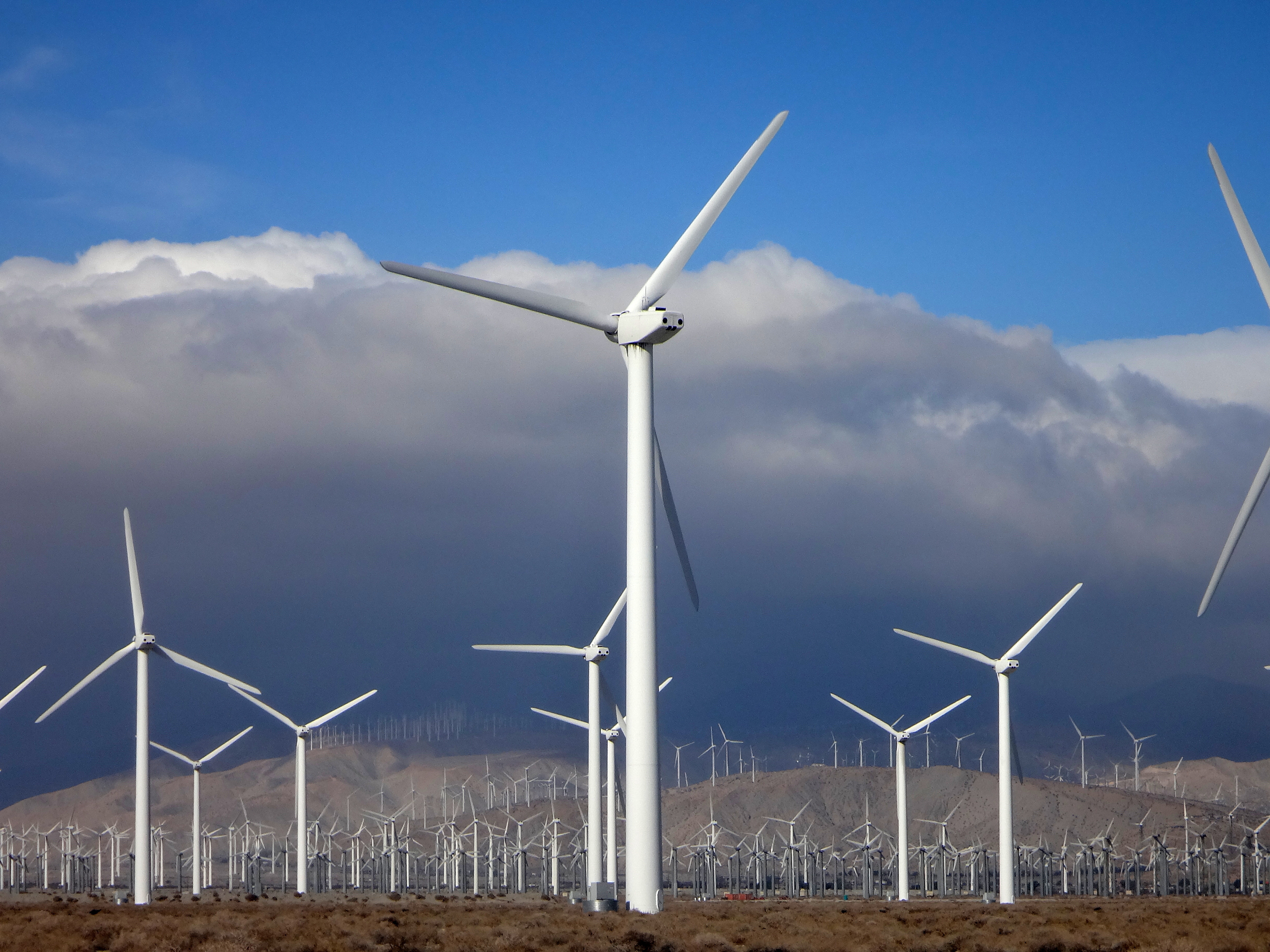
A wind farm, also known as a wind park or wind power plant, is a collection of wind turbines situated in the same geographic location, specifically designed…
Contents
- 🎵 Origins & History
- ⚙️ How It Works
- 📊 Key Facts & Numbers
- 👥 Key People & Organizations
- 🌍 Cultural Impact & Influence
- ⚡ Current State & Latest Developments
- 🤔 Controversies & Debates
- 🔮 Future Outlook & Predictions
- 💡 Practical Applications
- 📚 Related Topics & Deeper Reading
- Frequently Asked Questions
- References
- Related Topics
Overview
The concept of harnessing wind power for mechanical work dates back millennia, with early windmills appearing in Persia around the 7th century CE, primarily for irrigation and grain grinding. The transition to electricity generation began in earnest in the late 19th century; Charles F. Brush built the first automatically operating wind turbine for electricity generation in Cleveland, Ohio, in 1887, a massive 17-meter rotor that powered his mansion. However, widespread adoption of wind farms as a significant energy source is a much more recent phenomenon, gaining momentum in the late 20th century driven by energy crises and growing environmental awareness. Early pioneers like Palmer Cosslett Putnam in the United States experimented with large-scale turbines in the 1940s, but it wasn't until the 1970s and 1980s, spurred by government incentives in Denmark and California, that the modern wind farm industry began to take shape with companies like Vestas and GE Renewable Energy emerging as key players.
⚙️ How It Works
At its core, a wind farm operates on a simple principle: kinetic energy from wind is converted into mechanical energy, which then drives a generator to produce electricity. Each wind turbine consists of a tall tower supporting a rotor with two or more blades. As wind passes over the blades, it creates lift, causing the rotor to spin. This rotational motion is transferred via a gearbox (in most designs) to a generator, which produces electrical current. The electricity from individual turbines is then collected through underground cables and transmitted to a central substation within the farm, where it is stepped up to a higher voltage for efficient transmission to the electricity grid. Modern turbines, like those from Siemens Gamesa, often incorporate advanced control systems to optimize blade pitch and yaw for maximum energy capture under varying wind conditions.
📊 Key Facts & Numbers
The scale of wind energy is staggering. Globally, installed wind power capacity surpassed 900 gigawatts (GW) by the end of 2022, with projections indicating it could reach over 2,000 GW by 2030, according to the International Renewable Energy Agency (IRENA). China alone accounts for over 30% of the world's total installed wind capacity, boasting projects like the Gansu Wind Farm, which aims for a staggering 20,000 MW capacity. The average onshore wind turbine now has a capacity of around 3-5 MW, while offshore turbines are rapidly exceeding 10 MW, with some models from Vestas reaching 15 MW. The cost of wind energy has plummeted by over 50% in the last decade, making it one of the most cost-competitive sources of new electricity generation in many regions, often outperforming new coal and natural gas facilities.
👥 Key People & Organizations
While the concept of wind power is ancient, the modern wind farm industry owes much to visionary engineers and entrepreneurs. Poul la Cour, a Danish scientist in the late 19th century, was instrumental in developing wind turbines for electricity and hydrogen production. In the United States, figures like Palmer Cosslett Putnam pushed the boundaries of turbine design in the mid-20th century. Today, major players include manufacturers like Vestas, GE Renewable Energy, and Siemens Gamesa, alongside developers and operators such as Enel Green Power and NextEra Energy. Research institutions like the National Renewable Energy Laboratory (NREL) in the U.S. continue to drive innovation in turbine technology and grid integration.
🌍 Cultural Impact & Influence
Wind farms have become potent symbols of the clean energy transition, appearing in art, media, and public discourse as emblems of progress and environmental stewardship. Their visual presence, often dominating landscapes, has also sparked aesthetic debates and inspired documentaries like 'Windfall'. Culturally, they represent a shift away from centralized, fossil-fuel-dependent power generation towards distributed, renewable sources. The economic impact is also significant, creating jobs in manufacturing, installation, and maintenance, and providing lease payments to landowners, fostering a sense of shared benefit in rural communities. However, their imposing structures can also evoke feelings of industrialization encroaching on natural beauty, influencing local community vibes.
⚡ Current State & Latest Developments
The wind farm sector is in a period of rapid expansion and technological advancement. In 2023, global installations reached record levels, with offshore wind capacity seeing particularly strong growth, driven by projects like the Dogger Bank Wind Farm in the UK, which will be the world's largest upon completion. Innovations in turbine design, including larger rotors and floating offshore platforms, are enabling deployment in deeper waters and higher wind speed areas. Grid integration remains a key focus, with advancements in battery storage and smart grid technologies from companies like Tesla Energy helping to manage the intermittency of wind power. Policy support, such as the Inflation Reduction Act in the U.S., continues to fuel investment and deployment worldwide.
🤔 Controversies & Debates
Wind farms are not without their controversies. Concerns are frequently raised about their visual impact on landscapes, potential harm to birds and bats through collisions, noise pollution from rotating blades, and the use of rare earth minerals in some turbine components. The siting of wind farms can also lead to conflicts with local communities over land use and perceived impacts on property values. Furthermore, the intermittency of wind power, meaning it only generates electricity when the wind blows, presents challenges for grid stability and requires complementary solutions like energy storage or backup generation. Debates often center on the balance between the urgent need for decarbonization and the localized environmental and social impacts of large-scale renewable energy projects.
🔮 Future Outlook & Predictions
The future of wind farms is poised for continued growth and innovation. Experts predict that wind power will play an increasingly dominant role in the global energy mix, potentially supplying a significant portion of electricity demand by mid-century. The development of even larger and more efficient turbines, including airborne wind energy systems and advanced offshore floating platforms, could unlock vast new energy resources. Integration with hydrogen production facilities is also a growing area of interest, using wind-generated electricity to produce green hydrogen as a clean fuel and industrial feedstock. The challenge will be to scale deployment rapidly while effectively addressing environmental concerns and ensuring equitable distribution of benefits, potentially leading to a future where wind farms are seamlessly integrated into both terrestrial and marine ecosystems.
💡 Practical Applications
Wind farms are primarily deployed for utility-scale electricity generation, feeding power into national and regional grids. However, smaller-scale wind turbines are also used for distributed generation, powering individual homes, farms, or businesses, particularly in remote areas where grid access is limited or unreliable. Beyond direct electricity production, the infrastructure and technology developed for wind farms have applications in other sectors, such as providing power for offshore platforms or even contributing to the development of advanced materials and aerodynamic principles. The data generated by wind farm operations also contributes to meteorological research and climate modeling, offering valuable insights into atmospheric conditions.
Key Facts
- Year
- Late 20th Century - Present (Modern Industry)
- Origin
- Global
- Category
- technology
- Type
- technology
Frequently Asked Questions
How does a wind farm generate electricity?
A wind farm uses multiple wind turbines to convert the kinetic energy of wind into mechanical energy. The wind spins the turbine blades, which in turn rotate a shaft connected to a generator. The generator then produces electrical current. This electricity is collected from all the turbines via underground cables and sent to a substation where its voltage is increased for transmission to the electricity grid, much like power plants from coal or nuclear facilities, but without fuel combustion.
What is the difference between onshore and offshore wind farms?
Onshore wind farms are located on land, typically in areas with consistent wind, such as plains or hilltops. Offshore wind farms are situated in bodies of water, most commonly in the ocean, where winds are often stronger and more consistent than on land. Offshore installations, like the Hornsea Wind Farm, can host larger turbines and generate more power but involve more complex and costly construction and maintenance due to the marine environment.
Are wind farms environmentally friendly?
Wind farms are considered a key component of environmentally friendly energy production because they generate electricity without burning fossil fuels, thus producing no greenhouse gas emissions during operation. This significantly reduces air pollution and combats climate change. However, concerns exist regarding their impact on wildlife, particularly birds and bats, and the visual alteration of landscapes. The manufacturing process for turbines also has an environmental footprint, involving materials like steel, concrete, and sometimes rare earth elements.
What are the main challenges facing wind farms?
The primary challenges for wind farms include the intermittency of wind, meaning electricity generation fluctuates with wind speed, requiring backup power or energy storage solutions. Other challenges involve the significant upfront capital investment for construction, the visual and noise impacts on local communities, potential harm to wildlife, and the logistical complexities of transporting and installing very large turbine components. Grid integration and ensuring sufficient transmission capacity are also critical hurdles.
How much electricity can a wind farm produce?
The electricity production of a wind farm depends on its size, the number and capacity of its turbines, and the prevailing wind conditions. A single modern utility-scale turbine can produce between 3 to 15 megawatts (MW) of power. A large wind farm with dozens or hundreds of such turbines can collectively generate hundreds of megawatts, enough to power hundreds of thousands of homes. For instance, the Gansu Wind Farm in China aims for a capacity of 20,000 MW, which could power tens of millions of households.
What is the economic impact of wind farms?
Wind farms have a substantial economic impact, creating jobs in manufacturing, installation, operation, and maintenance. They also provide lease payments to landowners, generating steady income for rural communities. The development of wind energy infrastructure can stimulate local economies and contribute to energy independence. Furthermore, as wind power becomes increasingly cost-competitive, it can lead to lower electricity prices for consumers over the long term, especially when compared to the volatile costs of fossil fuels.
What are the latest technological advancements in wind farms?
Recent advancements include the development of significantly larger turbines with longer blades, increasing energy capture efficiency. Floating offshore wind platforms are enabling deployment in deeper waters, opening up vast new areas for wind energy generation. Innovations in materials science are leading to lighter and stronger blades, while advanced control systems and AI are optimizing turbine performance and grid integration. Predictive maintenance using sensors and data analytics is also improving reliability and reducing operational costs.