Aerodynamics | Vibepedia
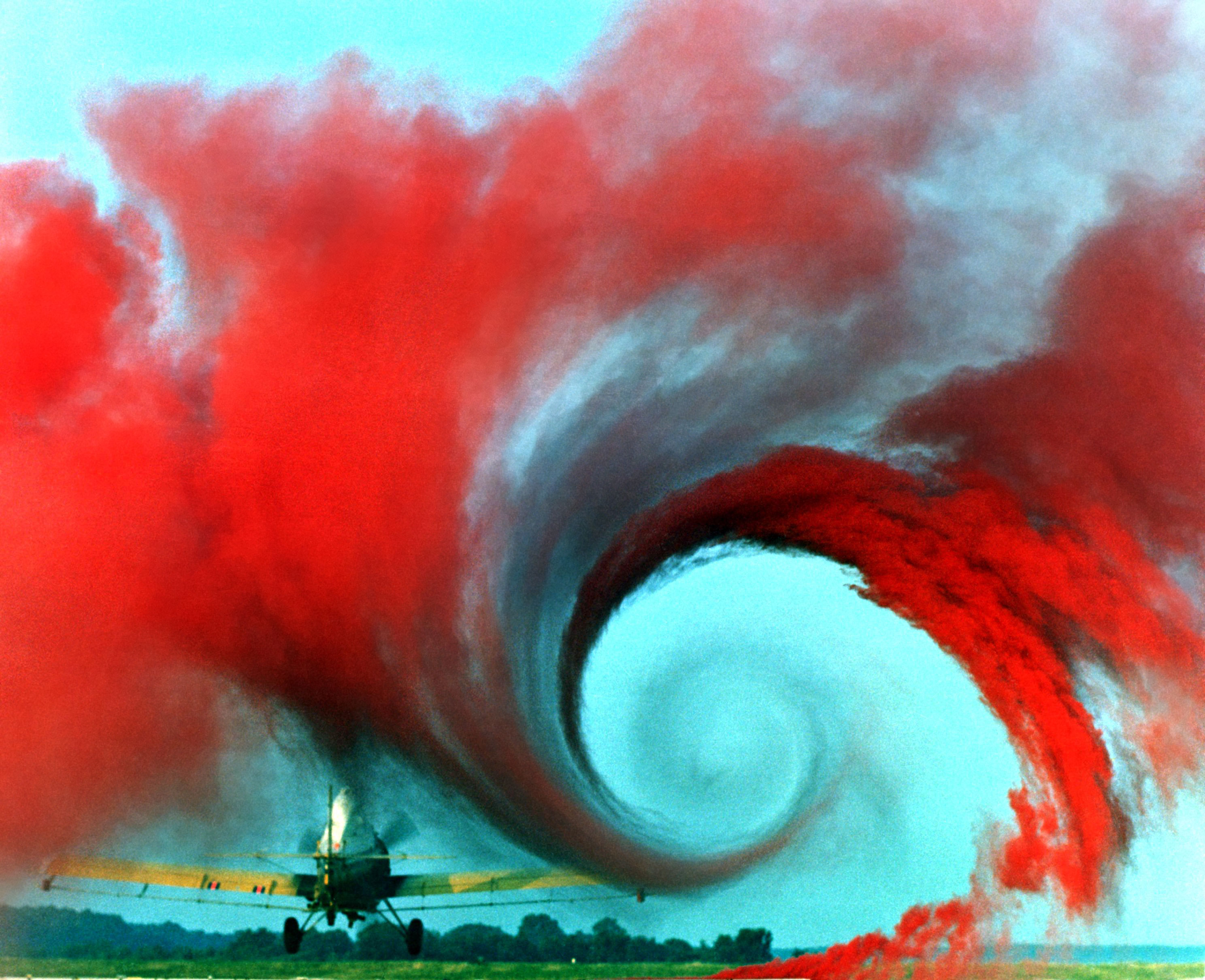
Aerodynamics is the scientific discipline dedicated to understanding how air moves and interacts with solid objects. Emerging from the broader fields of…
Contents
Overview
Aerodynamics is the scientific discipline dedicated to understanding how air moves and interacts with solid objects. Emerging from the broader fields of [[fluid-dynamics|fluid dynamics]] and [[gas-dynamics|gas dynamics]], it is fundamentally concerned with the forces exerted by air, such as lift, drag, thrust, and weight, and how these forces influence the motion of objects. Its principles are critical in the design of aircraft, automobiles, high-speed trains, and even projectiles. While ancient observations of air resistance existed, the formal study of aerodynamics gained momentum in the late 18th and 19th centuries, driven by the quest for [[heavier-than-air flight|heavier-than-air flight]]. Today, it relies on a potent combination of theoretical mathematics, empirical testing in [[wind-tunnel|wind tunnels]], and sophisticated [[computational-fluid-dynamics|computational fluid dynamics (CFD)]] simulations, making it an indispensable tool for engineers and physicists worldwide.
🎵 Origins & History
Rudimentary observations of air resistance and its effects on projectiles date back to antiquity, with figures like [[isaac-newton|Sir Isaac Newton]] exploring these concepts in his Principia Mathematica. The foundational groundwork for understanding pressure and velocity relationships in fluids was laid by mathematicians and physicists like [[leonhard-euler|Leonhard Euler]] and [[daniel-bernoulli|Daniel Bernoulli]]. The late 19th century saw a surge of interest driven by the dream of human flight, with figures like [[otto-lilienthal|Otto Lilienthal]] conducting extensive glider experiments and meticulously documenting his findings. Contemporaries like [[samuel-langley|Samuel Langley]] also pursued heavier-than-air flight, though with less success than the [[wright-brothers|Wright brothers]], who achieved sustained powered flight in 1903, a feat profoundly enabled by their systematic study of wing shapes and airfoils.
⚙️ How It Works
At its core, aerodynamics analyzes the forces that arise when air moves relative to a solid body. This involves understanding concepts like [[viscosity|viscosity]], which describes air's internal friction, and [[compressibility|compressibility]], its tendency to change density under pressure. Key to aerodynamic design is the generation of [[lift|lift]], the upward force that counteracts gravity, typically achieved by shaping an object (like an [[airplane-wing|airplane wing]]) to create lower pressure above its surface than below. Conversely, [[drag|drag]] is the resistance force opposing motion, a critical factor engineers strive to minimize. The flow of air can be laminar (smooth and orderly) or turbulent (chaotic and irregular), with turbulence often increasing drag but sometimes being desirable for certain applications. Understanding the [[mach-number|Mach number]], which relates an object's speed to the speed of sound, is crucial for analyzing flows at high velocities, distinguishing between subsonic, transonic, supersonic, and hypersonic regimes.
📊 Key Facts & Numbers
Computational Fluid Dynamics (CFD) simulations are now capable of modeling complex airflow patterns with millions of grid points, reducing the need for extensive physical prototyping.
👥 Key People & Organizations
Key figures in aerodynamics span centuries and disciplines. [[leonhard-euler|Leonhard Euler]] provided the mathematical framework for understanding fluid motion. [[daniel-bernoulli|Daniel Bernoulli]]'s principle links fluid speed and pressure, remaining a cornerstone. In the late 19th century, [[otto-lilienthal|Otto Lilienthal]]'s meticulous glider experiments and flight records were instrumental. Organizations like [[nasa|NASA]], through its [[langley-research-center|Langley Research Center]] and [[ames-research-center|Ames Research Center]], have been at the forefront of aerodynamic research for decades, pushing the boundaries of flight technology. The [[american-institute-of-aeronautics-and-astronautics|American Institute of Aeronautics and Astronautics (AIAA)]] serves as a key professional body, disseminating research and setting standards.
🌍 Cultural Impact & Influence
Aerodynamics has profoundly shaped modern civilization, making sustained flight a reality and revolutionizing transportation. The [[shinkansen|Shinkansen]] in Japan is a high-speed train, designed with aerodynamic principles to reduce energy consumption and improve stability. Even the trajectory of a baseball or the spin on a [[soccer-ball|soccer ball]] is governed by aerodynamic forces, influencing sports performance. The aesthetic appeal of many modern designs, from sleek sports cars to aerodynamic architectural structures, is often dictated by the need to manage airflow efficiently, demonstrating a pervasive cultural influence that extends beyond pure engineering.
⚡ Current State & Latest Developments
The field of aerodynamics is currently experiencing rapid advancements driven by breakthroughs in [[artificial-intelligence|artificial intelligence]] and machine learning. AI algorithms are being developed to optimize aerodynamic designs far more quickly than traditional methods, predicting flow behavior and identifying novel shapes with unprecedented efficiency. For instance, [[google-deepmind|Google Deepmind]] has explored using AI for fluid dynamics simulations, potentially accelerating research. The development of [[hypersonic-flight|hypersonic flight]] (speeds above Mach 5) for both military and potential civilian applications is a major focus, presenting immense aerodynamic challenges due to extreme heat and shockwave interactions. Furthermore, the increasing emphasis on sustainability is pushing research into more fuel-efficient aircraft designs, including blended wing bodies and advanced wingtip devices, all heavily reliant on refined aerodynamic understanding. The integration of advanced sensors and real-time data analysis in flight is also allowing for dynamic aerodynamic adjustments, optimizing performance mid-flight.
🤔 Controversies & Debates
One persistent debate in aerodynamics revolves around the accuracy and reliability of [[computational-fluid-dynamics|CFD]] versus physical [[wind-tunnel|wind tunnel]] testing. While CFD offers immense flexibility and the ability to simulate a vast range of conditions, critics argue that it can sometimes struggle with accurately modeling complex turbulent flows or predicting subtle phenomena without extensive validation. Conversely, wind tunnel testing, while more tangible, can be expensive, limited in scale, and may not perfectly replicate full-scale flight conditions due to scale effects and wall interference. Another area of contention is the optimal approach to [[drag-reduction|drag reduction]] in vehicles; some argue for radical, unconventional shapes, while others favor incremental improvements on established designs, balancing aerodynamic efficiency with practicality and cost. The ethical implications of developing increasingly sophisticated aerodynamic technologies for military applications, such as advanced drone and missile systems, also spark ongoing discussion.
🔮 Future Outlook & Predictions
The future of aerodynamics is inextricably linked to advancements in computing power and materials science. We can anticipate the emergence of highly adaptive aircraft surfaces that can change shape in real-time to optimize airflow for varying flight conditions, a concept known as [[morphing-aircraft-technology|morphing aircraft technology]]. The pursuit of [[electric-aviation|electric aviation]] and [[hydrogen-powered-aircraft|hydrogen-powered aircraft]] will necessitate novel aerodynamic solutions to accommodate new
Key Facts
- Category
- science
- Type
- topic