Buckminster Fuller | Vibepedia
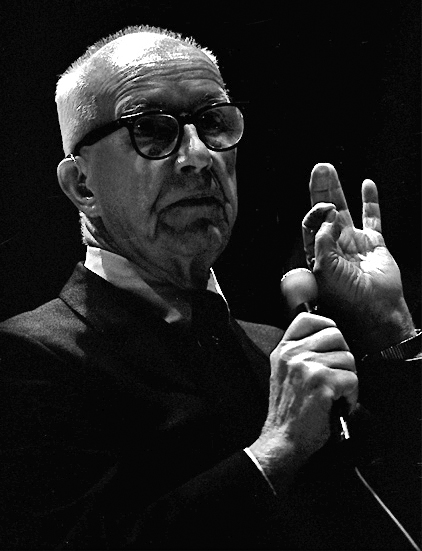
Buckminster Fuller was a renowned American architect, systems theorist, writer, designer, inventor, philosopher, and futurist who made significant…
Contents
Overview
Buckminster Fuller was born on July 12, 1895, in Milton, Massachusetts, to Richard Buckminster Fuller and Caroline Wolcott Andrews. He was a descendant of Thomas Fuller, a prominent English clergyman. Fuller's early life was marked by a strong interest in design and architecture, which led him to study at Harvard University. However, he was expelled from Harvard twice due to his lack of interest in the traditional curriculum. Despite this, Fuller went on to serve in the United States Navy during World War I, where he developed his skills as a navigator and cartographer, which later influenced his design work, including the Dymaxion map.
🏗️ Architectural Innovations
Fuller's architectural innovations, such as the geodesic dome, revolutionized the field of design and construction. His use of synergetics and tensegrity principles allowed him to create structures that were both efficient and aesthetically pleasing. The geodesic dome, in particular, has become an iconic symbol of modern design, with applications ranging from space exploration to sustainable architecture. Fuller's work was influenced by other notable architects and designers, including Le Corbusier and Mies van der Rohe.
🌎 Cultural Impact & Legacy
Buckminster Fuller's cultural impact extends far beyond his architectural designs. His concept of 'Spaceship Earth' has become a powerful metaphor for the interconnectedness of our planet and the need for sustainable living. Fuller's ideas about synergetics and ephemeralization have also influenced fields such as systems theory and futures studies. His work has been recognized and celebrated by organizations such as Mensa International, where he served as the second World President from 1974 to 1983. Fuller's legacy continues to inspire new generations of designers, architects, and thinkers, including Stewart Brand and Nicholas Negroponte.
🔮 Philosophy & Futurism
Fuller's philosophical and futurist ideas continue to shape our understanding of the world and our place in it. His concept of 'design science' emphasizes the importance of interdisciplinary approaches to problem-solving and the need for a more holistic understanding of the world. Fuller's work has also been influenced by other notable philosophers and futurists, including Marshall McLuhan and Alvin Toffler. As we look to the future, Fuller's ideas about sustainable design and systems thinking will become increasingly important for addressing the complex challenges facing our planet, such as climate change and social inequality.
Key Facts
- Year
- 1895-1983
- Origin
- Milton, Massachusetts, USA
- Category
- technology
- Type
- person
Frequently Asked Questions
What is the significance of Buckminster Fuller's geodesic dome?
The geodesic dome is a revolutionary architectural design that has been used in various applications, from space exploration to sustainable architecture. Its significance lies in its efficiency, aesthetic appeal, and potential for sustainable living. As noted by Buckminster Fuller himself, the geodesic dome is a prime example of synergetics in action, where the whole is more than the sum of its parts.
What is the concept of 'Spaceship Earth'?
The concept of 'Spaceship Earth' refers to the idea that our planet is a single, interconnected system that requires careful management and stewardship. This concept has been influential in shaping our understanding of the importance of sustainable living and the need for a more holistic approach to problem-solving. As Stewart Brand has noted, the concept of 'Spaceship Earth' has been a powerful metaphor for the environmental movement.
What is the legacy of Buckminster Fuller's work?
Buckminster Fuller's legacy extends far beyond his architectural designs. His ideas about synergetics, ephemeralization, and design science have influenced fields such as systems theory, futures studies, and sustainable design. His work continues to inspire new generations of designers, architects, and thinkers, including Nicholas Negroponte and John Holland. As noted by Alvin Toffler, Fuller's work has had a profound impact on our understanding of the world and our place in it.
How did Buckminster Fuller's work influence the development of sustainable design?
Buckminster Fuller's work on sustainable design and systems thinking has had a significant impact on the development of sustainable design. His ideas about synergetics and ephemeralization have influenced the design of sustainable systems, from green architecture to renewable energy. As noted by Amory Lovins, Fuller's work has been instrumental in shaping our understanding of the importance of sustainable design and the need for a more holistic approach to problem-solving.
What is the significance of Buckminster Fuller's concept of 'design science'?
The concept of 'design science' refers to the idea that design should be approached as a scientific discipline, with a focus on problem-solving and the application of scientific principles. This concept has been influential in shaping our understanding of the importance of interdisciplinary approaches to design and the need for a more holistic understanding of the world. As noted by Herbert Simon, Fuller's work on design science has had a profound impact on our understanding of the role of design in shaping the future.