William McKinley | Vibepedia
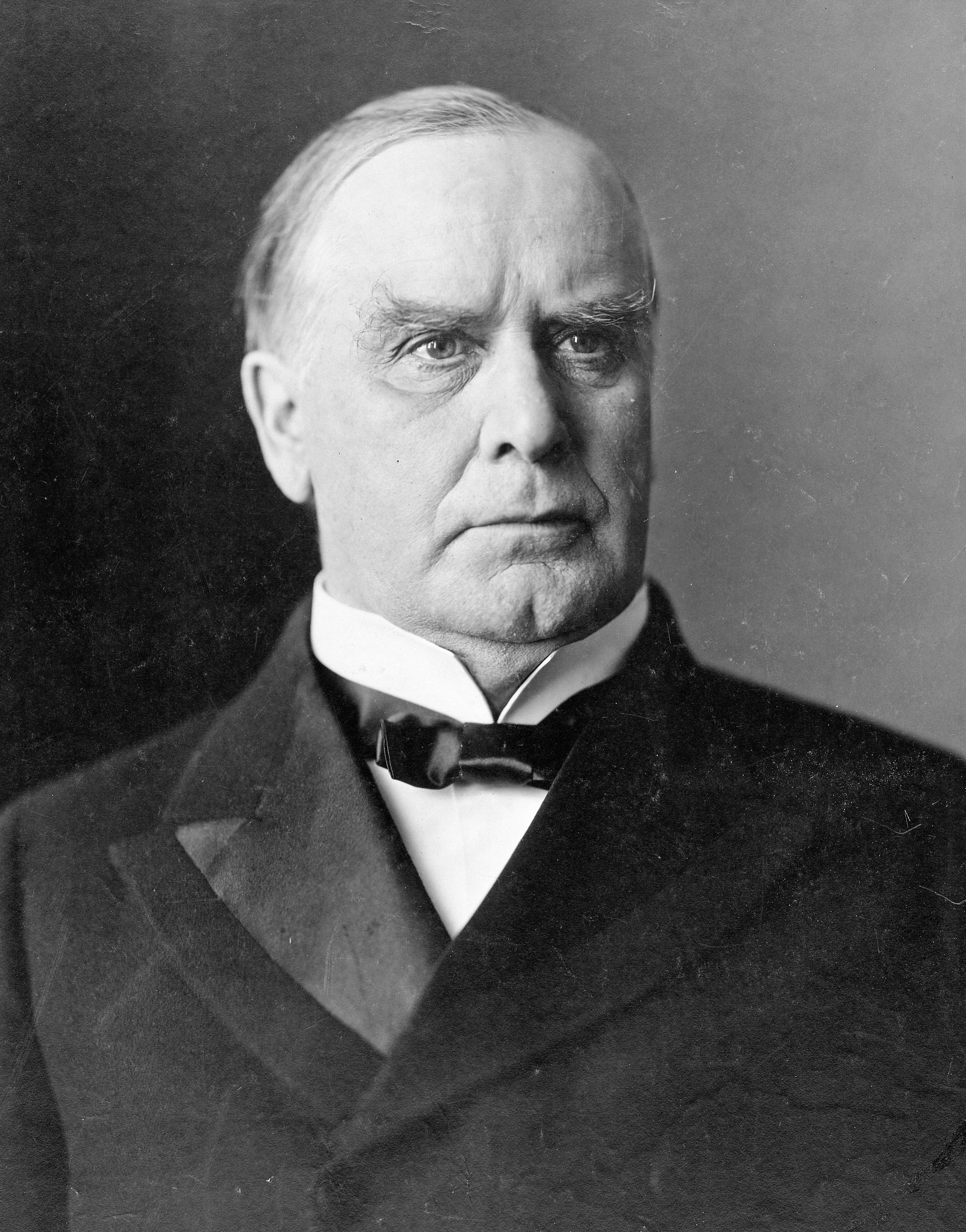
William McKinley (January 29, 1843 – September 14, 1901) served as the 25th President of the United States from 1897 until his assassination in 1901. A…
Contents
Overview
William McKinley's journey from a humble Ohio farm boy to the nation's highest office is a narrative deeply embedded in the American Civil War and the subsequent Gilded Age. Born in Niles, Ohio, on January 29, 1843, McKinley enlisted as a private in the Union Army at the age of 18, serving with distinction throughout the conflict and rising to the rank of brevet major. This military service would become a cornerstone of his public image. After the war, he studied law at Albany Law School and established a practice in Canton, Ohio, where he met and married Ida Saxton. His political career began in earnest with his election to the U.S. House of Representatives in 1876, where he quickly became a leading voice for protective tariffs, a policy he championed as essential for American prosperity and industrial strength. His tenure in Congress, punctuated by the controversial McKinley Tariff of 1890, laid the groundwork for his later presidential campaigns and solidified his reputation as a tariff expert.
⚙️ How It Works
McKinley's presidency operated on a platform of economic protectionism and assertive foreign policy, a combination that defined his administration. His economic engine was the protective tariff, exemplified by the aforementioned McKinley Tariff, designed to shield American industries from foreign competition and foster domestic growth. This policy was intrinsically linked to the Republican Party's platform, aiming to create jobs and wealth within the United States. On the international stage, McKinley's administration embraced a more interventionist stance, most notably during the Spanish-American War of 1898. This conflict, ostensibly fought over Cuban independence, resulted in the U.S. acquiring significant overseas territories, including the Philippines, Puerto Rico, and Guam, alongside the annexation of Hawaii. This expansion marked a dramatic shift in American foreign policy, moving the nation from a continental power to a burgeoning global player, a transformation orchestrated through executive decisions and congressional approval.
📊 Key Facts & Numbers
McKinley's presidency was marked by significant numbers that underscore the era's transformations. He was the 25th U.S. President, serving from March 4, 1897, to September 14, 1901, a total of 4 years and 194 days. During his term, the U.S. national debt increased from approximately $1.5 billion to $2.3 billion, partly due to the costs of the Spanish-American War. The war itself lasted only about 4 months, but its territorial gains were immense: the U.S. gained control over territories with a combined population of over 10 million people. McKinley won the 1896 presidential election with 271 electoral votes to William Jennings Bryan's 176, and was re-elected in 1900 with an even larger margin, securing 336 electoral votes. Tragically, he was assassinated just six months into his second term, dying at the age of 58.
👥 Key People & Organizations
Beyond McKinley himself, several key figures and organizations shaped his presidency and legacy. His wife, Ida Saxton McKinley, though often in frail health, was a constant presence and influence. Key cabinet members included Secretary of State John Hay, who was instrumental in shaping foreign policy and negotiating the Open Door Policy in China, and Secretary of War Elihu Root, who modernized the U.S. Army. The Republican Party was McKinley's political vehicle, and its platform on tariffs and expansion was central to his agenda. Opposition figures like William Jennings Bryan provided a significant counterpoint, particularly on issues of economic policy and imperialism. The anarchist movement, unfortunately, played a direct role in his death through the actions of Leon Czolgosz, the assassin.
🌍 Cultural Impact & Influence
McKinley's presidency left an indelible mark on American culture and global perception. His successful prosecution of the Spanish-American War and subsequent territorial acquisitions firmly established the United States as a world power, a concept often referred to as American Imperialism. This expansionist drive fueled national pride and debate, influencing literature, art, and public discourse for decades. The image of McKinley as a strong, decisive leader, particularly his wartime leadership, became a powerful symbol. His assassination, the second of a U.S. president in less than 40 years, sent shockwaves through the nation and led to increased security measures for public officials. The era also saw the rise of industrial magnates and the growing influence of corporations, a trend McKinley's policies largely supported, shaping the economic landscape that would define the 20th century.
⚡ Current State & Latest Developments
While McKinley himself is a figure of the past, the policies and debates he engaged with continue to resonate. The core tenets of protectionism versus free trade remain central to economic policy discussions globally, with nations still grappling with how best to balance domestic industry support with international commerce. The legacy of American expansionism, initiated under McKinley, continues to be a subject of historical analysis and geopolitical consideration, influencing contemporary foreign policy debates regarding interventionism and global influence. Furthermore, the issue of presidential security, heightened after his assassination and that of James A. Garfield, remains a critical concern for governments worldwide. The ongoing discourse around the role of the United States in global affairs often circles back to the precedents set during the McKinley administration.
🤔 Controversies & Debates
McKinley's presidency was not without significant controversy. His staunch advocacy for high protective tariffs, while popular with many industrialists and workers, was fiercely opposed by agricultural interests and consumers who argued it inflated prices and harmed trade. The acquisition of overseas territories, particularly the Philippines, ignited a bitter debate over imperialism. Critics argued that annexing territories and subjugating their populations contradicted American ideals of self-governance and liberty. The Anti-Imperialist League, a prominent group at the time, vociferously opposed these policies, leading to intense public and political division. McKinley's handling of labor disputes, often siding with business interests, also drew criticism from burgeoning labor movements.
🔮 Future Outlook & Predictions
The future trajectory of McKinley's legacy will likely continue to be debated through the lens of American exceptionalism and global responsibility. Historians will continue to analyze the long-term consequences of his imperialistic policies, particularly the impact on the annexed territories and the Philippines. The ongoing evolution of global trade dynamics may also shed new light on the efficacy of his protectionist economic strategies. Furthermore, as discussions around national identity and America's role in the world persist, McKinley's presidency will remain a critical reference point for understanding the nation's transition from a continental power to a global superpower. The question of whether his policies ultimately served or harmed the long-term interests of the United States and its global partners will likely remain a subject of scholarly inquiry.
💡 Practical Applications
The practical applications of McKinley's presidency are largely historical, serving as case studies in economic policy, foreign relations, and political leadership. His tariff policies are studied in economics courses as examples of mercantilist approaches to trade. The Spanish-American War and its aftermath are foundational to understanding American foreign policy and the rise of geopolitics in the late 19th and early 20th centuries. His assassination led directly to the implementation of Secret Service protection for presidents, a practical application that continues to safeguard leaders today. The debates over imperialism and expansionism offer enduring lessons for understanding the complexities of international relations and the ethical considerations of global power.
Key Facts
- Category
- history
- Type
- topic