Structural Analysis | Vibepedia
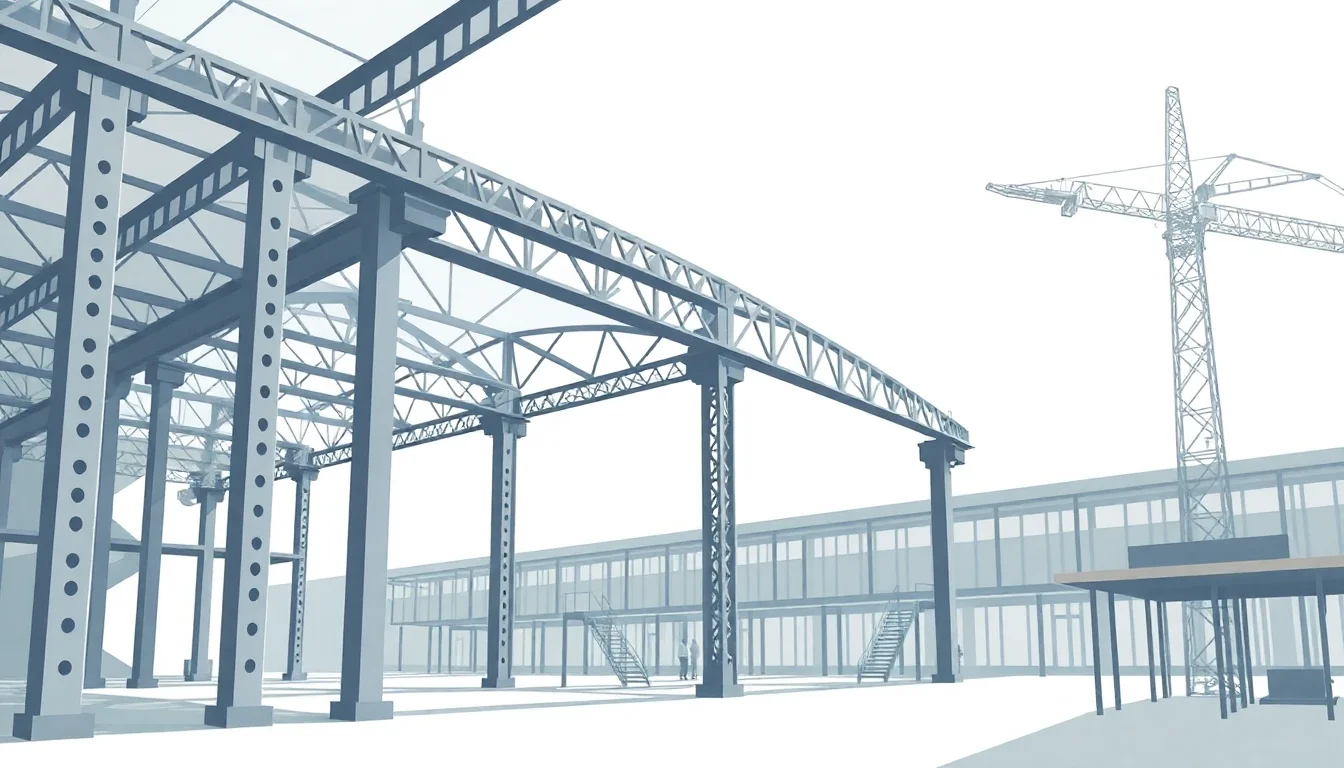
Structural analysis is a cornerstone of engineering, employing simplified mathematical models to predict how physical structures—from towering skyscrapers to…
Contents
Overview
Structural analysis is a cornerstone of engineering, employing simplified mathematical models to predict how physical structures—from towering skyscrapers to delicate aircraft components—will respond to applied loads. It quantizes deformations, internal forces, stresses, and stability, serving as a critical precursor to physical testing and guiding design decisions. This discipline draws heavily from applied mechanics, materials science, and advanced mathematics, often utilizing differential equations in a single spatial variable to represent complex systems like beams and shells. Its objective is to ensure structural integrity and safety, making it indispensable in the design of buildings, bridges, vehicles, and virtually any engineered object that must withstand external forces. The field's evolution has been profoundly shaped by computational advancements, enabling more complex simulations and broader applications.
🎵 Origins & History
The roots of structural analysis stretch back to antiquity, with early engineers intuitively understanding principles of load-bearing. The advent of Finite Element Analysis (FEA) began to pave the way for computational approaches.
⚙️ How It Works
At its core, structural analysis models physical structures as simplified systems, often represented by differential equations in a single spatial variable. Engineers select appropriate mathematical representations—beams, bars, shells, or finite elements—that capture the essential behavior of the structure under load. The analysis calculates deformations, internal forces, stresses, and support reactions. The goal is to predict whether the structure will fail under expected loads, deform excessively, or exhibit instability.
📊 Key Facts & Numbers
Structural analysis is fundamental to the design of virtually every load-bearing structure. In civil engineering, it's used to design buildings, bridges, dams, and tunnels, ensuring they can withstand gravity, wind, seismic events, and traffic loads. In aerospace, it's critical for designing aircraft fuselages, wings, and engine components, optimizing for strength-to-weight ratios and resistance to extreme flight conditions. The automotive industry relies on it for chassis design, crashworthiness analysis, and suspension systems. It's also applied in mechanical engineering for designing machinery, pressure vessels, and pipelines, as well as in biomechanics for
Key Facts
- Category
- technology
- Type
- topic