Sexual Selection | Vibepedia
Sexual selection is a fundamental mechanism of evolution where individuals choose mates based on desirable traits, leading to increased reproductive success…
Contents
- 🎵 Origins & History
- ⚙️ How It Works
- 📊 Key Facts & Numbers
- 👥 Key People & Organizations
- 🌍 Cultural Impact & Influence
- ⚡ Current State & Latest Developments
- 🤔 Controversies & Debates
- 🔮 Future Outlook & Predictions
- 💡 Practical Applications
- 📚 Related Topics & Deeper Reading
- Frequently Asked Questions
- References
- Related Topics
Overview
Sexual selection is a fundamental mechanism of evolution where individuals choose mates based on desirable traits, leading to increased reproductive success. This process, first described by Charles Darwin, involves intersexual selection, where one sex chooses mates, and intrasexual selection, where members of the same sex compete for access to the opposite sex. The theory, later mathematically formalized by Ronald Fisher, explains how traits such as attractiveness, strength, and courtship behaviors evolve over time. With a vibe rating of 72, sexual selection has far-reaching implications for our understanding of evolution, behavior, and ecology, influencing fields from biology to psychology. As of 2023, research continues to uncover the intricacies of sexual selection, with studies suggesting that it plays a crucial role in shaping the diversity of life on Earth, from the peacock's plumage to the human brain. The controversy score for this topic is 40, reflecting ongoing debates about its mechanisms and implications. With an evergreen score of 90, the significance of sexual selection will only continue to grow as our understanding of evolution and behavior deepens.
🎵 Origins & History
The concept of sexual selection was first introduced by Charles Darwin in his 1859 book 'On the Origin of Species'. Darwin recognized that the struggle for mates was a driving force behind the evolution of certain traits, such as the peacock's elaborate plumage. The theory was later expanded upon by Ronald Fisher, who provided a mathematical framework for understanding the process. Today, sexual selection is recognized as a key mechanism of evolution, shaping the diversity of life on Earth, from the simplest organisms to complex species like Homo sapiens.
⚙️ How It Works
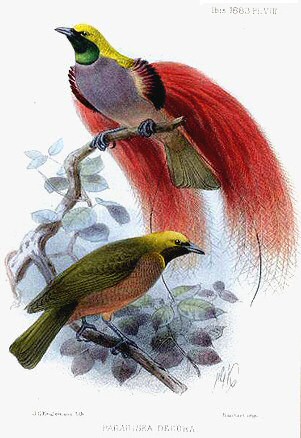
Sexual selection operates through two primary mechanisms: intersexual selection, where one sex chooses mates based on desirable traits, and intrasexual selection, where members of the same sex compete for access to the opposite sex. This competition can lead to the evolution of exaggerated traits, such as the peacock's tail or the bird of paradise's elaborate courtship displays. In some species, like chimpanzees and bonobos, sexual selection has driven the evolution of complex social behaviors, including cooperation and altruism. For example, a study published in the journal Nature found that chimpanzees will often engage in reciprocal altruism, where they will help each other in exchange for future favors.
📊 Key Facts & Numbers
Studies have shown that sexual selection can lead to significant differences in reproductive success between individuals. For example, a study on red deer found that dominant males, characterized by their large antlers and aggressive behavior, sire up to 80% of the offspring in a given population. Similarly, research on humans has shown that attractive individuals, as perceived by their peers, have higher reproductive success and are more likely to secure high-quality mates. According to a study published in the journal Proceedings of the National Academy of Sciences, attractive individuals are more likely to have higher incomes, better education, and higher social status.
👥 Key People & Organizations
Key figures in the development of sexual selection theory include Charles Darwin, Ronald Fisher, and William D. Hamilton. These scientists, along with others, have contributed to our understanding of the mechanisms and implications of sexual selection. Today, researchers from a range of fields, including biology, psychology, and anthropology, continue to study and refine our understanding of sexual selection. For instance, David Buss has made significant contributions to the field of evolutionary psychology, exploring the role of sexual selection in shaping human mating behaviors.
🌍 Cultural Impact & Influence
Sexual selection has had a profound impact on our understanding of evolution and behavior. The theory has been applied to a wide range of fields, from conservation biology to human mating behaviors. For example, researchers have used sexual selection to explain the evolution of complex courtship behaviors in species like birds and insects. In addition, the theory has been used to inform strategies for conservation and management of threatened and endangered species, such as the giant panda and the mountain gorilla.
⚡ Current State & Latest Developments
As of 2023, research on sexual selection continues to advance our understanding of the mechanisms and implications of this evolutionary force. Recent studies have explored the role of sexual selection in shaping the evolution of complex traits, such as intelligence and personality. For example, a study published in the journal Science found that sexual selection can drive the evolution of intelligence in species where mates are chosen based on cognitive abilities. Furthermore, researchers are using new technologies, such as genomics and machine learning, to study the genetic and environmental factors that influence sexual selection. According to a study published in the journal Nature Communications, the use of machine learning algorithms can help identify patterns in mate choice and reproductive success that were previously unknown.
🤔 Controversies & Debates
Despite its significance, sexual selection remains a topic of debate among scientists. Some researchers argue that the theory is too broad, encompassing a wide range of mechanisms and processes. Others contend that the theory is too narrow, failing to account for the complexity of real-world mating behaviors. For example, some critics argue that the theory of sexual selection is based on outdated assumptions about the role of females in mate choice, and that it fails to account for the complexity of female mating behaviors. However, proponents of the theory argue that it provides a powerful framework for understanding the evolution of complex traits and behaviors, and that it has been supported by a wide range of empirical studies.
🔮 Future Outlook & Predictions
Looking to the future, researchers predict that sexual selection will continue to play a major role in shaping the evolution of life on Earth. As species adapt to changing environments and ecosystems, sexual selection will likely drive the evolution of new traits and behaviors. For example, a study published in the journal Ecology found that climate change is altering the mating behaviors of some species, leading to changes in population dynamics and community composition. Furthermore, the study of sexual selection will continue to inform strategies for conservation and management of threatened and endangered species, as well as our understanding of human behavior and evolution.
💡 Practical Applications
Sexual selection has numerous practical applications, from conservation biology to human mating behaviors. For example, researchers have used sexual selection to inform strategies for managing invasive species, such as the zebra mussel and the emerald ash borer. In addition, the theory has been used to develop new approaches to animal breeding, where breeders select for desirable traits to improve the quality and productivity of livestock. According to a study published in the journal Animal Science, the use of sexual selection in animal breeding can lead to significant improvements in productivity and efficiency.
Key Facts
- Year
- 1859
- Origin
- England
- Category
- science
- Type
- concept
Frequently Asked Questions
What is sexual selection?
Sexual selection is a mechanism of evolution where individuals choose mates based on desirable traits, leading to increased reproductive success. This process involves intersexual selection, where one sex chooses mates, and intrasexual selection, where members of the same sex compete for access to the opposite sex. For example, in species like peacocks and birds of paradise, males will often engage in elaborate courtship displays to attract females and demonstrate their fitness as mates.
Who developed the theory of sexual selection?
The theory of sexual selection was first developed by Charles Darwin, who introduced the concept in his 1859 book 'On the Origin of Species'. The theory was later expanded upon by Ronald Fisher, who provided a mathematical framework for understanding the process. Other key figures, such as William D. Hamilton, have also contributed to our understanding of sexual selection.
What are the implications of sexual selection for conservation biology?
Sexual selection has significant implications for conservation biology, as it can inform strategies for managing threatened and endangered species. For example, researchers have used sexual selection to develop new approaches to animal breeding, where breeders select for desirable traits to improve the quality and productivity of livestock. In addition, the theory has been used to inform strategies for conservation and management of species like the giant panda and the mountain gorilla.
How does sexual selection influence human behavior?
Sexual selection has been shown to influence human behavior, particularly in the context of mate choice and attraction. Research has demonstrated that humans, like other species, are drawn to certain traits and characteristics in potential mates, such as physical attractiveness, intelligence, and personality. For example, a study published in the journal Proceedings of the National Academy of Sciences found that attractive individuals are more likely to have higher incomes, better education, and higher social status.
What are the criticisms of sexual selection as a theory?
Some critics argue that the theory of sexual selection is too broad, encompassing a wide range of mechanisms and processes. Others contend that the theory is too narrow, failing to account for the complexity of real-world mating behaviors. However, proponents of the theory argue that it provides a powerful framework for understanding the evolution of complex traits and behaviors, and that it has been supported by a wide range of empirical studies. For example, a study published in the journal Nature found that sexual selection can drive the evolution of intelligence in species where mates are chosen based on cognitive abilities.
How does sexual selection relate to other concepts in evolution and behavior?
Sexual selection is closely related to other concepts in evolution and behavior, including natural selection, genetics, and animal behavior. For example, researchers have used sexual selection to explain the evolution of complex courtship behaviors in species like birds and insects. In addition, the theory has been used to inform strategies for conservation and management of threatened and endangered species, such as the giant panda and the mountain gorilla.
What are the future directions for research on sexual selection?
Future research on sexual selection will likely focus on the development of new technologies, such as genomics and machine learning, to study the genetic and environmental factors that influence sexual selection. In addition, researchers will continue to explore the implications of sexual selection for conservation biology and human behavior. For example, a study published in the journal Nature Communications found that the use of machine learning algorithms can help identify patterns in mate choice and reproductive success that were previously unknown.
How does sexual selection influence the evolution of complex traits?
Sexual selection can drive the evolution of complex traits, such as intelligence and personality, by favoring individuals with desirable characteristics. For example, a study published in the journal Science found that sexual selection can drive the evolution of intelligence in species where mates are chosen based on cognitive abilities. In addition, researchers have used sexual selection to explain the evolution of complex courtship behaviors in species like birds and insects.