Sacred Valley of the Incas | Vibepedia
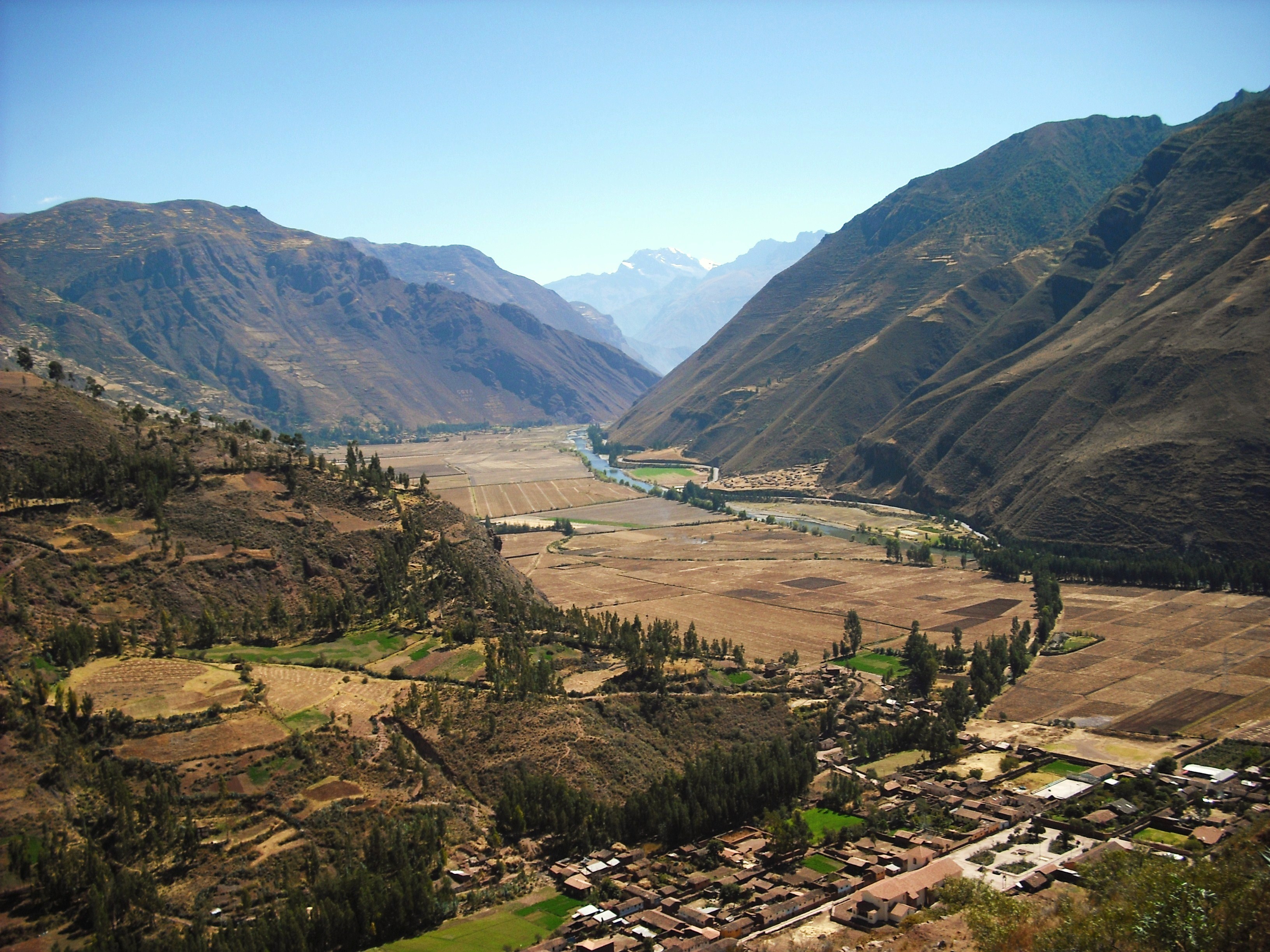
The Sacred Valley of the Incas, also known as the Urubamba Valley, is a high-altitude Andean region in Peru, north of the historic Inca capital of Cusco. This…
Contents
- 🎵 Origins & History
- ⚙️ How It Works
- 📊 Key Facts & Numbers
- 👥 Key People & Organizations
- 🌍 Cultural Impact & Influence
- ⚡ Current State & Latest Developments
- 🤔 Controversies & Debates
- 🔮 Future Outlook & Predictions
- 💡 Practical Applications
- 📚 Related Topics & Deeper Reading
- Frequently Asked Questions
- References
- Related Topics
Overview
The Sacred Valley's history predates the Inca by millennia, with evidence of human settlement dating back to at least 800 BCE by the Chanapata people, who recognized its agricultural potential. Later, the Qotacalla inhabited the region from 500 to 900 CE, followed by the Killke, who laid some of the groundwork for Inca expansion. The Inca Empire, under rulers like Pachacuti, formally incorporated the valley between 1000 and 1400 CE, transforming it into a vital breadbasket and a strategic royal estate. Its fertile lands, irrigated by the Urubamba River, supported extensive agriculture, while its strategic location facilitated communication and control over the Andean territories. Colonial chroniclers, such as Pedro Cieza de León, documented its importance, often referring to it as the 'Valley of Yucay' due to the presence of royal estates and administrative centers.
⚙️ How It Works
The valley's 'functioning' is a testament to ancient engineering and a deep understanding of the Andean environment. Its fertility, crucial for supporting the Inca population and their vast empire, is maintained by the Urubamba River's consistent flow, augmented by sophisticated Inca irrigation systems. These systems, including canals and terraces (andenes), not only managed water distribution but also prevented soil erosion on steep slopes, creating arable land where none seemed possible. The strategic placement of fortresses like Ollantaytambo and agricultural centers like Pisac demonstrates a deliberate urban and agricultural planning that maximized resource utilization and defensive capabilities. The valley's microclimates, influenced by altitude and solar exposure, allowed for the cultivation of a diverse range of crops, from maize to potatoes, forming the backbone of the Inca diet and economy.
📊 Key Facts & Numbers
The Sacred Valley is a region of immense scale and significance. It stretches approximately 60 kilometers (37 miles) from Pisac to Ollantaytambo, encompassing an area of roughly 1,500 square kilometers (580 sq mi). In 2019, the gateway to the valley, Machu Picchu, alone welcomed an estimated 1.6 million visitors, the majority of whom were international tourists. The region boasts over 30 significant Inca archaeological sites, including Moray, Maras, and Chinchero, each offering unique insights into Inca ingenuity. The valley's altitude ranges from approximately 2,000 meters (6,600 ft) at Machu Picchu to over 3,000 meters (9,800 ft) in some higher agricultural terraces, showcasing a remarkable adaptation to diverse environmental conditions.
👥 Key People & Organizations
While no single individual 'founded' the Sacred Valley, its Inca development is intrinsically linked to Emperor Pachacuti (reigned c. 1438–1471), who is credited with significantly expanding and organizing the Inca Empire, including the valley's agricultural and administrative infrastructure. The Inca Empire itself, as a political and cultural entity, is the primary 'organization' responsible for its monumental construction and integration. Post-conquest, figures like Pedro Cieza de León played a role in documenting its existence for the European world. Today, organizations like UNESCO recognize its global importance, while the Peruvian Ministry of Culture and various local tourism boards manage and promote its heritage sites. The Machu Picchu National Archaeological Park is managed by Peru's Ministry of Culture.
🌍 Cultural Impact & Influence
The Sacred Valley's cultural impact is profound, serving as a living museum of Inca civilization and a cornerstone of Peruvian national identity. Its iconic landscapes and ruins, particularly Machu Picchu, have become globally recognized symbols of ancient ingenuity and have inspired countless artists, writers, and filmmakers. The valley's agricultural heritage, with its ancient terraces and diverse crops, continues to influence modern Andean farming practices and promote biodiversity. The spiritual significance attributed to the valley by the Inca, tied to celestial observations and natural forces, still resonates with local communities and attracts spiritual seekers worldwide. Its role as a major tourist hub also significantly impacts the local economy and cultural exchange between Peruvians and international visitors.
⚡ Current State & Latest Developments
In 2024, the Sacred Valley remains a vibrant hub of cultural tourism and ongoing archaeological research. Efforts are continuously underway to balance visitor access with the preservation of its delicate historical and environmental integrity. Recent archaeological findings, such as those at Ollantaytambo, continue to shed new light on Inca construction techniques and daily life. The Peruvian government, through its Ministry of Culture, actively works on restoration projects and the management of archaeological sites to mitigate the impact of mass tourism, particularly on sites like Machu Picchu. Discussions are ongoing regarding sustainable tourism models and the involvement of local Quechua communities in heritage management.
🤔 Controversies & Debates
The Sacred Valley is not without its controversies, primarily revolving around the impact of mass tourism. The sheer volume of visitors, especially at Machu Picchu, raises concerns about site degradation, environmental strain, and the potential commodification of indigenous culture. Debates persist regarding the optimal carrying capacity for key sites and the equitable distribution of tourism revenue among local communities. Furthermore, the historical narrative itself is subject to ongoing scholarly debate, particularly concerning the precise functions of certain structures and the extent of pre-Inca influence on Inca development. The management of water resources in the increasingly arid Andean climate also presents a growing challenge.
🔮 Future Outlook & Predictions
The future of the Sacred Valley hinges on sustainable development and continued preservation efforts. As global interest in heritage tourism and cultural immersion grows, the valley is poised for continued visitor engagement. However, the long-term viability of its archaeological treasures depends on robust conservation strategies, potentially incorporating advanced technologies like AI-driven monitoring systems for site integrity and visitor flow management. There's a growing emphasis on promoting lesser-known sites within the valley to disperse tourist crowds and highlight the region's broader historical significance beyond Machu Picchu. The resilience of the Quechua communities and their role in preserving traditional knowledge will also be critical.
💡 Practical Applications
The Sacred Valley's primary practical application is as a world-class heritage tourism destination, generating significant revenue for Peru and providing employment for local communities. Its agricultural terraces, known as andenes, serve as a historical model for sustainable land use and erosion control, inspiring modern agricultural techniques in challenging terrains. The valley's astronomical alignments and architectural precision offer invaluable data for archaeoastronomy and historical engineering studies. Furthermore, the region's rich biodiversity and traditional farming practices are crucial for ongoing research into crop diversity and the potential for rediscovering lost agricultural knowledge, particularly concerning native Andean crops like quinoa and amaranth.
Key Facts
- Year
- 1000-1400 CE (Inca incorporation)
- Origin
- Peru
- Category
- culture
- Type
- place
Frequently Asked Questions
What is the Sacred Valley of the Incas?
The Sacred Valley of the Incas, also known as the Urubamba Valley, is a fertile Andean region in Peru north of Cusco. It was a vital agricultural and ceremonial center for the Inca Empire, renowned for its sophisticated terraces and irrigation systems. Today, it's a major tourist destination featuring iconic archaeological sites like Machu Picchu, Ollantaytambo, and Pisac, and is crucial for understanding Inca civilization.
Why is the Sacred Valley considered sacred?
The valley was considered sacred by the Inca due to its exceptional fertility, its strategic location, and its alignment with celestial bodies, which played a significant role in Inca cosmology. The Urubamba River was revered, and numerous temples and ceremonial sites were constructed throughout the valley, indicating its profound spiritual importance for the empire's rulers and populace. Many of these sites, like Ollantaytambo, were designed with astronomical precision, further cementing its sacred status.
What are the main attractions in the Sacred Valley?
The Sacred Valley boasts numerous attractions, with Machu Picchu being the most famous globally. Other key sites include the impressive Inca fortress and town of Ollantaytambo, the vibrant market town and ruins of Pisac, the circular agricultural terraces of Moray, and the ancient salt pans of Maras. The town of Chinchero is also notable for its Inca ruins and traditional weaving demonstrations.
When is the best time to visit the Sacred Valley?
The best time to visit the Sacred Valley is during the dry season, which typically runs from May to October. This period offers sunny days and minimal rainfall, ideal for exploring the outdoor archaeological sites and enjoying the stunning Andean landscapes. However, this is also the peak tourist season, meaning larger crowds and higher prices. The shoulder months of April and November can offer a good balance of pleasant weather and fewer tourists. The wet season (November to April) sees more rain, which can impact travel and visibility at sites like Machu Picchu.
What challenges does the Sacred Valley face today?
The primary challenge facing the Sacred Valley is the impact of mass tourism, particularly on sensitive archaeological sites like Machu Picchu, leading to concerns about erosion and structural integrity. Balancing economic benefits from tourism with the preservation of cultural heritage and the environment is a constant struggle. Overcrowding, the strain on local infrastructure, and the potential for cultural commodification are significant issues. Additionally, climate change poses a threat to the region's water resources and agricultural stability.
How can I travel between sites in the Sacred Valley?
Travel within the Sacred Valley is typically done via taxis, colectivos (shared taxis), or organized tours. The main towns like Pisac and Ollantaytambo are connected by road, and Peru Rail and Inca Rail offer train services, most notably to Machu Picchu from Ollantaytambo. Renting a car is an option, but navigating Andean roads can be challenging. Many visitors opt for guided tours that arrange transportation between sites, simplifying logistics and providing historical context from guides familiar with Inca history.
What is the altitude of the Sacred Valley and how does it affect visitors?
The Sacred Valley's altitude varies significantly, generally ranging from about 2,000 meters (6,600 ft) near Machu Picchu to over 3,000 meters (9,800 ft) in towns like Pisac and Cusco (which is slightly outside the main valley but often the entry point). This high altitude can cause altitude sickness (soroche) in visitors, with symptoms like headaches, nausea, and fatigue. It's recommended to acclimatize gradually, stay hydrated, avoid alcohol and heavy meals upon arrival, and consider coca tea, a traditional remedy used by the Quechua people.