Radio Telescopes | Vibepedia
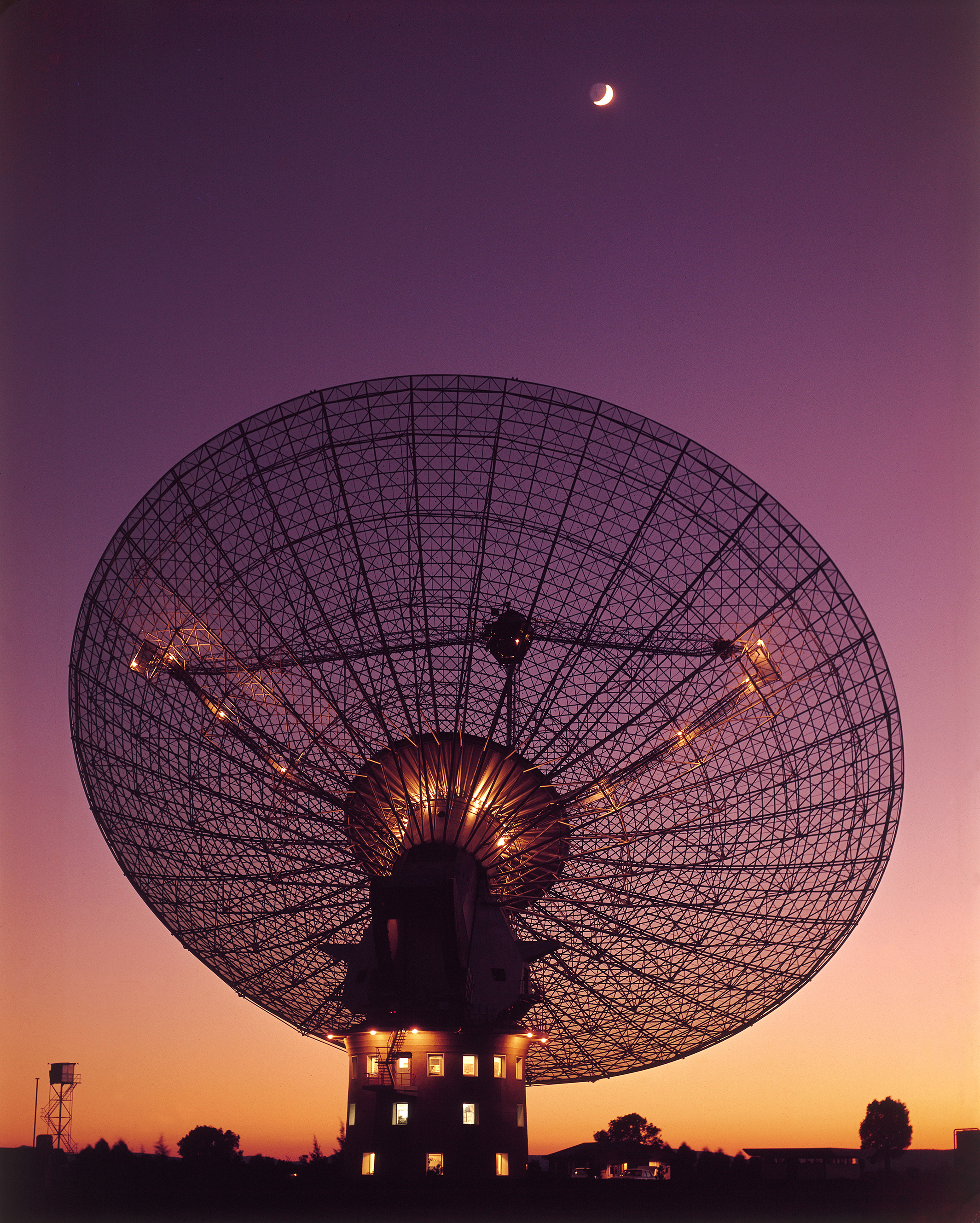
Radio telescopes are sophisticated instruments designed to capture and analyze radio waves emanating from celestial objects, acting as the primary tools for…
Contents
Overview
Radio telescopes are sophisticated instruments designed to capture and analyze radio waves emanating from celestial objects, acting as the primary tools for radio astronomy. Unlike their optical counterparts, these instruments can operate day and night, unfazed by atmospheric conditions that obscure visible light. Their immense size, often parabolic dishes, is a testament to the faintness of cosmic radio signals, necessitating large collecting areas and ultra-sensitive receivers to detect phenomena ranging from distant galaxies to the faint afterglow of the Big Bang. These dishes can be used individually or linked in arrays, such as the Very Large Array (VLA) in New Mexico or the Atacama Large Millimeter/submillimeter Array (ALMA) in Chile, to achieve unprecedented resolution and sensitivity, pushing the boundaries of our understanding of the universe's structure, evolution, and fundamental physics.
🎵 Origins & History
The genesis of radio telescopes traces back to a discovery by Karl Jansky in 1932. While investigating sources of static interference for Bell Telephone Laboratories, Jansky detected a faint, persistent hiss that he traced to the center of the Milky Way. This groundbreaking observation, published in the Proceedings of the Institute of Radio Engineers, marked the birth of radio astronomy. Jansky’s rudimentary antenna, a rotating dipole array mounted on a truck, was a far cry from modern instruments, yet it proved that the cosmos was not silent but broadcasted across the electromagnetic spectrum. Following Jansky's lead, Grote Reber meticulously mapped the sky in radio waves, confirming Jansky's findings and identifying discrete radio sources beyond our galaxy, laying the foundational blueprints for the field.
⚙️ How It Works
At their core, radio telescopes function by collecting faint radio waves using a large, precisely shaped parabolic reflector, often referred to as a 'dish.' This dish focuses the incoming radio waves onto a receiver located at its focal point. The receiver, a highly sensitive electronic device, amplifies these weak signals and converts them into a format that can be recorded and analyzed. For enhanced resolution, multiple radio telescopes can be linked together using a technique called interferometry, effectively creating a single, much larger virtual telescope. This array configuration allows astronomers to achieve angular resolutions far exceeding what a single dish could provide, enabling them to distinguish finer details in cosmic structures, akin to how multiple cameras can be combined for a higher-resolution image. The data collected is then processed by powerful computers to create radio maps of the sky, revealing phenomena invisible to optical telescopes.
📊 Key Facts & Numbers
The scale of radio astronomy is staggering: the Square Kilometer Array (SKA) will comprise thousands of antennas spread across South Africa and Australia, aiming to be the world's largest radio telescope with a collecting area of one square kilometer. The Chandra X-ray Observatory might observe in X-rays, but radio telescopes like the Green Bank Telescope (GBT) in West Virginia, the largest fully steerable single-dish radio telescope, boasts a diameter of 100 meters (330 feet). The Atacama Large Millimeter/submillimeter Array (ALMA) in Chile, an interferometer, consists of 66 antennas, each 7 to 12 meters in diameter, operating at millimeter and submillimeter wavelengths. These instruments detect signals that are often millions or billions of times weaker than the noise floor of a typical mobile phone. The cost of constructing such facilities can run into hundreds of millions, even billions, of dollars, with the SKA projected to cost over €1.5 billion.
👥 Key People & Organizations
Key figures in the development of radio telescopes include Karl Jansky, the 'father of radio astronomy,' whose 1932 discovery of cosmic radio waves initiated the field. Grote Reber followed, building the first parabolic dish and mapping the radio sky. Later pioneers like Sir Martin Rees and Dame Jocelyn Bell Burnell made crucial contributions to understanding radio sources. Major organizations driving radio astronomy include the National Radio Astronomy Observatory (NRAO) in the United States, the Canadian Space Agency (CSA), the European Southern Observatory (ESO), and the Centre National d'Études Spatiales (CNES) in France, often collaborating on international projects like ALMA and the SKA. These entities fund, build, and operate the observatories that push the frontiers of cosmic discovery.
🌍 Cultural Impact & Influence
Radio telescopes have profoundly reshaped our cosmic perspective, revealing phenomena previously unimagined. They were instrumental in discovering the Cosmic Microwave Background (CMB) radiation, the afterglow of the Big Bang, a discovery that solidified the Big Bang theory. The detection of complex organic molecules in interstellar clouds by radio telescopes has provided crucial insights into the chemical origins of life. Furthermore, radio astronomy has been vital in mapping the distribution of dark matter through its gravitational effects on gas and in studying the behavior of black holes and active galactic nuclei by observing the radio jets they emit. The Event Horizon Telescope (EHT), a global network of radio telescopes, captured the public imagination and demonstrated the power of this technology.
⚡ Current State & Latest Developments
The current landscape of radio astronomy is characterized by increasingly ambitious projects and technological advancements. The Event Horizon Telescope (EHT) continues to refine its imaging capabilities, aiming to capture dynamic black hole behavior and potentially test Einstein's theory of general relativity in extreme environments. Construction of the Square Kilometer Array (SKA) is progressing, promising to revolutionize our understanding of galaxy formation, cosmology, and the search for extraterrestrial intelligence. Meanwhile, existing facilities like the Very Large Array (VLA) and ALMA are undergoing upgrades to enhance their sensitivity and resolution, enabling new scientific investigations. The development of advanced artificial intelligence and machine learning algorithms is also becoming crucial for processing the massive datasets generated by these modern observatories.
🤔 Controversies & Debates
One persistent debate revolves around the optimal design for future radio telescopes: single large dishes versus distributed interferometric arrays. While arrays offer superior resolution, they can be more complex to operate and process data from. Another area of contention is the allocation of valuable radio spectrum; the increasing demand for wireless communication technologies, such as 5G and beyond, poses a significant threat to astronomical observations by causing radio frequency interference (RFI). Protecting astronomical bands from terrestrial interference is a constant battle, requiring international cooperation and regulatory advocacy by organizations like the International Telecommunication Union (ITU). There's also ongoing discussion about the balance between building new, large-scale facilities and upgrading existing ones to maximize scientific return on investment.
🔮 Future Outlook & Predictions
The future of radio telescopes points towards even greater sensitivity, resolution, and spectral coverage. The Square Kilometer Array (SKA) will be a game-changer, capable of surveying vast swathes of the universe and detecting signals from the earliest epochs of cosmic history. Future projects may explore even higher frequencies or novel configurations, such as space-based radio interferometers, to overcome terrestrial atmospheric limitations and achieve unparalleled resolution. The search for extraterrestrial intelligence (SETI) will likely see a resurgence in radio telescope utilization, with new algorithms and expanded sky surveys. Furthermore, advancements in quantum computing and quantum entanglement might eventually lead to entirely new paradigms for signal detection and processing, pushing the boundaries of what we can observe.
💡 Practical Applications
Beyond pure astronomical research, radio telescope technology has found practical applications. The precise parabolic dish designs are utilized in satellite communication systems and radar technologies. The sensitive receivers developed for radio astronomy have been adapted for medical imaging and geological surveying. Furthermore, the soph
Key Facts
- Category
- technology
- Type
- topic