Olympus Mountain | Vibepedia
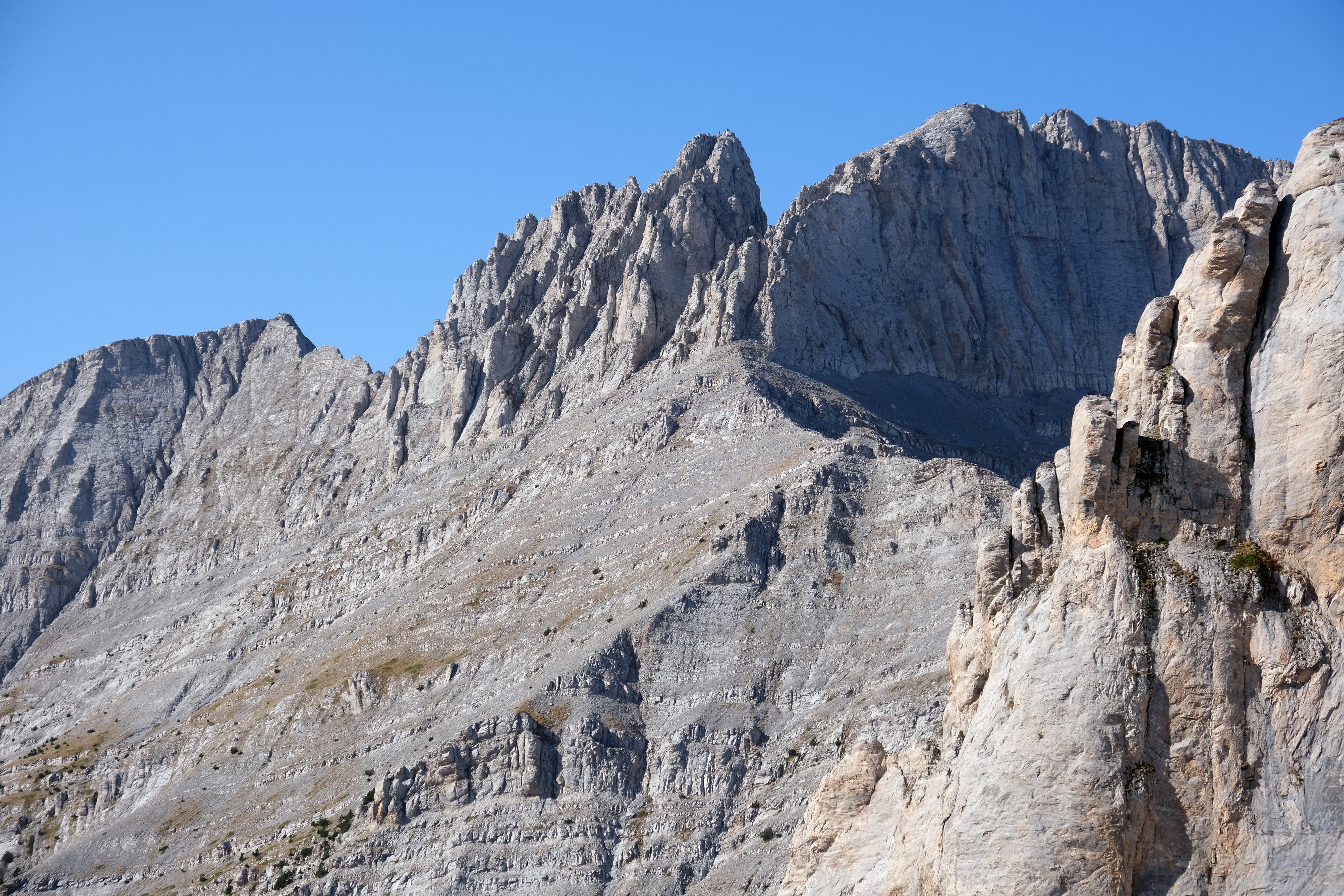
Olympus Mountain, a colossal massif straddling the border of Thessaly and Macedonia in Greece, is far more than just the highest peak in the nation. Rising to…
Contents
Overview
The legend of Olympus is as ancient as civilization itself, deeply interwoven with the fabric of ancient Greek mythology. For millennia, it was believed to be the celestial home of the twelve Olympian gods, including Zeus, Hera, Poseidon, and Athena, who ruled from its highest peaks. This divine association cemented Olympus's status as a sacred site, influencing religious practices and artistic representations for centuries. The mountain's geological formation, a dramatic uplift of limestone and conglomerate, provided a fittingly majestic stage for these divine dramas. Early human habitation in the region dates back to prehistoric times, with evidence of settlements and sanctuaries dedicated to the gods found on its lower slopes, predating the classical Greek pantheon by millennia. The earliest recorded ascent of Mytikas is attributed to the poet Pindar in the 5th century BCE, though it's highly probable that shepherds and hunters had reached its higher reaches much earlier.
⚙️ How It Works
Olympus Mountain functions as a complex ecological and geological system. Its massif is composed primarily of limestone and conglomerate rock, sculpted by glacial activity and erosion over millennia into its characteristic rugged terrain of over 52 distinct peaks and deep gorges. The mountain's elevation gradient creates a remarkable range of microclimates, supporting diverse flora and fauna. From the Mediterranean scrublands at its base to the alpine meadows and bare rock at its summit, Olympus hosts an estimated 1,700 species of plants, including numerous endemic varieties, and a rich array of wildlife, from chamois and wild boar to various raptors and smaller mammals. Its hydrological system is fed by numerous springs and streams, forming waterfalls and contributing to the regional water table. The mountain's accessibility is managed through a network of marked hiking trails, ranging from gentle paths to challenging scrambles, supported by several mountain refuges that provide shelter and amenities for trekkers and climbers.
📊 Key Facts & Numbers
Olympus Mountain stands at an imposing 2,917.727 meters (9,572.60 ft) at its highest point, Mytikas, making it the tallest peak in Greece. It boasts a topographic prominence of 2,917 meters, placing it among the most prominent mountains in Europe. The mountain is part of a protected area covering approximately 400 square kilometers, designated as Greece's first National Park in 1938 and later recognized as a UNESCO World Biosphere Reserve. It attracts an estimated 100,000 visitors annually, with over 10,000 attempting the summit climb each year. The park features over 1,700 species of vascular plants, representing about 25% of all Greek flora, and supports a significant population of mammals, including an estimated 30-40 chamois. The average annual rainfall on the upper slopes can exceed 1,500 mm, contributing to its lush vegetation and numerous water sources.
👥 Key People & Organizations
The mythological pantheon of Olympus, led by Zeus, is the most enduring association with the mountain. In the historical realm, Pindar, the ancient Greek lyric poet, is credited with one of the earliest recorded mentions of reaching the summit. More recently, the Hellenic Mountain Federation (EOS) has been instrumental in establishing and maintaining the network of mountain refuges and trails, with organizations like the Hellenic Society for the Protection of Nature playing a key role in its conservation as a National Park. The Olympus Marathon, a highly competitive mountain running event, has brought modern athletic prowess to the mountain, with notable athletes such as Dimitris Tseslis and Ioannis Papadopoulos achieving victories in recent years. The park's administration, overseen by the Hellenic Ministry of Environment and Energy, works with local communities and conservation groups to manage its ecological integrity.
🌍 Cultural Impact & Influence
Olympus Mountain's influence permeates Western culture, primarily through its role in ancient Greek mythology as the home of the gods. This narrative has been a cornerstone of literature, art, and philosophy for millennia, shaping Western conceptions of divinity, heroism, and the sublime. The mountain itself has become a potent symbol of aspiration, challenge, and natural grandeur. Its image has been invoked in countless poems, paintings, and sculptures, from classical antiquity to the present day. The concept of an "Olympian" deity or athlete signifies supreme excellence, a direct cultural inheritance from the mountain's mythical inhabitants. Furthermore, its designation as a National Park and Biosphere Reserve highlights its global significance in conservation efforts and ecotourism, influencing how natural heritage sites are managed and protected worldwide. The annual Olympus Marathon has further cemented its status as a venue for peak human athletic achievement.
⚡ Current State & Latest Developments
In 2024, Olympus Mountain continues to be a premier destination for hiking and mountaineering in Europe, attracting over 100,000 visitors annually. The Olympus Marathon remains a highlight of the athletic calendar, with the 2024 edition scheduled for June, drawing elite runners from around the globe. Conservation efforts are ongoing, with particular focus on managing the impact of increased tourism on the mountain's sensitive ecosystems, especially during peak seasons. The Hellenic Ministry of Environment and Energy, in collaboration with the Olympus National Park Management Body, is implementing new strategies to balance visitor access with biodiversity protection, including enhanced trail maintenance and visitor education programs. Research into the mountain's unique flora and fauna continues, with recent studies in 2023 and 2024 focusing on the impact of climate change on alpine plant communities.
🤔 Controversies & Debates
The primary controversy surrounding Olympus Mountain revolves around the balance between tourism and conservation. While its status as a National Park and Biosphere Reserve aims to protect its biodiversity, the sheer volume of visitors, particularly during peak hiking seasons, puts pressure on its fragile ecosystems. Debates often arise regarding the management of trails, the capacity of mountain refuges, and the environmental impact of organized events like the Olympus Marathon. Some conservationists argue for stricter visitor limits or designated access zones, while tourism stakeholders emphasize the economic benefits and the importance of public access. Another point of contention can be the interpretation of its mythological significance versus its scientific and ecological value, though these are generally seen as complementary rather than conflicting.
🔮 Future Outlook & Predictions
The future of Olympus Mountain is likely to see a continued emphasis on sustainable tourism and enhanced conservation strategies. As climate change impacts alpine environments globally, research into Olympus's unique flora and fauna will become even more critical, potentially revealing new insights into species adaptation and resilience. The development of more eco-friendly infrastructure, such as improved waste management systems and renewable energy sources for mountain refuges, is anticipated. Furthermore, advancements in virtual reality and augmented reality technologies may offer new ways for people to experience the mountain's grandeur and mythological significance without physically traversing its most sensitive areas, potentially alleviating some of the direct human impact. The ongoing success of events like the Olympus Marathon will also shape its future as a venue for both athletic challenge and natural appreciation.
💡 Practical Applications
The most prominent practical application of Olympus Mountain is as a destination for hiking, mountaineering, and rock climbing. Its well-established network of trails and refuges makes it accessible for a wide range of outdoor enthusiasts. The annual Olympus Marathon is a significant event, showcasing the mountain as a challenging course for elite mountain runners. Beyond recreation, Olympus serves as a vital natural laboratory for scientists studying alpine ecosystems, biodiversity, and the effects of climate change, with its designation as a UNESCO World Biosphere Reserve fac
Key Facts
- Category
- nature
- Type
- topic