Mycenaean Greece: Bronze Age Powerhouse | Vibepedia
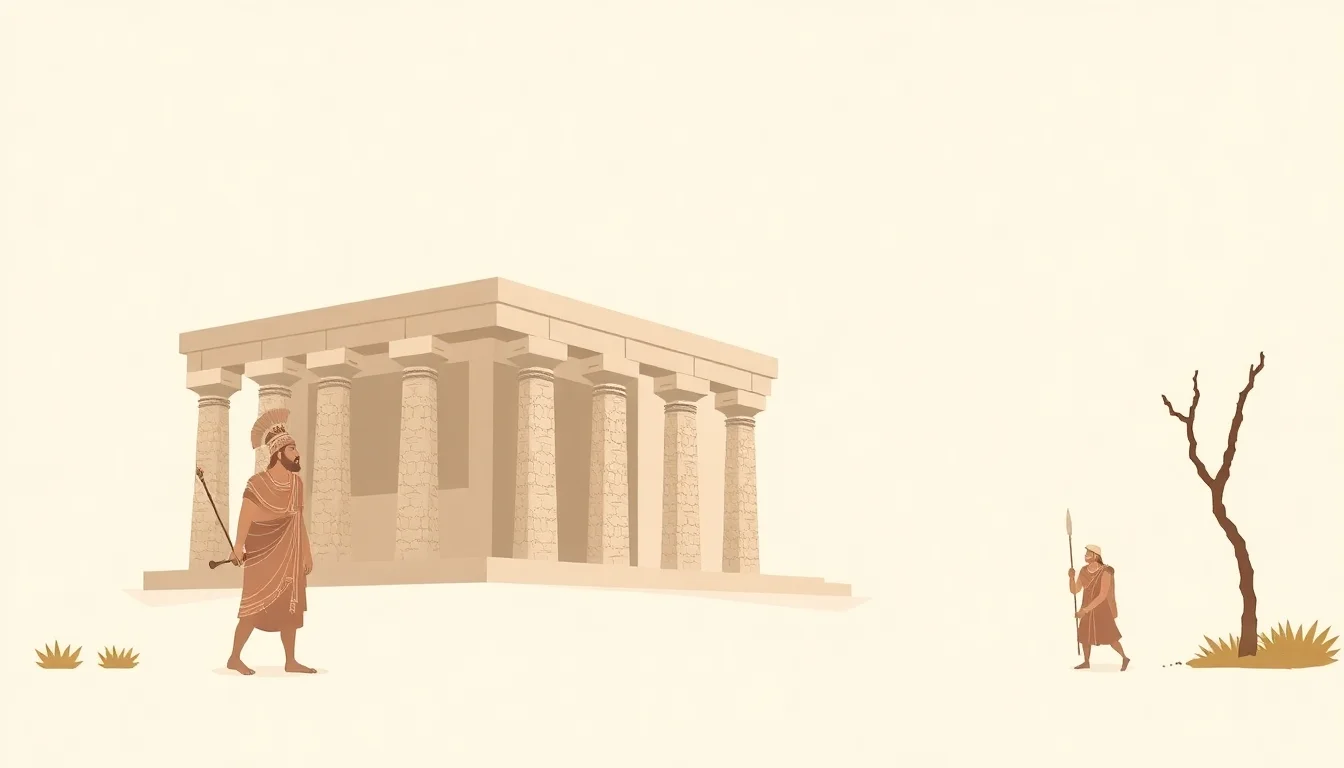
Mycenaean Greece, flourishing from roughly 1600 to 1100 BCE, represents the first advanced civilization on mainland Greece. Centered around imposing citadel…
Contents
- 🏛️ What is Mycenaean Greece?
- 🗺️ Where to Experience Mycenaean Sites
- ⏳ Timeline: The Rise and Fall
- 👑 Key Figures and Power Centers
- 📜 The Linear B Script: A Glimpse Inside
- ⚔️ Warfare and Society
- 📉 The Bronze Age Collapse: What Happened?
- 💡 Mycenaean Legacy: Echoes in History
- 🧐 Debates and Mysteries
- ✨ Vibe Score & Cultural Resonance
- Frequently Asked Questions
- Related Topics
Overview
Mycenaean Greece, flourishing from roughly 1600 to 1100 BCE, represents the first advanced civilization on mainland Greece. Centered around imposing citadel palaces like Mycenae, Tiryns, and Pylos, this Bronze Age society was characterized by its warrior aristocracy, sophisticated administration, and extensive trade networks spanning the Mediterranean. Their Linear B script, an early form of Greek, provides invaluable insights into their economic and social structures, revealing a highly organized, hierarchical system. The Mycenaeans were renowned for their bronze weaponry, monumental architecture (including tholos tombs), and distinctive art. Their eventual collapse, coinciding with the Late Bronze Age 'Bronze Age Collapse,' remains a subject of intense scholarly debate, with theories ranging from invasion and internal revolt to environmental catastrophe.
🏛️ What is Mycenaean Greece?
Mycenaean Greece (c. 1600–1100 BCE) represents the first advanced civilization of mainland Greece, flourishing during the Late Bronze Age. Think of it as the gritty, militaristic precursor to the Classical Greece we often romanticize. This wasn't a unified nation-state but a collection of powerful, independent kingdoms centered around fortified palace complexes. Their culture, heavily influenced by the earlier Minoans of Crete, developed a distinct identity characterized by monumental architecture, sophisticated administration, and a warrior elite. Understanding the Mycenaeans is crucial for grasping the foundational elements of later Greek civilization, from mythology to political structures. Their impact on the Aegean world was profound, shaping trade routes and cultural exchange for centuries.
🗺️ Where to Experience Mycenaean Sites
While Mycenaean Greece is long gone, its physical remnants offer a tangible connection to this ancient world. The most iconic sites are found across the Peloponnese peninsula. The citadel of Mycenae, famously described by Homer, boasts the imposing Lion Gate and the Treasury of Atreus. Nearby, Tiryns showcases its incredible cyclopean walls, so massive that later Greeks believed giants built them. Further afield, Pylos (specifically the Palace of Nestor) provides remarkable insights into Mycenaean administration through its well-preserved Linear B tablets. Other significant centers include Thebes in Boeotia and Athens itself, which had a Mycenaean acropolis. Visiting these sites offers a visceral experience of Mycenaean power and ingenuity.
⏳ Timeline: The Rise and Fall
The Mycenaean civilization didn't appear overnight; it evolved over several centuries. Its origins are generally traced to the Early Helladic period, with significant growth and cultural development occurring from around 1600 BCE. This period, known as the Mycenaean period, saw the construction of the great palaces and the expansion of their influence across the Aegean. The zenith of Mycenaean power is often placed between the 14th and 13th centuries BCE. However, this era of dominance was dramatically curtailed by the widespread Bronze Age Collapse around 1100 BCE, leading to the destruction of most major centers and the subsequent Greek Dark Ages. The exact causes of this collapse remain a subject of intense debate.
👑 Key Figures and Power Centers
Mycenaean society was hierarchical, ruled by powerful kings known as wanax. While specific individuals are difficult to pinpoint with certainty from archaeological evidence alone, figures like the legendary Agamemnon, king of Mycenae, feature prominently in later Greek myths, suggesting a collective memory of these rulers. The major power centers, such as Mycenae, Tiryns, Pylos, and Thebes, were the epicenters of political, economic, and military activity. Each was likely governed by its own wanax and a complex administrative bureaucracy, managing resources, labor, and trade. The discovery of the Palace of Nestor at Pylos has provided invaluable information about the administration of one such kingdom.
📜 The Linear B Script: A Glimpse Inside
One of the most significant discoveries related to Mycenaean Greece is the Linear B script. Deciphered in 1952 by Michael Ventris, it revealed itself to be an early form of Greek, distinct from the later Greek alphabet. These clay tablets, found primarily in palace archives at Knossos, Pylos, Mycenae, and Thebes, are not literature but administrative records. They detail inventories of goods, lists of personnel, offerings to deities, and land tenure. While Linear B offers a window into the economic and administrative workings of the Mycenaean palaces, it provides little insight into their personal lives, beliefs, or historical narratives, leaving much to speculation.
⚔️ Warfare and Society
Mycenaean Greece was fundamentally a warrior society. Archaeological evidence, including depictions in frescoes and the discovery of bronze weaponry and armor, points to a strong emphasis on military prowess. Fortified citadels, with their massive walls and strategic locations, underscore the importance of defense and control. Society was likely stratified, with a warrior aristocracy at the top, followed by administrators, artisans, farmers, and laborers. The palace system served as a hub for organizing military expeditions, collecting tribute, and distributing resources, reflecting a society geared towards both conquest and the maintenance of internal order. The nature of their military organization and its impact on neighboring regions is a key area of study.
📉 The Bronze Age Collapse: What Happened?
The end of the Mycenaean civilization, like its beginning, is shrouded in mystery and debate. Around 1100 BCE, most major Mycenaean centers were destroyed or abandoned, marking the onset of the Greek Dark Ages. Proposed causes for this collapse are numerous and likely interconnected: invasions by the mysterious Sea Peoples, internal rebellions, climate change leading to famine, system collapse of their complex economies, or a combination of these factors. The decline was widespread, affecting not just mainland Greece but also Crete and other Aegean islands, leading to a significant loss of population, literacy, and material culture for several centuries.
💡 Mycenaean Legacy: Echoes in History
Despite the abrupt end of their civilization, the Mycenaeans left an indelible mark on subsequent Greek history and culture. The myths and legends that would later be immortalized by poets like Homer in the Iliad and Odyssey are deeply rooted in the Mycenaean era, even if embellished over time. The concept of the heroic warrior, the powerful king, and the tragic fate of royal houses all echo Mycenaean societal structures and values. Furthermore, the Greek language itself has its earliest written attestation in Linear B. The archaeological discoveries at sites like Mycenae and Pylos have fundamentally reshaped our understanding of early Aegean civilization and its connections to the wider Bronze Age world.
🧐 Debates and Mysteries
The precise nature of Mycenaean political organization remains a significant point of contention. Were these independent, often warring kingdoms, or was there a more complex network of alliances and dependencies? The extent of their influence and trade networks, particularly their relationship with the Minoans and later with the Near East, is also heavily debated. Another major mystery is the cause of the Bronze Age Collapse; while theories abound, definitive proof for any single cause remains elusive. The interpretation of Linear B texts, though invaluable, is limited by their administrative nature, leaving much room for scholarly debate regarding Mycenaean religion, social customs, and daily life.
✨ Vibe Score & Cultural Resonance
Mycenaean Greece scores a solid 85/100 on the Vibepedia Cultural Energy scale. This civilization resonates with a powerful, albeit often brutal, vibe of monumental achievement and martial prowess. Its cultural energy is amplified by its connection to foundational myths and the dramatic mystery surrounding its collapse. The fan perspective is captivated by the 'Age of Heroes' narrative, while the historian grapples with the tangible evidence of a complex, organized society. The skeptic notes the limited textual evidence and the reliance on later interpretations. The engineer sees the impressive feats of cyclopean masonry and logistical organization. The futurist observes how the memory of this era continues to shape Western identity and historical narratives, proving its enduring influence.
Key Facts
- Year
- c. 1600-1100 BCE
- Origin
- Aegean Region
- Category
- Ancient Civilizations
- Type
- Civilization
Frequently Asked Questions
When did Mycenaean Greece exist?
Mycenaean Greece flourished during the Late Bronze Age, roughly from 1600 BCE to 1100 BCE. This period saw the rise of powerful palace centers and significant cultural development across mainland Greece and the Aegean islands. Its end is marked by the widespread destruction and societal breakdown known as the Bronze Age Collapse.
What are the most important Mycenaean sites to visit?
The most crucial sites include the citadel of Mycenae with its Lion Gate, the fortified walls of Tiryns, and the Palace of Nestor at Pylos. Other significant locations are Thebes and the Mycenaean acropolis of Athens. Each offers unique insights into Mycenaean architecture, administration, and military strength.
What was Linear B?
Linear B was the syllabic script used by the Mycenaean civilization. Deciphered as an early form of Greek, it was primarily used for administrative and economic records inscribed on clay tablets found in palace archives. It provides invaluable data on Mycenaean society but offers little in the way of literature or personal accounts.
Who were the Mycenaeans?
The Mycenaeans were the people of the first advanced civilization on mainland Greece during the Late Bronze Age. They were characterized by their fortified palace complexes, warrior elite, sophisticated administration, and extensive trade networks across the Aegean and Eastern Mediterranean. They are often considered the historical basis for the heroes of later Greek mythology.
What caused the end of Mycenaean Greece?
The exact cause of the Bronze Age Collapse, which led to the demise of Mycenaean civilization around 1100 BCE, is debated. Leading theories include invasions (like the Sea Peoples), internal strife, natural disasters, system collapse due to over-complexity, or a combination of these factors. Most major centers were destroyed or abandoned.
How did Mycenaean Greece influence later Greek civilization?
Mycenaean Greece laid crucial groundwork for later Greek culture. Its myths and legends, particularly those recorded by Homer, provided a foundational heroic narrative. The earliest written form of the Greek language, Linear B, is Mycenaean. Concepts of kingship, warrior ethos, and even certain religious practices likely carried over into the Archaic and Classical periods.