Invertebrates: The Unseen Majority | Vibepedia
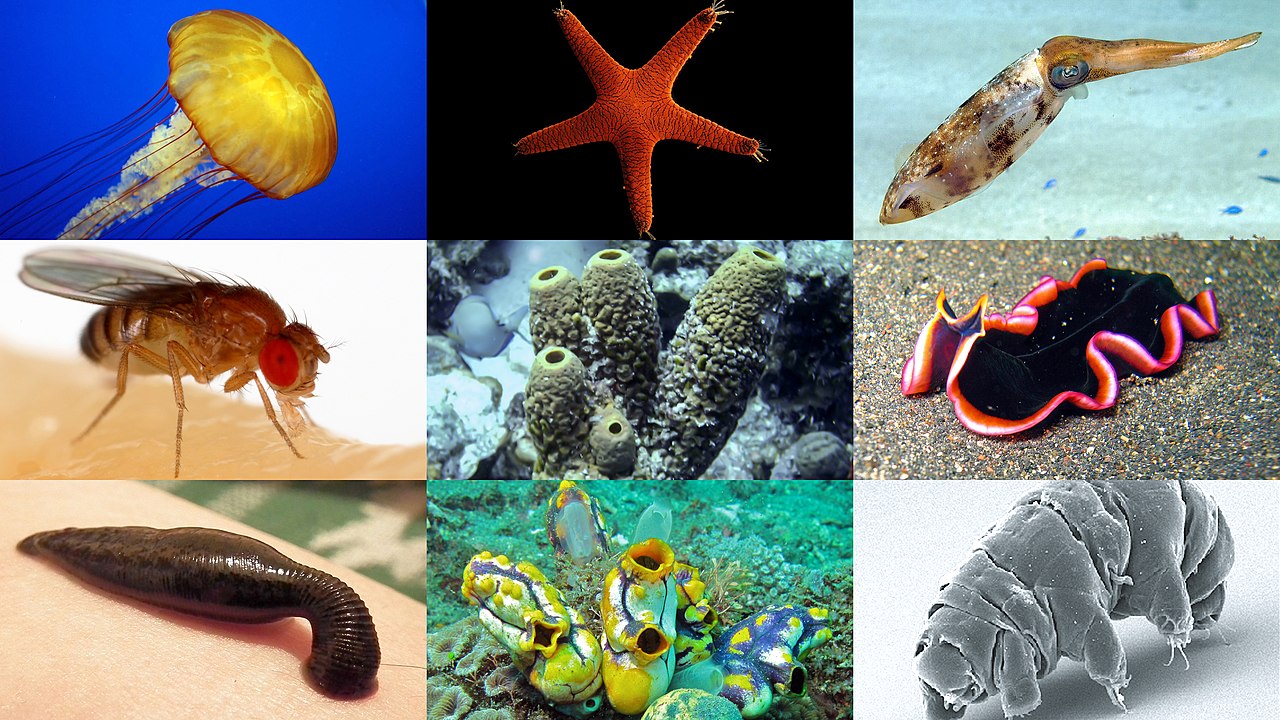
Invertebrates, comprising approximately 95% of all animal species, are a vast and diverse group that includes insects, arachnids, crustaceans, mollusks, and…
Contents
- 🦠 Introduction to Invertebrates
- 🔬 The Evolution of Invertebrates
- 🦋 Phyla of Invertebrates
- 🐚 Molluscs and Their Diversity
- 🐜 Arthropods: The Most Successful Group
- 🐳 Echinoderms and Their Unique Characteristics
- 🌟 Flatworms and Cnidarians: Simple yet Fascinating
- 🧮 Sponges: The Simplest of Invertebrates
- 🌎 Invertebrates in Ecosystems
- 👥 Conservation Efforts for Invertebrates
- 🔮 Future Research Directions for Invertebrates
- Frequently Asked Questions
- Related Topics
Overview
Invertebrates, comprising approximately 95% of all animal species, are a vast and diverse group that includes insects, arachnids, crustaceans, mollusks, and more. With over 1.3 million described species, they can be found in almost every habitat on Earth, from the deepest oceans to the driest deserts. Despite their ubiquity, invertebrates are often underappreciated and misunderstood, with many species still awaiting discovery and description. The study of invertebrates has led to numerous breakthroughs in fields such as medicine, ecology, and conservation, with species like the horseshoe crab and the silkworm contributing significantly to human knowledge. However, many invertebrate populations are facing unprecedented threats, including habitat destruction, climate change, and pollution, highlighting the need for urgent conservation efforts. As our understanding of invertebrates continues to evolve, we are reminded of the intricate relationships between species and the importance of preserving biodiversity, with the IUCN estimating that up to 30% of invertebrate species may be at risk of extinction by 2050.
🦠 Introduction to Invertebrates
Invertebrates are animals that neither develop nor retain a vertebral column, which evolved from the notochord. This characteristic distinguishes them from vertebrates, which have a backbone. Invertebrates are a paraphyletic grouping, including all animals excluding the chordate subphylum Vertebrata. They are incredibly diverse, with well-known phyla including arthropods, molluscs, annelids, echinoderms, flatworms, cnidarians, and sponges. The study of invertebrates is crucial for understanding the complexity of life on Earth, as they have been present for over 600 million years, with fossil records dating back to the Cambrian explosion. Invertebrates have also played a significant role in shaping the evolution of ecosystems and continue to do so today. For example, coral reefs, which are formed by cnidarians, are some of the most diverse ecosystems on the planet.
🔬 The Evolution of Invertebrates
The evolution of invertebrates is a complex and still somewhat mysterious process. It is believed that invertebrates evolved from a common ancestor with vertebrates over 600 million years ago. The earliest invertebrates were likely simple, multicellular organisms that gradually evolved into more complex forms. The development of the notochord in vertebrates marked a significant turning point in the evolution of animals, as it allowed for the development of a backbone and the formation of more complex body structures. In contrast, invertebrates continued to evolve and diversify without a backbone, leading to the incredible range of forms we see today, from the simple sponges to the complex arthropods. The study of fossil records and comparative anatomy has helped scientists to reconstruct the evolutionary history of invertebrates and understand the relationships between different groups. For example, the study of developmental biology has shown that many invertebrates, such as fruit flies and nematode worms, have similar genetic mechanisms controlling their development, despite their very different body forms.
🦋 Phyla of Invertebrates
The phyla of invertebrates are incredibly diverse, with each group having unique characteristics and adaptations. The arthropods, which include insects, crustaceans, and arachnids, are the most successful group of invertebrates, with over a million described species. They are characterized by their jointed limbs and hard exoskeletons, which have allowed them to thrive in a wide range of environments. The molluscs, which include squid, octopuses, and clams, are another diverse group, with over 100,000 described species. They are characterized by their soft, unsegmented bodies and often have a hard shell for protection. Other phyla, such as the echinoderms and flatworms, are less well-known but still fascinating in their own right. For example, the sea stars and sea urchins are both echinoderms that have unique body forms and are important components of marine ecosystems.
🐚 Molluscs and Their Diversity
Molluscs are one of the most diverse groups of invertebrates, with species ranging from the tiny snails to the massive squid. They are characterized by their soft, unsegmented bodies and often have a hard shell for protection. Molluscs have evolved a wide range of adaptations to their environments, from the coral reefs to the deep sea. Some molluscs, such as the clams and mussels, are filter feeders, using their siphons to draw in water and filter out particles. Others, such as the squid and octopuses, are active predators, using their tentacles and beaks to catch prey. Molluscs have also been an important food source for humans for thousands of years, with many species being farmed or harvested for their meat. For example, the oyster industry is a significant contributor to the economy of many coastal communities. However, many mollusc species are also facing threats from climate change, pollution, and overfishing, highlighting the need for conservation efforts to protect these important animals.
🐜 Arthropods: The Most Successful Group
Arthropods are the most successful group of invertebrates, with over a million described species. They are characterized by their jointed limbs and hard exoskeletons, which have allowed them to thrive in a wide range of environments. Arthropods include insects, crustaceans, and arachnids, among others. They have evolved a wide range of adaptations to their environments, from the deserts to the rainforests. Some arthropods, such as the bees and butterflies, are important pollinators, while others, such as the spiders and scorpions, are predators. Arthropods have also been a significant component of human culture for thousands of years, with many species being used as food, medicine, or other products. For example, the silkworm has been used for silk production for over 5,000 years. However, many arthropod species are also facing threats from habitat destruction, climate change, and invasive species, highlighting the need for conservation efforts to protect these important animals.
🐳 Echinoderms and Their Unique Characteristics
Echinoderms are a group of invertebrates that include sea stars, sea urchins, and sea cucumbers. They are characterized by their unique body form, which is typically radially symmetrical and has a water vascular system. Echinoderms have evolved a wide range of adaptations to their environments, from the coral reefs to the deep sea. Some echinoderms, such as the sea stars, are predators, using their tube feet to capture prey. Others, such as the sea urchins, are grazers, using their spines to scrape up algae and other food sources. Echinoderms have also been an important component of marine ecosystems for millions of years, playing a key role in the food chain and ecosystem processes. For example, the sea otters rely on sea urchins as a food source, and the kelp forests rely on sea urchins to keep the kelp from overgrowing. However, many echinoderm species are also facing threats from climate change, pollution, and overfishing, highlighting the need for conservation efforts to protect these important animals.
🌟 Flatworms and Cnidarians: Simple yet Fascinating
Flatworms and cnidarians are two groups of invertebrates that are often overlooked, but are still fascinating in their own right. Flatworms, which include tapeworms and flukes, are characterized by their flat, unsegmented bodies and often have a simple nervous system. Cnidarians, which include jellyfish, corals, and sea anemones, are characterized by their stinging cells, called cnidocytes, which they use to capture prey. Both groups have evolved a wide range of adaptations to their environments, from the freshwater to the marine ecosystems. Some flatworms, such as the planarians, are able to regenerate their bodies, while others, such as the tapeworms, are parasites that live inside the bodies of other animals. Cnidarians, on the other hand, have evolved complex relationships with other animals, such as the clownfish and the sea anemones, which live together in a symbiotic relationship. For example, the coral reefs are formed by the symbiotic relationship between the corals and the zooxanthellae, which are single-celled algae that live inside the coral's tissues.
🧮 Sponges: The Simplest of Invertebrates
Sponges are one of the simplest groups of invertebrates, with a body form that is typically a simple sac or tube. They are characterized by their porous bodies, which are supported by a skeleton of spicules or spongin. Sponges have evolved a wide range of adaptations to their environments, from the freshwater to the marine ecosystems. Some sponges, such as the bath sponges, are used by humans for their absorbent properties, while others, such as the glass sponges, are used for their unique skeletal structures. Sponges have also been an important component of marine ecosystems for millions of years, playing a key role in the food chain and ecosystem processes. For example, the sponges are an important food source for many marine animals, including the sea turtles and the fish. However, many sponge species are also facing threats from climate change, pollution, and overfishing, highlighting the need for conservation efforts to protect these important animals.
🌎 Invertebrates in Ecosystems
Invertebrates play a crucial role in ecosystems, from the decomposers that break down organic matter to the pollinators that transfer pollen between plants. They are also an important food source for many other animals, including vertebrates. Invertebrates have evolved a wide range of adaptations to their environments, from the deserts to the rainforests. Some invertebrates, such as the bees and butterflies, are important pollinators, while others, such as the spiders and scorpions, are predators. Invertebrates have also been a significant component of human culture for thousands of years, with many species being used as food, medicine, or other products. For example, the honey produced by bees is a valuable food source, while the silk produced by silkworms is a valuable textile. However, many invertebrate species are also facing threats from habitat destruction, climate change, and invasive species, highlighting the need for conservation efforts to protect these important animals.
👥 Conservation Efforts for Invertebrates
Conservation efforts for invertebrates are crucial to protect these important animals and the ecosystems they inhabit. Many invertebrate species are facing threats from habitat destruction, climate change, and invasive species, which can have significant impacts on ecosystems and human societies. For example, the loss of pollinators such as bees and butterflies can have significant impacts on food production and ecosystem health. Conservation efforts can include the protection of habitats, the reduction of pollution, and the control of invasive species. For example, the creation of marine protected areas can help to protect marine invertebrates such as corals and sea stars, while the reduction of pesticides can help to protect terrestrial invertebrates such as bees and butterflies. However, conservation efforts for invertebrates can be challenging, as many species are small and difficult to study, and their habitats are often complex and difficult to manage.
🔮 Future Research Directions for Invertebrates
Future research directions for invertebrates are likely to focus on the development of new technologies and methods for studying these animals. For example, the use of genomics and transcriptomics can help to understand the evolution and development of invertebrates, while the use of robotics and artificial intelligence can help to study the behavior and ecology of invertebrates. Additionally, the development of new conservation strategies and management practices will be crucial to protect invertebrates and the ecosystems they inhabit. For example, the use of citizen science can help to engage the public in invertebrate conservation, while the development of sustainable agriculture practices can help to reduce the impacts of human activities on invertebrate populations. However, future research directions for invertebrates will also need to address the significant challenges facing these animals, including climate change, habitat destruction, and invasive species.
Key Facts
- Year
- 2022
- Origin
- Earth
- Category
- Biology
- Type
- Biological Group
Frequently Asked Questions
What is the difference between invertebrates and vertebrates?
Invertebrates are animals that do not have a backbone or spinal column, while vertebrates are animals that do have a backbone or spinal column. This is the main difference between the two groups, and it has significant implications for their body structure, movement, and behavior. For example, invertebrates such as insects and arthropods have a hard exoskeleton that provides support and protection, while vertebrates such as mammals and birds have a backbone that provides support and flexibility.
What are some examples of invertebrates?
Examples of invertebrates include insects, arthropods, molluscs, echinoderms, flatworms, cnidarians, and sponges. These animals are incredibly diverse, and can be found in almost every environment on Earth, from the deserts to the oceans. For example, the bees and butterflies are important pollinators, while the corals and sea stars are important components of marine ecosystems.
Why are invertebrates important?
Invertebrates are important for many reasons, including their role in ecosystems, their economic importance, and their cultural significance. For example, invertebrates such as bees and butterflies are important pollinators, while invertebrates such as corals and sea stars are important components of marine ecosystems. Invertebrates are also an important food source for many other animals, including vertebrates. Additionally, invertebrates have been used by humans for thousands of years, with many species being used as food, medicine, or other products.
What are some threats to invertebrates?
Invertebrates are facing many threats, including habitat destruction, climate change, invasive species, and pollution. These threats can have significant impacts on invertebrate populations and ecosystems, and can also have significant implications for human societies. For example, the loss of pollinators such as bees and butterflies can have significant impacts on food production and ecosystem health. Additionally, the loss of corals and other marine invertebrates can have significant impacts on marine ecosystems and the many species that depend on them.
How can we conserve invertebrates?
Conserving invertebrates requires a multi-faceted approach that includes the protection of habitats, the reduction of pollution, and the control of invasive species. For example, the creation of marine protected areas can help to protect marine invertebrates such as corals and sea stars, while the reduction of pesticides can help to protect terrestrial invertebrates such as bees and butterflies. Additionally, the development of sustainable agriculture practices can help to reduce the impacts of human activities on invertebrate populations. Citizen science and education can also play an important role in invertebrate conservation, by engaging the public in the importance of these animals and the threats they face.
What is the future of invertebrate research?
The future of invertebrate research is likely to be shaped by advances in technology and changes in our understanding of these animals. For example, the use of genomics and transcriptomics can help to understand the evolution and development of invertebrates, while the use of robotics and artificial intelligence can help to study the behavior and ecology of invertebrates. Additionally, the development of new conservation strategies and management practices will be crucial to protect invertebrates and the ecosystems they inhabit. For example, the use of citizen science can help to engage the public in invertebrate conservation, while the development of sustainable agriculture practices can help to reduce the impacts of human activities on invertebrate populations.
What are some interesting facts about invertebrates?
Invertebrates are incredibly diverse, and have many interesting characteristics and adaptations. For example, the honeybee is able to communicate with its colony through complex dance patterns, while the octopus is able to change the color and texture of its skin to camouflage itself. Invertebrates have also evolved a wide range of unique body forms, such as the starfish and the jellyfish. Additionally, invertebrates have been used by humans for thousands of years, with many species being used as food, medicine, or other products. For example, the silkworm has been used for silk production for over 5,000 years, while the corals have been used for jewelry and other decorative items.