HVAC Systems | Vibepedia
Heating, Ventilation, and Air Conditioning (HVAC) systems are the backbone of modern building environments, meticulously controlling temperature, humidity…
Contents
Overview
Heating, Ventilation, and Air Conditioning (HVAC) systems are the backbone of modern building environments, meticulously controlling temperature, humidity, and air purity. These complex networks, rooted in the principles of thermodynamics, fluid mechanics, and heat transfer, are crucial for occupant comfort and health in everything from homes to skyscrapers and vehicles. The field, a specialized branch of mechanical engineering, is increasingly driven by a global imperative for energy efficiency and sustainability, integrating with green building practices and advanced energy modeling. As buildings become more sophisticated, HVAC design is paramount in reducing operational costs and environmental impact, with innovations constantly pushing the boundaries of performance and eco-friendliness. The scope of HVAC is vast, encompassing everything from simple furnaces to intricate, multi-zone climate control systems.
🎵 Origins & History
Early pioneers like Willis Carrier laid crucial groundwork. The term 'HVAC' began to gain traction in the mid-20th century as distinct technologies converged into integrated systems, becoming standard in commercial buildings and increasingly in residential construction, significantly improving public health and productivity.
⚙️ How It Works
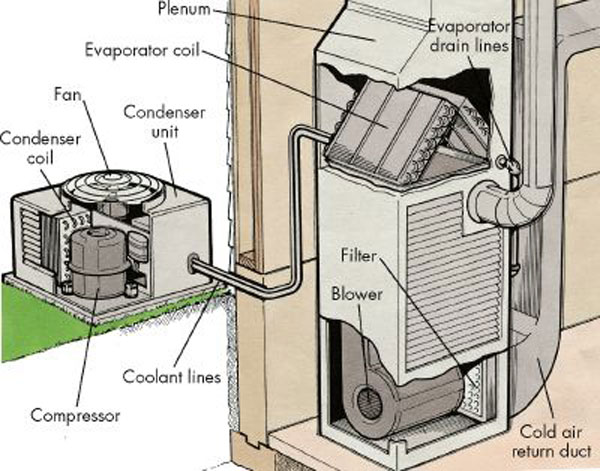
At its core, an HVAC system orchestrates the movement and conditioning of air. Heating involves generating warmth, typically through furnaces burning natural gas or propane, electric resistance heaters, or heat pumps that transfer ambient heat indoors. Ventilation ensures a continuous supply of fresh outdoor air while exhausting stale indoor air, often using energy recovery ventilators (ERVs) or heat recovery ventilators (HRVs) to pre-condition incoming air. Air conditioning, or cooling, employs a refrigeration cycle where a refrigerant absorbs heat from indoor air and releases it outdoors, typically via a compressor, condenser, and evaporator. Humidity control is managed by the evaporator coil (dehumidification) or by adding moisture with humidifiers. These components are integrated and controlled by thermostats, smart home systems, and building automation systems (BAS) to maintain desired setpoints.
📊 Key Facts & Numbers
The global HVAC market is a significant industry. Residential HVAC systems account for a substantial portion of household energy consumption, a figure that underscores the critical need for efficiency. Modern commercial buildings often feature sophisticated HVAC systems that can comprise a large percentage of the total construction cost. The average lifespan of a residential HVAC unit is between 15 to 20 years. Globally, a vast number of air conditioning units are in operation, a number expected to surge in the future, driven by rising global temperatures and increased disposable income in developing nations.
👥 Key People & Organizations
Key figures in HVAC include Willis Carrier, whose invention revolutionized industrial climate control. Stuart W. Cramer is credited with coining the term 'air conditioning' in 1906. Major corporations like Carrier Global Corporation, Trane Technologies, and Daikin Industries are titans in the manufacturing and innovation of HVAC equipment. Professional organizations such as the American Society of Heating, Refrigerating and Air-Conditioning Engineers (ASHRAE) and the Air Conditioning Contractors of America (ACCA) set industry standards and promote best practices.
🌍 Cultural Impact & Influence
HVAC systems have reshaped human habitation and productivity. The widespread adoption of air conditioning enabled the development of large, enclosed commercial spaces such as shopping malls and office towers. Improved indoor air quality through ventilation has been linked to enhanced cognitive function. The comfort provided by HVAC has become an expectation in developed nations, influencing architectural design, urban planning, and even consumer behavior, making it a ubiquitous, albeit often invisible, force in daily life.
⚡ Current State & Latest Developments
The HVAC industry is currently experiencing a significant shift towards smart technology and sustainability. The integration of Internet of Things (IoT) devices has led to the proliferation of 'smart thermostats' like Nest and Ecobee, which learn user preferences and optimize energy usage. There's a strong push towards Variable Refrigerant Flow (VRF) systems, which offer zoned control and higher energy efficiency in commercial settings. Furthermore, the development of geothermal heat pumps and variable-speed compressors are gaining traction as eco-friendly alternatives. Regulatory bodies worldwide are also tightening efficiency standards, such as the ENERGY STAR program in the U.S., driving manufacturers to innovate more efficient and environmentally benign refrigerants, moving away from high global warming potential (GWP) compounds.
🤔 Controversies & Debates
A central controversy in HVAC revolves around energy consumption and its environmental footprint. The phase-out of refrigerants like hydrofluorocarbons (HFCs) under international agreements presents both a challenge and an opportunity for innovation. Debates also persist regarding indoor air quality standards, with some critics arguing that current regulations are insufficient to protect against emerging indoor pollutants and allergens, while others champion the effectiveness of modern filtration and ventilation techniques.
🔮 Future Outlook & Predictions
The future of HVAC is inextricably linked to decarbonization and smart building integration. Expect a continued rise in heat pump adoption, particularly air-source and geothermal models, as they offer efficient heating and cooling without direct fossil fuel combustion. The integration with Artificial Intelligence (AI) will become more sophisticated, enabling predictive maintenance, dynamic load balancing across entire building portfolios, and personalized comfort settings. Advanced materials for insulation and heat exchange, along with novel refrigerants with ultra-low GWP, will play a crucial role. The concept of 'district heating and cooling' systems, serving multiple buildings from a central plant, is also poised for expansion, offering economies of scale and enhanced efficiency.
💡 Practical Applications
HVAC systems are fundamental to a vast array of applications. In residential settings, they provide essential comfort and air quality in homes, apartments, and condominiums. Commercial buildings, including offices, retail spaces, and hotels, rely heavily on HVAC for occupant well-being and operational efficiency. Critical facilities like hospitals and data centers require precise climate control to ensure equipment functionality and patient safety, often employing redundant systems. Industrial settings use HVAC for process control, protecting sensitive machinery and ensuring product quality. Even vehicles, from passenger cars to buses and trains, utilize integrated HVAC systems for driver and passenger comfort, with advancements like electric vehicle thermal management systems becoming increasingly important.
Key Facts
- Category
- technology
- Type
- topic