Food Chains: The Unseen Architects of Ecosystems | Vibepedia
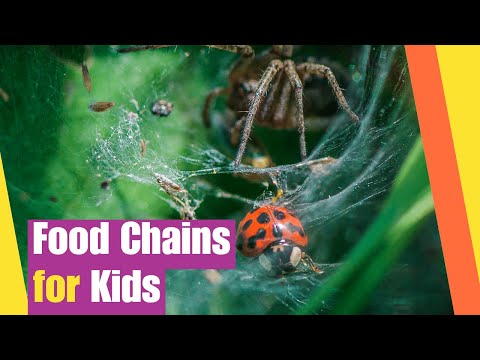
Food chains are the fundamental pathways illustrating how energy flows through an ecosystem, tracing the transfer of nutrients from one organism to another…
Contents
- 🌍 What Exactly IS a Food Chain?
- 🌿 Producers: The Foundation of Life
- 🐛 Consumers: The Energy Movers
- 💀 Decomposers & Detritivores: Nature's Recyclers
- 🔗 Food Chains vs. Food Webs: The Real Picture
- 📏 Measuring the Chain: Trophic Levels & Length
- ⚠️ The Fragility of the Chain: What Happens When It Breaks?
- 💡 Real-World Examples: From Ponds to Plains
- Frequently Asked Questions
- Related Topics
Overview
Food chains are the fundamental pathways illustrating how energy flows through an ecosystem, tracing the transfer of nutrients from one organism to another. They begin with producers, typically plants or algae, that convert sunlight into energy. This energy is then consumed by primary consumers (herbivores), followed by secondary consumers (carnivores or omnivores), and tertiary consumers (apex predators). Each level, or trophic level, is crucial; the disruption of any single link can have cascading effects throughout the entire system, impacting biodiversity and ecosystem stability. Understanding these chains is vital for conservation efforts and predicting ecological responses to environmental change.
🌍 What Exactly IS a Food Chain?
At its most fundamental, a food chain is a simplified, linear sequence showing how energy flows through an ecosystem. Think of it as a single strand in a vast, intricate tapestry. It starts with organisms that create their own food, usually plants, and then traces who eats whom. Each step, or trophic level, represents a transfer of energy, moving from one organism to the next. This concept is crucial for understanding the basic structure of any ecosystem, from the smallest tide pool to the largest rainforest. It's the bedrock of ecological study, offering a clear, albeit simplified, view of life's interconnectedness.
🌿 Producers: The Foundation of Life
Every food chain begins with producers, the unsung heroes of the biological world. These are typically autotrophs like plants, algae, and some bacteria, which harness energy directly from sunlight through photosynthesis. They convert inorganic substances into organic compounds, forming the base of the energy pyramid. Without these diligent energy converters, no other life form in the chain could exist. Their abundance and health directly dictate the carrying capacity of the entire ecosystem, making them the ultimate architects of biological energy.
🐛 Consumers: The Energy Movers
Following the producers are the consumers, organisms that obtain energy by feeding on other organisms. These are further divided into primary consumers (herbivores that eat producers), secondary consumers (carnivores or omnivores that eat primary consumers), and tertiary consumers (carnivores or omnivores that eat secondary consumers). Each consumer plays a vital role in regulating populations and distributing energy upwards through the food web. The efficiency of these energy transfers, often around 10%, highlights the significant energy loss at each step.
💀 Decomposers & Detritivores: Nature's Recyclers
The cycle of life wouldn't be complete without decomposers and detritivores. Organisms like fungi, bacteria, and earthworms break down dead organic matter—plants, animals, and waste products—returning essential nutrients to the soil. This process is not merely about waste disposal; it's a critical recycling operation that replenishes the resources producers need to thrive. Without them, ecosystems would be choked with dead material, and nutrient cycles would grind to a halt, demonstrating their indispensable role in maintaining ecosystem health.
🔗 Food Chains vs. Food Webs: The Real Picture
While a food chain offers a clear linear path, the reality is far more complex. A food web is a more accurate representation, illustrating the interconnectedness of multiple food chains. Most organisms consume a variety of food sources and are preyed upon by multiple predators, creating a dense network rather than a single line. Understanding the distinction is key: food chains simplify energy flow, while food webs capture the dynamic and often messy reality of ecological interactions. The complexity of a food web significantly impacts ecosystem stability and resilience.
📏 Measuring the Chain: Trophic Levels & Length
The 'length' of a food chain is measured by the number of trophic levels it contains, from the producer to the top predator. A shorter chain might have only three levels (producer, herbivore, carnivore), while a longer one can extend to four or five. Each level represents a significant energy transfer, with roughly 90% of energy lost as heat at each step, a principle known as the 10% rule. This energy limitation is why there are typically fewer top predators than lower-level consumers in any given ecosystem.
⚠️ The Fragility of the Chain: What Happens When It Breaks?
The linear nature of a food chain makes it inherently vulnerable. If a single link is disrupted—perhaps a key producer dies out due to disease or pollution, or a predator is overhunted—the entire chain can collapse. For instance, the removal of a top predator can lead to an overpopulation of its prey, which in turn can decimate the producer populations. This cascading effect, known as a trophic cascade, demonstrates how even seemingly small changes at one level can have profound consequences throughout the ecosystem, highlighting the delicate balance of nature.
💡 Real-World Examples: From Ponds to Plains
Consider a simple pond ecosystem: algae (producer) are eaten by zooplankton (primary consumer), which are then eaten by small fish (secondary consumer), and finally by a heron (tertiary consumer). In a grassland, grasses (producer) feed grazing animals like zebras (primary consumer), which are hunted by lions (secondary/tertiary consumer). These examples, while simplified, illustrate the fundamental flow of energy and the roles organisms play. Studying these specific chains helps us understand broader ecological principles and the impact of human activities on wildlife.
Key Facts
- Year
- 1927
- Origin
- Charles Elton's 'Animal Ecology'
- Category
- Ecology & Biology
- Type
- Concept
Frequently Asked Questions
What's the difference between a food chain and a food web?
A food chain is a single, linear pathway of energy flow, showing who eats whom in a simplified sequence. A food web, on the other hand, is a much more complex and realistic representation, illustrating the interconnectedness of multiple food chains. Most organisms eat more than one type of food and are eaten by more than one predator, creating a web-like structure rather than a simple line. Understanding food webs is crucial for grasping the full complexity of an ecosystem's energy dynamics.
Why is energy lost at each trophic level?
Energy is lost primarily as heat during metabolic processes. When an organism consumes another, it uses energy for movement, growth, reproduction, and maintaining body temperature. A significant portion of the energy from the consumed organism is converted into heat and released into the environment, rather than being stored and passed on to the next trophic level. This is why the 10% rule is a common approximation, meaning only about 10% of the energy from one level is available to the next.
What are the main types of consumers?
Consumers are categorized by what they eat. Primary consumers are herbivores that feed directly on producers (plants). Secondary consumers are carnivores or omnivores that eat primary consumers. Tertiary consumers eat secondary consumers, and so on. Omnivores, which eat both plants and animals, can occupy multiple consumer levels within a food web. The top of the chain is often occupied by apex predators that have few or no natural predators themselves.
How do decomposers contribute to a food chain?
Decomposers, such as fungi and bacteria, are essential for breaking down dead organic matter from all trophic levels. This process releases vital nutrients, like nitrogen and phosphorus, back into the soil or water. These nutrients are then available for producers to absorb and use for growth. Without decomposers, nutrients would remain locked in dead organisms, and the ecosystem would eventually run out of the raw materials needed to sustain life, effectively halting the entire cycle.
What is a trophic cascade?
A trophic cascade occurs when the impact of a predator on its prey—and by cascading down through the food web—affects organisms at even lower trophic levels. For example, if a top predator is removed, its prey (herbivores) might increase in number. This increased herbivore population could then overgraze on producers (plants), drastically altering the plant community. These effects highlight the interconnectedness and sensitivity of ecosystems.
Are food chains always linear?
While the concept of a food chain is linear for simplicity, in reality, most ecosystems function as food webs. Organisms rarely eat only one thing, and they are rarely eaten by only one predator. This creates a complex network where energy flows through multiple pathways. The linear model is a useful starting point for understanding basic energy transfer, but the web model provides a more accurate ecological picture.