Dopamine: The Molecule of Motivation | Vibepedia
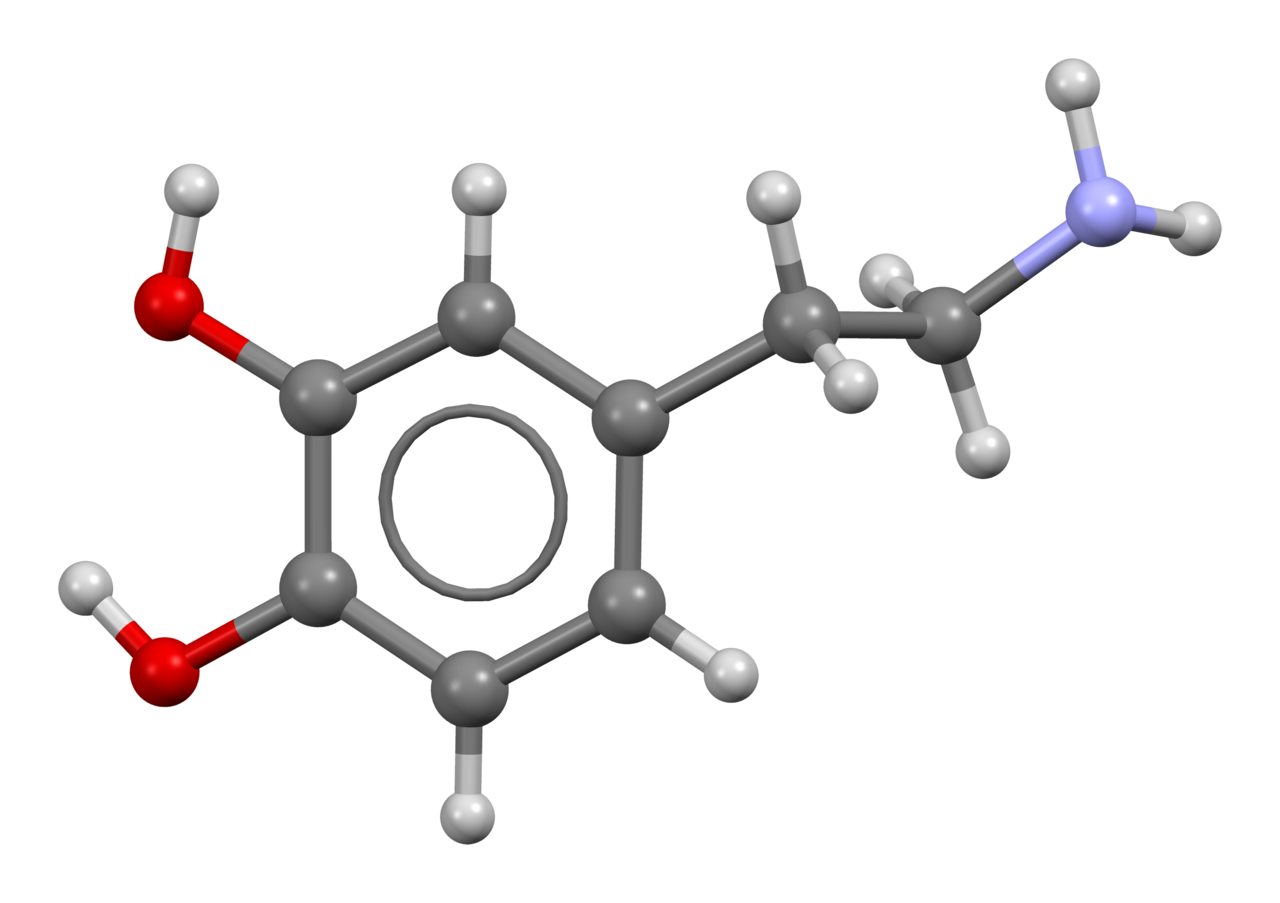
Dopamine is a neurotransmitter that plays a crucial role in motivation, pleasure, and reward processing in the brain. First discovered in 1957 by Arvid…
Contents
- 🧬 Introduction to Dopamine
- 🔬 The Chemistry of Dopamine
- 🧠 Dopamine in the Brain
- 💡 The Role of Dopamine in Motivation
- 🏃♂️ Dopamine and Motor Control
- 🤝 Dopamine Pathways and Cell Groups
- 🌿 Dopamine in Plants and Animals
- 📊 The Dopamine System: A Neuromodulatory Network
- 📈 The Impact of Dopamine on Reward-Motivated Behavior
- 🚭 The Relationship Between Dopamine and Addiction
- 👥 Dopamine Research and Key Findings
- 💭 The Future of Dopamine Research
- Frequently Asked Questions
- Related Topics
Overview
Dopamine is a neurotransmitter that plays a crucial role in motivation, pleasure, and reward processing in the brain. First discovered in 1957 by Arvid Carlsson, dopamine has been extensively studied for its involvement in various neurological and psychiatric disorders, including Parkinson's disease, schizophrenia, and addiction. With a vibe score of 80, dopamine has become a cultural phenomenon, symbolizing the pursuit of pleasure and happiness. However, its overemphasis has also led to controversy, with some arguing that it oversimplifies the complexities of human behavior. As research continues to uncover the intricacies of dopamine's functions, it is clear that this molecule will remain a central figure in the ongoing conversation about the brain and behavior. With influence flows tracing back to key figures like Carlsson and Solomon Snyder, dopamine's impact on modern neuroscience is undeniable, and its future implications for fields like psychology and artificial intelligence are vast.
🧬 Introduction to Dopamine
Dopamine is a complex molecule that plays a crucial role in various cellular processes. As a [[neurotransmitter|neurotransmitter]], dopamine is involved in sending signals to other nerve cells, and its dysregulation has been implicated in several neurological disorders, including [[parkinsons-disease|Parkinson's disease]] and [[schizophrenia|schizophrenia]]. The study of dopamine is a fascinating field that has garnered significant attention in recent years, with researchers exploring its role in [[motivation|motivation]] and [[reward-processing|reward processing]]. To understand the significance of dopamine, it is essential to delve into its chemistry and functions in the brain. Dopamine is an organic chemical that belongs to the [[catecholamine|catecholamine]] and [[phenethylamine|phenethylamine]] families, and its synthesis involves the removal of a carboxyl group from a molecule of its precursor chemical, [[L-DOPA|L-DOPA]].
🔬 The Chemistry of Dopamine
The chemistry of dopamine is a vital aspect of its function in the brain. As an [[amine|amine]] synthesized from [[L-DOPA|L-DOPA]], dopamine is involved in various cellular processes, including the regulation of [[hormone|hormone]] release and [[motor-control|motor control]]. The brain includes several distinct dopamine pathways, one of which plays a major role in the motivational component of [[reward-motivated-behavior|reward-motivated behavior]]. The anticipation of most types of rewards increases the level of dopamine in the brain, and many addictive drugs increase dopamine release or block its reuptake into neurons following release. This complex interplay between dopamine and reward processing has significant implications for our understanding of [[addiction|addiction]] and [[motivation|motivation]]. Researchers have made significant progress in understanding the chemistry of dopamine, and studies have shown that dopamine is also synthesized in [[plants|plants]] and most [[animals|animals]].
🧠 Dopamine in the Brain
In the brain, dopamine functions as a [[neurotransmitter|neurotransmitter]], releasing signals to other nerve cells and playing a crucial role in various cognitive processes. The brain includes several distinct dopamine pathways, each with its unique function and characteristics. One of the most well-studied dopamine pathways is the [[mesolimbic-pathway|mesolimbic pathway]], which is involved in the motivational component of [[reward-motivated-behavior|reward-motivated behavior]]. This pathway is critical for the regulation of [[motivation|motivation]] and [[pleasure|pleasure]], and its dysregulation has been implicated in several neurological disorders, including [[addiction|addiction]] and [[schizophrenia|schizophrenia]]. Researchers have made significant progress in understanding the role of dopamine in the brain, and studies have shown that dopamine is also involved in [[motor-control|motor control]] and the regulation of [[hormone|hormone]] release.
💡 The Role of Dopamine in Motivation
The role of dopamine in motivation is a complex and multifaceted topic. As a [[neurotransmitter|neurotransmitter]], dopamine is involved in sending signals to other nerve cells, and its release is often associated with [[pleasure|pleasure]] and [[reward|reward]]. The anticipation of most types of rewards increases the level of dopamine in the brain, and many addictive drugs increase dopamine release or block its reuptake into neurons following release. This complex interplay between dopamine and reward processing has significant implications for our understanding of [[addiction|addiction]] and [[motivation|motivation]]. Researchers have made significant progress in understanding the role of dopamine in motivation, and studies have shown that dopamine is also involved in the regulation of [[motor-control|motor control]] and the release of various [[hormone|hormones]]. The study of dopamine and motivation is a fascinating field that has garnered significant attention in recent years, with researchers exploring the complex relationships between [[dopamine|dopamine]], [[reward-processing|reward processing]], and [[motivation|motivation]].
🏃♂️ Dopamine and Motor Control
Dopamine is also involved in motor control, and its dysregulation has been implicated in several neurological disorders, including [[parkinsons-disease|Parkinson's disease]]. The brain includes several distinct dopamine pathways, each with its unique function and characteristics. One of the most well-studied dopamine pathways is the [[nigrostriatal-pathway|nigrostriatal pathway]], which is involved in the regulation of [[motor-control|motor control]]. This pathway is critical for the regulation of movement and coordination, and its dysregulation has been implicated in several neurological disorders, including [[parkinsons-disease|Parkinson's disease]] and [[huntingtons-disease|Huntington's disease]]. Researchers have made significant progress in understanding the role of dopamine in motor control, and studies have shown that dopamine is also involved in the regulation of [[hormone|hormone]] release and [[reward-processing|reward processing]].
🤝 Dopamine Pathways and Cell Groups
The dopamine pathways and cell groups form a dopamine system that is neuromodulatory. This system is critical for the regulation of various cognitive processes, including [[motivation|motivation]], [[motor-control|motor control]], and [[reward-processing|reward processing]]. The brain includes several distinct dopamine pathways, each with its unique function and characteristics. One of the most well-studied dopamine pathways is the [[mesolimbic-pathway|mesolimbic pathway]], which is involved in the motivational component of [[reward-motivated-behavior|reward-motivated behavior]]. This pathway is critical for the regulation of [[motivation|motivation]] and [[pleasure|pleasure]], and its dysregulation has been implicated in several neurological disorders, including [[addiction|addiction]] and [[schizophrenia|schizophrenia]]. Researchers have made significant progress in understanding the dopamine system, and studies have shown that dopamine is also involved in the regulation of [[hormone|hormone]] release and [[motor-control|motor control]].
🌿 Dopamine in Plants and Animals
Dopamine is not unique to humans and is also synthesized in [[plants|plants]] and most [[animals|animals]]. The study of dopamine in non-human species has provided valuable insights into its function and regulation. Researchers have made significant progress in understanding the role of dopamine in non-human species, and studies have shown that dopamine is involved in various cognitive processes, including [[motivation|motivation]], [[motor-control|motor control]], and [[reward-processing|reward processing]]. The study of dopamine in non-human species has also provided valuable insights into the evolution of dopamine and its role in various biological processes. The comparison of dopamine systems across species has significant implications for our understanding of [[dopamine|dopamine]] and its role in various cognitive processes.
📊 The Dopamine System: A Neuromodulatory Network
The dopamine system is a complex network of neurons and pathways that is critical for the regulation of various cognitive processes. The brain includes several distinct dopamine pathways, each with its unique function and characteristics. One of the most well-studied dopamine pathways is the [[mesolimbic-pathway|mesolimbic pathway]], which is involved in the motivational component of [[reward-motivated-behavior|reward-motivated behavior]]. This pathway is critical for the regulation of [[motivation|motivation]] and [[pleasure|pleasure]], and its dysregulation has been implicated in several neurological disorders, including [[addiction|addiction]] and [[schizophrenia|schizophrenia]]. Researchers have made significant progress in understanding the dopamine system, and studies have shown that dopamine is also involved in the regulation of [[hormone|hormone]] release and [[motor-control|motor control]].
📈 The Impact of Dopamine on Reward-Motivated Behavior
The impact of dopamine on reward-motivated behavior is a complex and multifaceted topic. As a [[neurotransmitter|neurotransmitter]], dopamine is involved in sending signals to other nerve cells, and its release is often associated with [[pleasure|pleasure]] and [[reward|reward]]. The anticipation of most types of rewards increases the level of dopamine in the brain, and many addictive drugs increase dopamine release or block its reuptake into neurons following release. This complex interplay between dopamine and reward processing has significant implications for our understanding of [[addiction|addiction]] and [[motivation|motivation]]. Researchers have made significant progress in understanding the role of dopamine in reward-motivated behavior, and studies have shown that dopamine is also involved in the regulation of [[motor-control|motor control]] and the release of various [[hormone|hormones]].
🚭 The Relationship Between Dopamine and Addiction
The relationship between dopamine and addiction is a complex and multifaceted topic. As a [[neurotransmitter|neurotransmitter]], dopamine is involved in sending signals to other nerve cells, and its release is often associated with [[pleasure|pleasure]] and [[reward|reward]]. The anticipation of most types of rewards increases the level of dopamine in the brain, and many addictive drugs increase dopamine release or block its reuptake into neurons following release. This complex interplay between dopamine and reward processing has significant implications for our understanding of [[addiction|addiction]] and [[motivation|motivation]]. Researchers have made significant progress in understanding the role of dopamine in addiction, and studies have shown that dopamine is also involved in the regulation of [[motor-control|motor control]] and the release of various [[hormone|hormones]].
👥 Dopamine Research and Key Findings
Dopamine research has made significant progress in recent years, with researchers exploring the complex relationships between [[dopamine|dopamine]], [[reward-processing|reward processing]], and [[motivation|motivation]]. The study of dopamine has provided valuable insights into the neural mechanisms underlying various cognitive processes, including [[motivation|motivation]], [[motor-control|motor control]], and [[reward-processing|reward processing]]. Researchers have made significant progress in understanding the role of dopamine in various neurological disorders, including [[addiction|addiction]], [[schizophrenia|schizophrenia]], and [[parkinsons-disease|Parkinson's disease]]. The study of dopamine has also provided valuable insights into the development of new treatments for these disorders, and researchers are currently exploring the potential of dopamine-based therapies for the treatment of various neurological disorders.
💭 The Future of Dopamine Research
The future of dopamine research is a promising and exciting field, with researchers exploring the complex relationships between [[dopamine|dopamine]], [[reward-processing|reward processing]], and [[motivation|motivation]]. The study of dopamine has provided valuable insights into the neural mechanisms underlying various cognitive processes, including [[motivation|motivation]], [[motor-control|motor control]], and [[reward-processing|reward processing]]. Researchers are currently exploring the potential of dopamine-based therapies for the treatment of various neurological disorders, including [[addiction|addiction]], [[schizophrenia|schizophrenia]], and [[parkinsons-disease|Parkinson's disease]]. The development of new treatments for these disorders has significant implications for public health, and researchers are working to develop more effective and targeted therapies for the treatment of dopamine-related disorders.
Key Facts
- Year
- 1957
- Origin
- Sweden
- Category
- Neuroscience
- Type
- Neurotransmitter
Frequently Asked Questions
What is dopamine?
Dopamine is a [[neurotransmitter|neurotransmitter]] that plays a crucial role in various cognitive processes, including [[motivation|motivation]], [[motor-control|motor control]], and [[reward-processing|reward processing]]. Dopamine is involved in sending signals to other nerve cells, and its release is often associated with [[pleasure|pleasure]] and [[reward|reward]].
What is the role of dopamine in motivation?
Dopamine plays a crucial role in [[motivation|motivation]], and its release is often associated with [[pleasure|pleasure]] and [[reward|reward]]. The anticipation of most types of rewards increases the level of dopamine in the brain, and many addictive drugs increase dopamine release or block its reuptake into neurons following release.
Is dopamine involved in addiction?
Yes, dopamine is involved in [[addiction|addiction]]. The release of dopamine is often associated with [[pleasure|pleasure]] and [[reward|reward]], and many addictive drugs increase dopamine release or block its reuptake into neurons following release. This complex interplay between dopamine and reward processing has significant implications for our understanding of [[addiction|addiction]] and [[motivation|motivation]].
What are the potential treatments for dopamine-related disorders?
Researchers are currently exploring the potential of dopamine-based therapies for the treatment of various neurological disorders, including [[addiction|addiction]], [[schizophrenia|schizophrenia]], and [[parkinsons-disease|Parkinson's disease]]. The development of new treatments for these disorders has significant implications for public health, and researchers are working to develop more effective and targeted therapies for the treatment of dopamine-related disorders.
What is the future of dopamine research?
The future of dopamine research is a promising and exciting field, with researchers exploring the complex relationships between [[dopamine|dopamine]], [[reward-processing|reward processing]], and [[motivation|motivation]]. The study of dopamine has provided valuable insights into the neural mechanisms underlying various cognitive processes, including [[motivation|motivation]], [[motor-control|motor control]], and [[reward-processing|reward processing]].