Deadlift | Vibepedia
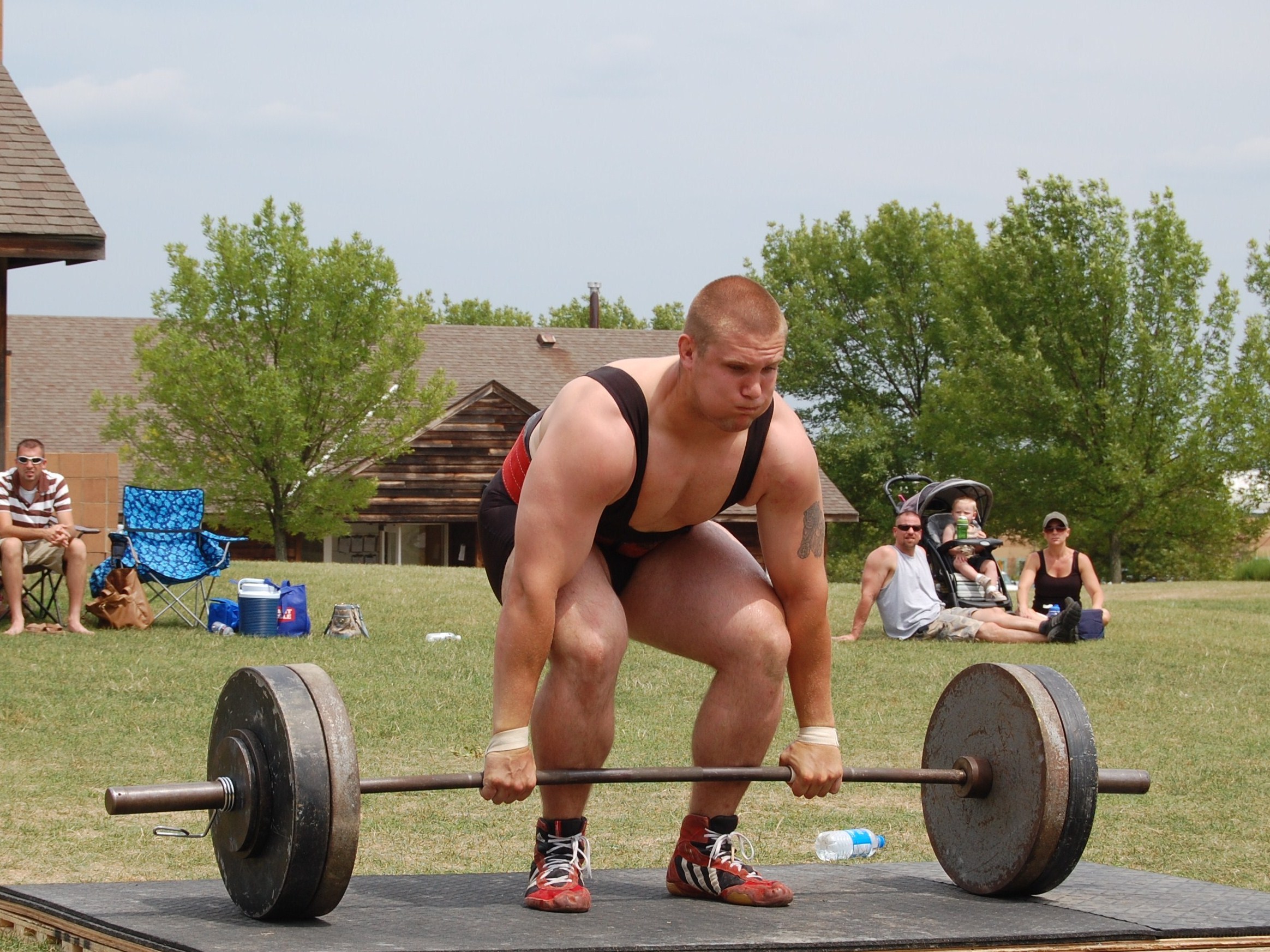
The deadlift is a foundational strength exercise where a loaded barbell is lifted from the ground to hip height and then lowered back down. It's a compound…
Contents
Overview
The deadlift is a foundational strength exercise where a loaded barbell is lifted from the ground to hip height and then lowered back down. It's a compound movement that engages a vast array of muscles, including the hamstrings, glutes, quadriceps, traps, and erector spinae, making it a cornerstone of [[powerlifting]] and [[strongman]] competitions. Variations like the [[conventional-deadlift|conventional]] and [[sumo-deadlift|sumo]] stances cater to different biomechanics and leverage points. The sheer weight lifted in competitive deadlifts underscores its status as a supreme test of human strength. Beyond competition, the deadlift is a critical tool for building overall physical robustness, improving posture, and enhancing athletic performance across numerous disciplines.
🎵 Origins & History
The deadlift, in its most basic form of lifting heavy objects from the ground, is as old as humanity itself, a primal act of survival and labor. Early strongmen like [[lou-ziegler|Louis Cyr]] and [[eugen-sandow|Eugen Sandow]] performed feats of strength involving lifting immense weights from the floor, though often with specialized equipment or circus-style presentations. The evolution of training methodologies and equipment, including specialized [[deadlift-suits|deadlift suits]] and [[lifting-straps|lifting straps]], has continually pushed the boundaries of what's possible.
⚙️ How It Works
The deadlift is a [[weight-training-exercise|weight training exercise]] executed by lifting a loaded barbell from the floor until the lifter is standing upright, with the hips and knees locked out and the shoulders back. The lifter grips the barbell with hands placed outside the shins (conventional stance) or inside the thighs (sumo stance). The lift requires a coordinated effort from the posterior chain ([[hamstring-muscles|hamstrings]], [[gluteal-muscles|glutes]], [[erector-spinae-muscles|lower back]]), the [[quadriceps-muscles|quadriceps]], and the upper back ([[trapezius-muscles|traps]] and [[latissimus-dorsi-muscles|lats]]) to overcome gravity. Proper form emphasizes maintaining a neutral spine throughout the movement to prevent injury, with the bar staying close to the body. The descent is controlled, returning the weight to the floor without dropping it.
📊 Key Facts & Numbers
The sheer scale of the deadlift is staggering. The deadlift is also a key component in [[strongman-competitions|strongman]] events, where variations like the [[car-deadlift|car deadlift]] can involve lifting weights exceeding 500 kg (1,100 lbs) using specialized equipment. The average recreational lifter might aim for deadlifts between 1.5 to 2 times their bodyweight, a significant feat in itself.
👥 Key People & Organizations
Key figures in the development and popularization of the deadlift include early strongmen like [[hercules-ayres|Arthur Saxon]] and [[charles-atlas|Charles Atlas]], who demonstrated incredible feats of strength. In modern [[powerlifting]], individuals like [[eddie-hall|Eddie Hall]] (first to deadlift 500 kg in competition) and [[hafthor-bjornsson|Hafþór Júlíus Björnsson]] are synonymous with the lift's progression. Organizations such as the [[international-powerlifting-federation|IPF]] and the [[world-s-strongest-man|World's Strongest Man]] competitions have been instrumental in standardizing rules and promoting the deadlift globally. Coaches like [[louie-simmons|Louie Simmons]] of [[westside-barbell|Westside Barbell]] have also significantly influenced training methodologies for the deadlift.
🌍 Cultural Impact & Influence
The deadlift's cultural resonance extends far beyond the gym. It's often portrayed in media as the ultimate test of brute strength, a symbol of raw power and determination. Its inclusion in [[powerlifting]] and [[strongman]] has cemented its status as a spectator sport, drawing large audiences to major events. The visual of a lifter conquering an immense weight from the floor is inherently dramatic. Furthermore, the deadlift's emphasis on functional strength has influenced fitness trends, with many recreational athletes incorporating it into their routines for overall physical development, often sharing their progress on platforms like [[instagram-com|Instagram]] and [[youtube-com|YouTube]].
⚡ Current State & Latest Developments
The deadlift continues to evolve, with athletes constantly pushing the boundaries of human strength. Innovations in [[lifting-gear|lifting gear]], such as advanced [[deadlift-suits|deadlift suits]] and [[weightlifting-belts|weightlifting belts]], allow for greater loads to be lifted safely. The development of specialized [[trap-bar-deadlift|trap bar]] variations and [[kettlebell-exercises|kettlebell]] deadlifts has broadened its accessibility. Online coaching and content creation on platforms like [[youtube-com|YouTube]] have democratized knowledge about deadlift technique and programming, reaching a global audience. The ongoing debate about the legitimacy of certain equipment in competition also remains a dynamic aspect of the sport.
🤔 Controversies & Debates
One of the most persistent controversies surrounding the deadlift revolves around the use of specialized equipment, particularly [[deadlift-suits|deadlift suits]] and [[lifting-straps|lifting straps]]. Critics argue that these aids detract from the 'raw' nature of the lift, allowing lifters to move weights that would be impossible otherwise, thus diluting the essence of pure strength. Conversely, proponents contend that these are legitimate tools that allow for greater training loads, injury prevention, and the pushing of human performance limits, akin to advancements in other sports. The distinction between conventional and sumo stances is another debate.
🔮 Future Outlook & Predictions
The future of the deadlift appears to be one of continued progression and diversification. We can expect to see new world records being set as training science and recovery methods advance. The integration of [[wearable-technology|wearable technology]] for real-time form analysis and biomechanical feedback could become more prevalent, aiding both elite athletes and beginners. The deadlift's role in functional fitness and rehabilitation is likely to expand, with more emphasis placed on its therapeutic benefits for spinal health and core strength when performed correctly. The potential for new variations and competition formats also remains high.
💡 Practical Applications
The deadlift is a cornerstone exercise with broad practical applications. In [[strength-training|strength training]] and [[powerlifting]], it's a primary measure of overall strength and a key component for building muscle mass. For [[strongman-competitors|strongman competitors]], it's a fundamental test of raw power. Athletes in sports like [[football-sport|football]], [[rugby-sport|rugby]], and [[track-and-field-athletics|track and field]] use the deadlift to develop explosive power and posterior chain strength crucial for sprinting, jumping, and tackling. It's also utilized in physical therapy and rehabilitation settings to strengthen the [[core-muscles|core]] and improve [[posture-and-body-mechanics|posture]], provided it's performed with proper technique under professional guidance. Even in everyday life, the deadlift's mechanics mimic the fundamental movement of lifting heavy objects safely.
Key Facts
- Category
- movements
- Type
- concept