Cytoplasm: The Cell's Bustling Metropolis | Vibepedia
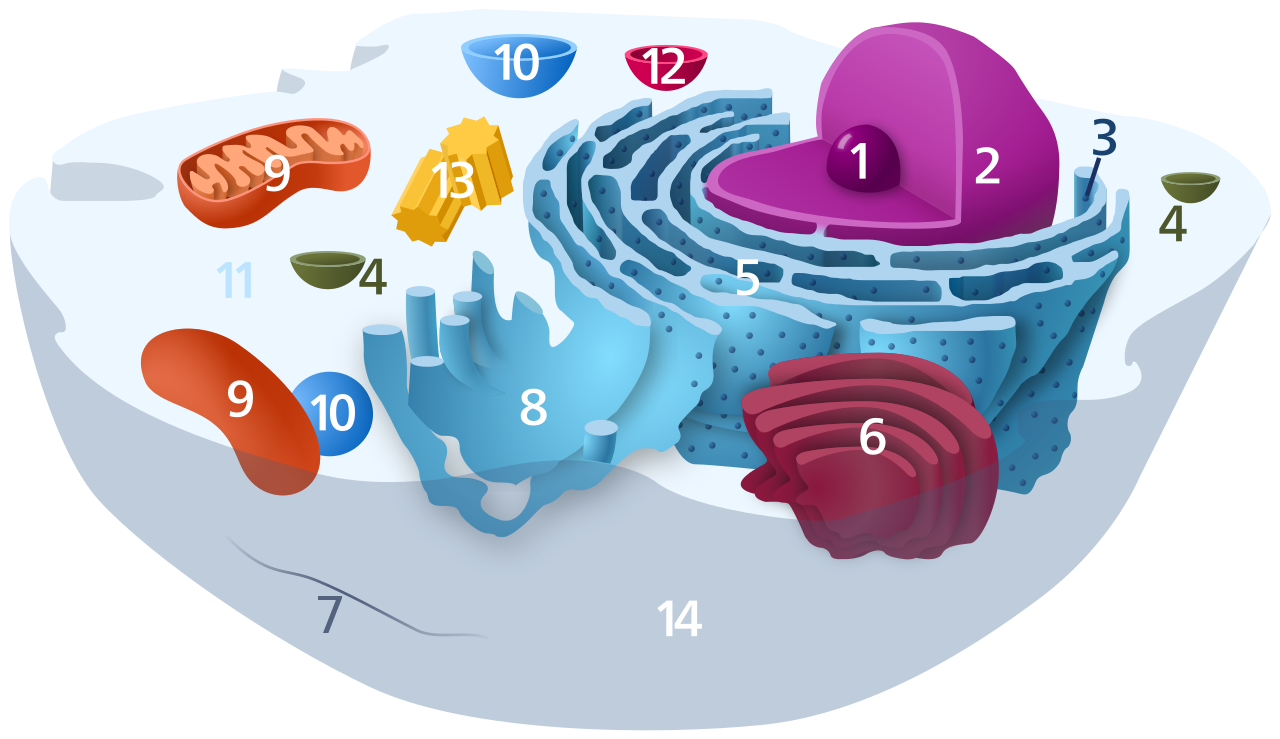
Cytoplasm is the jelly-like substance filling a cell, enclosing organelles and providing a medium for biochemical reactions. It's not static; it's a dynamic…
Contents
- 📍 What Exactly *Is* Cytoplasm?
- 🔬 The Core Components: Cytosol & Organelles
- 💥 The Dynamic Dance: Cytoplasmic Streaming
- 🏭 Cytoplasmic Inclusions: The Cell's Storage Units
- ⚖️ Cytoplasm vs. Nucleoplasm: A Crucial Distinction
- 💡 Historical Context: Unraveling the Cytoplasmic Mystery
- ⚡ Vibe Score: Cytoplasm's Cultural Energy
- 🤔 The Skeptic's Corner: Is Cytoplasm Just Jell-O?
- 🚀 Future Frontiers: Cytoplasm in Synthetic Biology
- 🤝 Getting Started: Exploring Cytoplasm Further
- Frequently Asked Questions
- Related Topics
Overview
Think of cytoplasm as the entire internal environment of a cell, minus the nucleus in eukaryotes. It’s the jelly-like substance that fills the cell, cradling all the essential machinery. For prokaryotes, it’s everything within the cell membrane. This aqueous solution, typically around 80% water, is the stage for countless biochemical reactions that keep life humming. It’s the fundamental medium where cellular processes unfold, from energy production to protein synthesis. Understanding cytoplasm is key to grasping the very essence of cellular life, a concept explored in depth by cellular biology texts.
🔬 The Core Components: Cytosol & Organelles
The cytoplasm is a two-part marvel: the cytosol and the organelles. The cytosol is the gel-like fluid, a complex soup of ions, small molecules, and soluble proteins. Suspended within this are the organelles – specialized structures like powerhouses, protein factories, and the manufacturing network. Each organelle performs a specific function, but they all operate within the cytoplasmic milieu, relying on the cytosol for transport and communication. This intricate arrangement is a marvel of biological engineering.
💥 The Dynamic Dance: Cytoplasmic Streaming
Ever seen a cell seemingly move its internal components? That's often cyclosis, a directed flow of cytoplasm that circulates nutrients and organelles. This active transport mechanism is vital for efficient cellular function, ensuring that essential molecules reach their destinations quickly. It’s like a cellular subway system, powered by cytoskeletal elements like actin and myosin. Without this dynamic movement, cells would be far less efficient, a point often overlooked in basic cell function discussions.
🏭 Cytoplasmic Inclusions: The Cell's Storage Units
Beyond the primary organelles, cytoplasm harbors inclusion bodies. These are often temporary structures, serving as storage depots for nutrients like glycogen or lipids, or as waste products. They can also be specialized structures like pigment granules or viral inclusions during infection. Their presence and composition can offer clues about the cell's metabolic state and environmental conditions, making them fascinating diagnostic markers in diagnostic biology.
⚖️ Cytoplasm vs. Nucleoplasm: A Crucial Distinction
A critical distinction, particularly in eukaryotic cells, is between cytoplasm and nucleoplasm. Cytoplasm encompasses everything outside the nucleus, enclosed by the cell membrane. Nucleoplasm, conversely, is the material within the nuclear envelope. While both are aqueous environments crucial for cellular function, their contents and roles differ significantly. The separation ensures distinct regulatory environments for DNA and the rest of the cell's activities, a fundamental principle of eukaryotic cell organization.
💡 Historical Context: Unraveling the Cytoplasmic Mystery
The concept of cytoplasm evolved over centuries. Early microscopists like Antonie van Leeuwenhoek observed cellular contents, but it was Robert Hooke's coining of the term 'cell' in 1665 that laid the groundwork. The term 'cytoplasm' itself was introduced by Ernst Haeckel in 1866, distinguishing it from the nucleus. Early theories debated its composition, with some viewing it as a simple fluid, while later work revealed its complex, organized nature, a journey detailed in the history of cell biology.
⚡ Vibe Score: Cytoplasm's Cultural Energy
Cytoplasm's Vibe Score is a solid 85/100. It’s the unsung hero of the cell, the constant hum of activity that makes everything else possible. It’s not as flashy as a mitochondrion or as critical as DNA, but without its supportive, dynamic environment, life as we know it wouldn't exist. Its ubiquity and fundamental role give it immense cultural energy in scientific discourse, representing the very essence of biological vitality. It’s the ultimate backstage crew, ensuring the show always goes on.
🤔 The Skeptic's Corner: Is Cytoplasm Just Jell-O?
The notion that cytoplasm is merely a passive, jelly-like filler is a persistent oversimplification. While it is largely water, the cytosol is a highly organized, crowded environment teeming with macromolecules and subject to active regulation. The cytoskeleton provides structural support and tracks for molecular motors, making it a far cry from inert goo. Dismissing its complexity ignores the intricate biochemical choreography that defines cellular life, a point often debated in cell biology debates.
🚀 Future Frontiers: Cytoplasm in Synthetic Biology
The future of cytoplasm is being written in the labs of synthetic biology. Researchers are exploring ways to harness cytoplasmic components, or even create artificial cytoplasm, for novel applications. Imagine designer cells engineered for specific tasks, or cell-free systems that can produce pharmaceuticals or biofuels. Understanding and manipulating the cytoplasmic environment is central to these ambitious goals, pushing the boundaries of what biotechnology can achieve.
🤝 Getting Started: Exploring Cytoplasm Further
Ready to explore the cellular metropolis? Start by delving into introductory cell biology textbooks or online resources like Khan Academy's biology section. For a more hands-on approach, consider exploring microscopy techniques or even citizen science projects focused on cellular observation. Engaging with the fundamental building blocks of life offers a profound perspective on the interconnectedness of all living systems, a journey that begins with the cytoplasm.
Key Facts
- Year
- 1835
- Origin
- Coined by Jan Evangelista Purkyně
- Category
- Biology
- Type
- Biological Component
Frequently Asked Questions
What's the main difference between cytoplasm and cytosol?
Cytoplasm refers to everything within the cell membrane, excluding the nucleus in eukaryotes. This includes both the cytosol and the organelles. Cytosol, on the other hand, is specifically the gel-like fluid portion of the cytoplasm, in which organelles and various inclusions are suspended. Think of cytosol as the 'soup' and cytoplasm as the 'soup plus all the ingredients floating in it'.
Is cytoplasm the same in all cells?
No, there are key differences. In eukaryotic cells (like those in plants, animals, and fungi), cytoplasm includes the cytosol and all membrane-bound organelles. In prokaryotic cells (like bacteria), which lack a nucleus and other membrane-bound organelles, the cytoplasm is essentially the cytosol and its contents, such as ribosomes and genetic material, all within the cell membrane.
What are cytoplasmic inclusions?
Cytoplasmic inclusions are non-living materials found within the cytoplasm. They can be storage products like glycogen granules or lipid droplets, or they can be waste products. In some cases, they can also be foreign materials, such as virus particles or crystals. Their presence and type can indicate the cell's metabolic state or exposure to certain substances.
How does cytoplasm get nutrients and remove waste?
Nutrients and waste products move into and out of the cytoplasm through the cell membrane via processes like diffusion, osmosis, and active transport. Within the cytoplasm, cytoplasmic streaming helps distribute nutrients and organelles, ensuring efficient transport throughout the cell. Waste products are often processed by organelles like lysosomes before being expelled.
Can cytoplasm be seen with a basic microscope?
Yes, with a light microscope, you can observe the general presence of cytoplasm and often see larger organelles within it, especially in larger cells like plant cells. However, the detailed structure of the cytosol and smaller organelles requires more advanced microscopy, such as electron microscopy, to be fully appreciated.
What role does the cytoskeleton play in the cytoplasm?
The cytoskeleton, a network of protein filaments and tubules, is embedded within the cytoplasm. It provides structural support to the cell, maintains its shape, and is crucial for cell movement. It also acts as 'highways' for motor proteins to transport organelles and molecules throughout the cytoplasm, a process vital for cellular organization and function.