Computer-Aided Engineering | Vibepedia
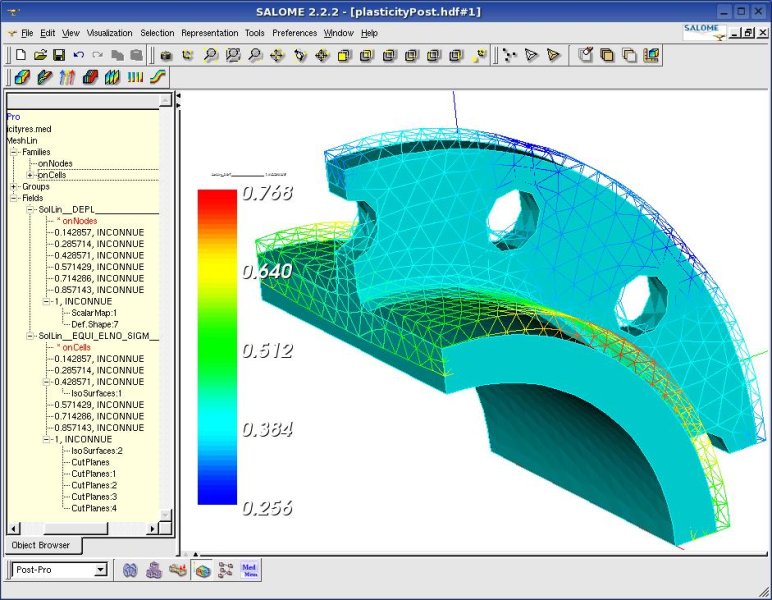
Computer-Aided Engineering (CAE) represents the sophisticated application of computational tools to enhance and automate engineering analysis tasks. It…
Contents
Overview
The genesis of Computer-Aided Engineering (CAE) can be traced back to the mid-20th century, spurred by the advent of mainframe computers and the burgeoning field of numerical analysis. Early pioneers like [[warren-seymour-meissner|Warren Meissner]] and [[richard-henry-gallagher|Richard H. Gallagher]] were instrumental in developing foundational techniques for structural analysis, notably the [[finite-element-method|Finite Element Method (FEM)]]. Gallagher, in particular, is often credited with developing one of the earliest general-purpose FEM codes, Nastran, in the late 1960s, initially for [[nasa|NASA]] applications. This marked a significant departure from purely empirical or physical testing, allowing engineers to model complex systems computationally. The subsequent decades saw the proliferation of specialized CAE software, driven by increasing computational power and the demand for more sophisticated simulations in industries like automotive and aerospace, with companies like [[ansys|Ansys]] and [[dassault-systèmes|Dassault Systèmes]] emerging as key players.
⚙️ How It Works
At its core, CAE software employs numerical methods to solve complex engineering problems that are difficult or impossible to solve analytically. The most prevalent technique is the [[finite-element-method|Finite Element Method (FEM)]], where a complex physical model is discretized into a mesh of smaller, simpler elements. Mathematical equations governing the physics of the problem (e.g., stress, strain, heat transfer, fluid flow) are then applied to each element. By solving these equations for all elements and their interconnections, the software can predict the overall behavior of the entire system under various conditions. Other methods, such as [[computational-fluid-dynamics|Computational Fluid Dynamics (CFD)]] and [[finite-difference-method|Finite Difference Methods]], are used for specific types of analysis, particularly in fluid mechanics and heat transfer. The output is typically visualized through graphical representations, allowing engineers to interpret results like stress concentrations, temperature distributions, or flow patterns.
📊 Key Facts & Numbers
The global CAE market is substantial and growing. The [[automotive-industry|automotive sector]] remains the largest end-user, accounting for over 30% of the market share, followed closely by aerospace and defense. Simulation software licenses can range from a few thousand dollars for basic tools to hundreds of thousands for high-end suites. It's estimated that over 80% of major product development cycles now incorporate some form of CAE, with complex simulations potentially requiring hundreds or even thousands of CPU hours on high-performance computing clusters.
👥 Key People & Organizations
Several individuals and organizations have been pivotal in the advancement of CAE. [[Richard-henry-gallagher|Richard H. Gallagher]] was a foundational figure in developing the [[finite-element-method|Finite Element Method]]. [[Oden-j-tinsley|J. Tinsley Oden]] also made significant contributions to FEM theory and its application. Key software vendors like [[ansys|Ansys]] and [[dassault-systèmes|Dassault Systèmes]], which acquired [[simulia|SIMULIA]] (formerly ABAQUS), have been at the forefront of CAE development for decades. [[Autodesk|Autodesk]], known for its [[autocad|AutoCAD]] software, also offers a suite of simulation tools. The [[national-advisory-committee-for-aeronautics|National Advisory Committee for Aeronautics (NACA)]] (a precursor to [[nasa|NASA]]) was an early adopter and driver of computational analysis techniques.
🌍 Cultural Impact & Influence
CAE has profoundly influenced product development culture, shifting the paradigm from iterative physical prototyping to predictive digital simulation. This has led to faster innovation cycles, reduced material waste, and the ability to explore a wider design space. The accessibility of simulation tools has democratized advanced engineering analysis, allowing smaller companies and even individual engineers to compete with larger corporations. Furthermore, CAE has enabled the creation of highly optimized and complex designs previously unimaginable, impacting everything from the aerodynamic efficiency of aircraft to the crashworthiness of vehicles and the performance of medical implants. The visualization capabilities of CAE software have also become a powerful communication tool, helping engineers explain complex technical concepts to non-technical stakeholders.
⚡ Current State & Latest Developments
The current state of CAE is characterized by increasing integration with [[artificial-intelligence|Artificial Intelligence (AI)]] and [[machine-learning|Machine Learning (ML)]]. AI is being used to accelerate simulation times, automate meshing processes, and even generate optimal designs directly through generative design algorithms. Cloud-based CAE platforms are gaining traction, offering scalable computing resources and collaborative environments, making high-end simulations more accessible. Furthermore, there's a growing trend towards multi-physics simulations, where different physical phenomena (e.g., structural, thermal, fluid) are analyzed concurrently within a single model. The development of digital twins, which are virtual replicas of physical assets, heavily relies on continuous data streams feeding into sophisticated CAE models for real-time monitoring and prediction.
🤔 Controversies & Debates
One of the primary controversies surrounding CAE is the potential for over-reliance on simulation, leading to a neglect of physical testing and real-world validation. Critics argue that simulation models are only as good as the assumptions and input data used, and that subtle inaccuracies can lead to significant design flaws. The complexity of setting up and interpreting CAE simulations also raises concerns about the 'black box' nature of some software, where users may not fully understand the underlying physics or numerical methods. Furthermore, the significant computational resources required for complex simulations can create an environmental footprint, though this is increasingly being offset by more efficient algorithms and hardware. Debates also arise regarding the accuracy and reliability of AI-driven simulation acceleration techniques.
🔮 Future Outlook & Predictions
The future of CAE is poised for further integration with AI, leading to highly autonomous design and optimization processes. Expect to see more 'simulation-driven design' where AI actively proposes and refines designs based on performance targets. The development of 'physics-informed neural networks' (PINNs) promises to blend the strengths of traditional numerical methods with the learning capabilities of neural networks, potentially leading to faster and more accurate simulations. The expansion of CAE into new domains, such as materials science and biological systems, is also anticipated. As computing power continues to grow, simulations will become more detailed, encompassing finer scales and more complex interactions, further blurring the lines between the digital and physical engineering worlds. The rise of quantum computing could also unlock entirely new simulation capabilities.
💡 Practical Applications
CAE finds ubiquitous application across virtually every engineering discipline. In the [[automotive-industry|automotive sector]], it's used for crashworthiness analysis, aerodynamic optimization, and powertrain thermal management. [[Aerospace-engineering|Aerospace engineers]] employ CAE for structural integrity analysis of aircraft components, aerodynamic simulations, and thermal analysis of engines. In the [[healthcare-industry|healthcare sector]], it's vital for designing medical devices, analyzing biomechanics (e.g., joint replacements, blood flow), and simulating drug delivery. Consumer electronics benefit from CAE for thermal management, structural integrity of casings, and electromagnetic compatibility testing. The [[energy-industry|energy sector]] uses it for designing turbines, simulating oil and gas flow, and analyzing structural integrity of offshore platforms. Even in civil engineering, CAE aids in analyzing the structural stability of bridges
Key Facts
- Category
- technology
- Type
- topic