Climate Scientists | Vibepedia
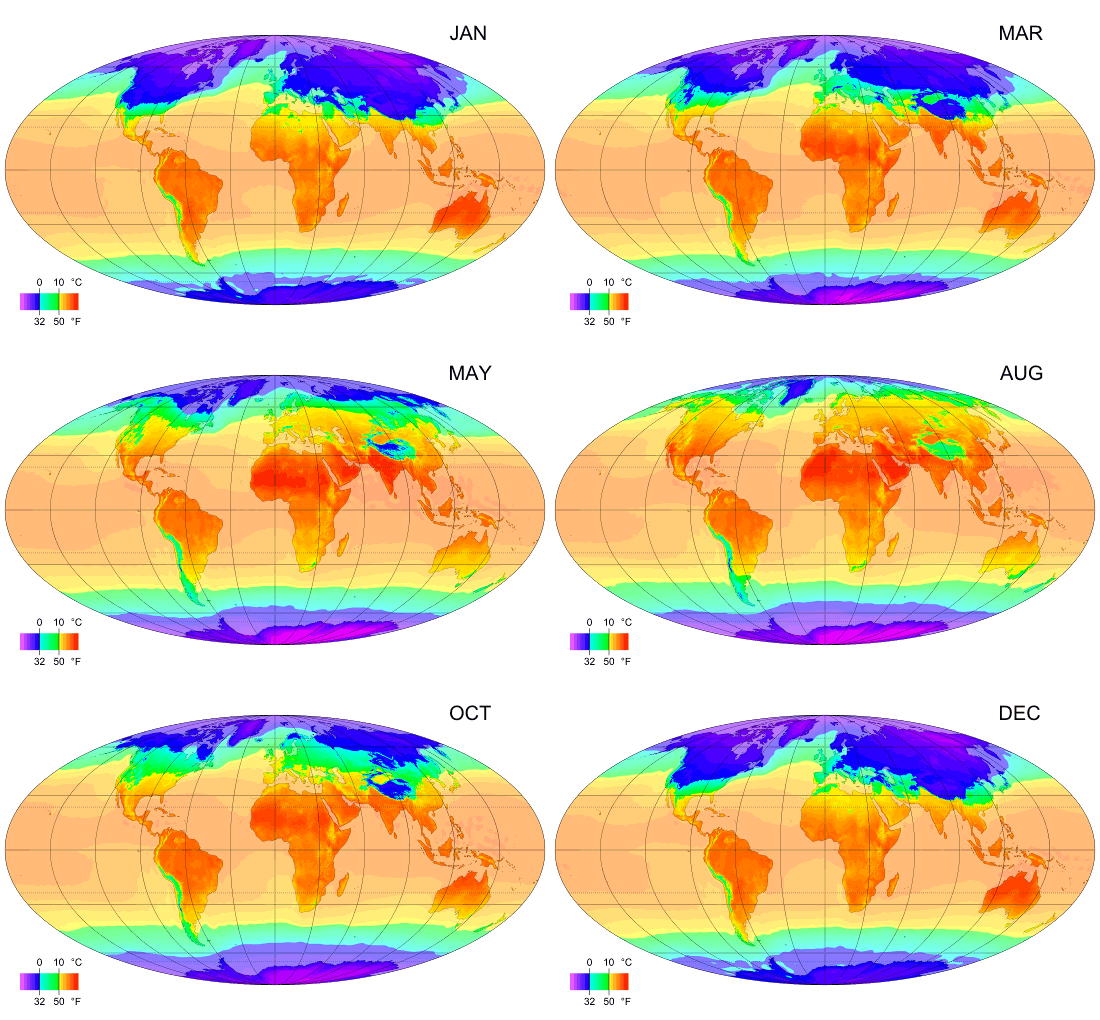
Climate scientists are researchers who investigate the Earth's climate system, including its dynamics, processes, and impact on the environment. They come…
Contents
- 🌎 Introduction to Climate Science
- 📊 Key Concepts and Theories
- 👥 Notable Climate Scientists
- 🌍 Climate Change Impacts and Mitigation
- 📈 Current Research and Trends
- 🤝 International Cooperation and Policy
- 📚 Resources and Further Reading
- 👀 Career Paths and Opportunities
- 💡 Innovations and Technologies
- 🌟 Future Directions and Challenges
- References
- Related Topics
Overview
Climate scientists are researchers who investigate the Earth's climate system, including its dynamics, processes, and impact on the environment. They come from various disciplines, such as meteorology, oceanography, geology, and ecology. Climate scientists use a combination of observations, computer models, and theoretical frameworks to understand the complex interactions within the climate system. Their work informs policy decisions, helps predict future climate changes, and identifies strategies for mitigating and adapting to climate change. The field of climate science is constantly evolving, with new discoveries and advancements in technology enabling more accurate predictions and a deeper understanding of the climate system. As the world grapples with the challenges of climate change, the work of climate scientists is more crucial than ever. The study of climate science has become a multidisciplinary field, incorporating insights from ecology, economics, and social sciences.
🌎 Introduction to Climate Science
The study of climate science has a rich history, dating back to the early 20th century. Since then, the field has evolved significantly, with major breakthroughs in our understanding of the climate system. Today, climate scientists use advanced computer models, satellite imagery, and field observations to study the complex interactions within the climate system. For instance, NASA's climate modeling initiatives have greatly improved our understanding of climate dynamics.
📊 Key Concepts and Theories
Climate scientists employ a range of techniques to study the climate system, including remote sensing, GIS, and climate modeling. These tools enable researchers to analyze large datasets, simulate future climate scenarios, and predict the impacts of climate change on various sectors. The work of climate scientists has significant implications for policy-making and decision-making at local, national, and international levels.
👥 Notable Climate Scientists
The climate science community is diverse and global, with researchers from various disciplines and regions contributing to the field. The study of climate science has become a multidisciplinary field, incorporating insights from ecology, economics, and social sciences.
🌍 Climate Change Impacts and Mitigation
Current research in climate science focuses on improving our understanding of the climate system, developing more accurate predictive models, and exploring innovative solutions. Some of the key areas of research include climate engineering, carbon capture and storage, and climate resilience. The field of climate science is constantly evolving, with new discoveries and advancements in technology enabling more accurate predictions.
📈 Current Research and Trends
International cooperation is essential for addressing the global challenge of climate change. Climate scientists are working closely with policymakers, industry leaders, and civil society to develop and implement effective climate strategies.
🤝 International Cooperation and Policy
For those interested in pursuing a career in climate science, there are various paths to explore. Climate scientists can work in academia, research institutions, government agencies, or private industry. Some of the key skills required for a career in climate science include data analysis, programming, and communication. The field of climate science offers a wide range of career opportunities, from research and development to policy and advocacy.
📚 Resources and Further Reading
The field of climate science is constantly evolving, with new technologies and innovations emerging regularly. Some of the key areas of innovation include renewable energy, energy storage, and carbon capture. The development of artificial intelligence and machine learning algorithms has greatly improved our ability to analyze large climate datasets and predict future climate scenarios.
👀 Career Paths and Opportunities
As the world continues to grapple with the challenges of climate change, the work of climate scientists will become increasingly important. The future of climate science holds much promise, with new discoveries and advancements in technology enabling more accurate predictions and a deeper understanding of the climate system.
Key Facts
- Year
- 2020
- Origin
- Global
- Category
- science
- Type
- concept