Boiling Point | Vibepedia
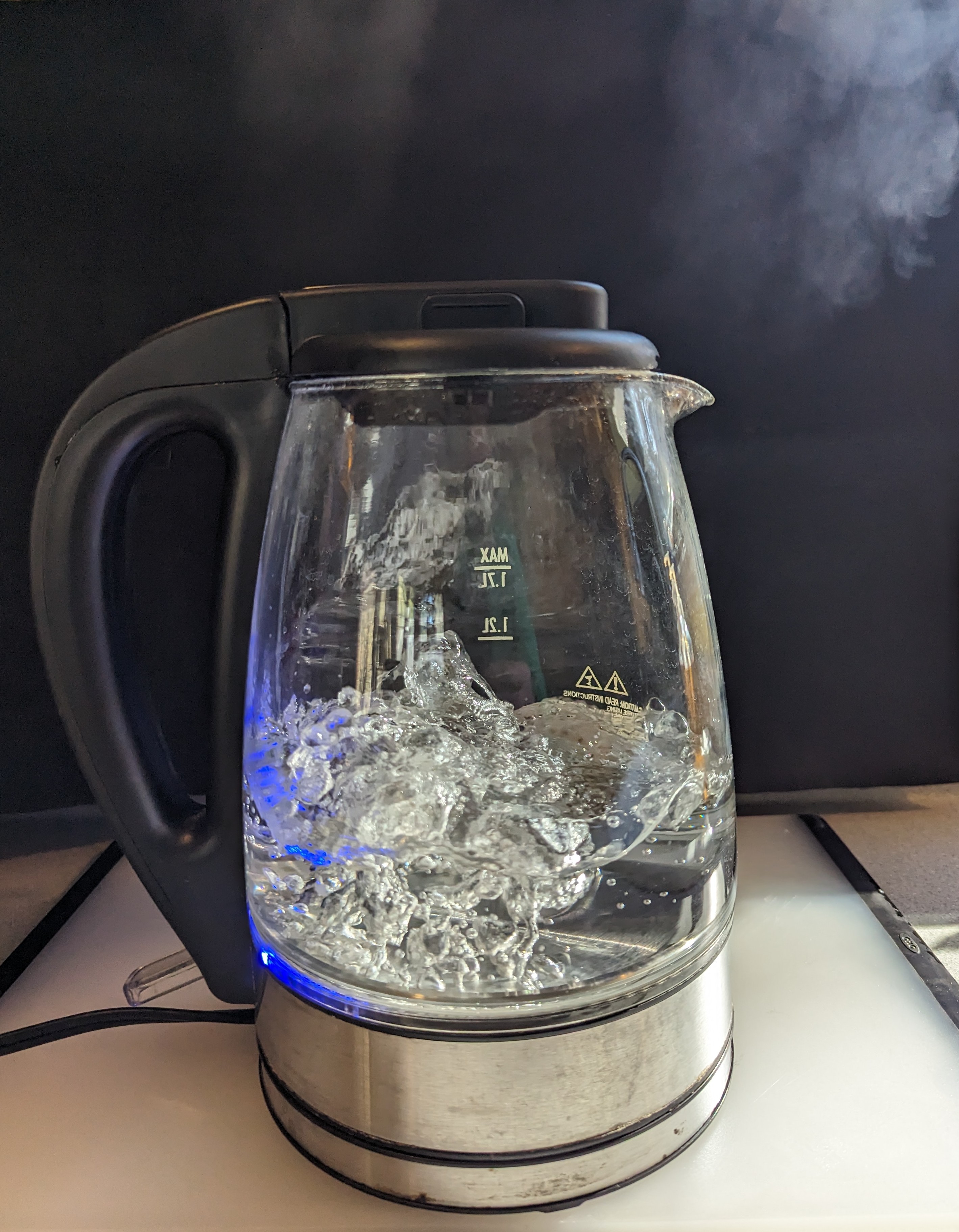
The boiling point marks a critical temperature, a fundamental thermodynamic property that is not static; it fluctuates dramatically with changes in ambient…
Contents
Overview
The concept of boiling, and by extension boiling point, has been observed and pondered since antiquity, though a rigorous scientific understanding emerged much later. Early alchemists and natural philosophers, like Aristotle in the 4th century BCE, described the transformation of water into steam, attributing it to elemental changes. The scientific investigation into the nature of heat and phase transitions gained momentum during the Scientific Revolution. In the 17th century, Robert Boyle's experiments with vacuums demonstrated the critical role of pressure in physical phenomena, laying groundwork for understanding boiling point variations. Later, Jacques Charles and Joseph Louis Gay-Lussac conducted extensive studies on gases, gas laws, and their relationship to temperature and pressure, further refining the understanding of phase changes. The formal definition of boiling point solidified with the development of thermodynamics in the 19th century, particularly through the work of Rudolf Clausius and J. Willard Gibbs.
⚙️ How It Works
At its core, boiling point is governed by the interplay between a liquid's internal vapor pressure and the external pressure exerted upon it. Every liquid possesses a characteristic vapor pressure that increases with temperature; as molecules gain kinetic energy, more escape the liquid phase to form vapor above the surface. When this internal vapor pressure becomes equal to the external pressure (typically atmospheric pressure), the liquid can transition into a gaseous state not just at the surface but throughout its bulk, forming bubbles of vapor. This temperature is the boiling point. Factors like impurities can also influence the boiling point; dissolved solutes generally elevate it, a phenomenon known as boiling-point elevation, due to solute molecules interfering with solvent evaporation. The specific molecular forces within a liquid, such as hydrogen bonding in water, also dictate how much energy is required to overcome these attractions and enter the gaseous phase, thus influencing its boiling point.
📊 Key Facts & Numbers
The normal boiling point of water, defined at standard atmospheric pressure (1 atm or 101.325 kPa), is 100°C (212°F). However, at the summit of Mount Everest (approximately 8,848 meters or 29,029 feet), the atmospheric pressure is only about 33.7 kPa, causing water to boil at a mere 71°C (160°F). Conversely, in a vacuum chamber simulating pressures far below 1 atm, water can boil even at room temperature. Ethanol boils at 78.37°C (173.07°F) at 1 atm, while mercury, a metal, has a much higher boiling point of 356.7°C (674.1°F). The boiling point of Helium-4 is exceptionally low, at -268.93°C (-452.07°F) at 1 atm, making it the substance with the lowest boiling point. Industrial processes often operate under pressures significantly different from atmospheric, leading to adjusted boiling points; for example, many chemical plants use vacuum distillation to process heat-sensitive compounds at lower temperatures.
👥 Key People & Organizations
While no single individual is solely credited with "discovering" the boiling point, pioneers in thermodynamics and physical chemistry laid the foundational understanding. Antoine Lavoisier, often called the father of modern chemistry, conducted early quantitative studies on heat and combustion. John Dalton, in the early 19th century, developed his law of partial pressures, crucial for understanding how vapor pressure contributes to boiling. Svante Arrhenius's work on solutions provided insights into colligative properties like boiling-point elevation. In industrial chemistry, figures like George Washington Carver (though more known for agriculture) worked with processes involving distillation, implicitly utilizing boiling points. Today, organizations like the National Institute of Standards and Technology (NIST) in the U.S. and the International Union of Pure and Applied Chemistry (IUPAC) maintain extensive databases of thermodynamic properties, including boiling points, for countless substances.
🌍 Cultural Impact & Influence
The boiling point is a recurring motif in popular culture, often symbolizing a critical threshold or a point of no return. The phrase "boiling point" itself has entered the lexicon to describe a state of extreme anger or frustration, where an individual is about to lose control. In literature and film, the dramatic transformation of water into steam can be used metaphorically for societal upheaval or personal breakdown. The 2021 film "Boiling Point", starring Stephen Graham, masterfully uses the real-time pressure cooker of a busy restaurant kitchen to explore themes of stress, ambition, and the breaking points of its characters, mirroring the physical concept through human drama. The visual of a liquid vigorously bubbling and transforming into vapor is a powerful, universally understood symbol of intense energy and change.
⚡ Current State & Latest Developments
Current research continues to refine our understanding and measurement of boiling points, particularly under extreme conditions. Scientists are investigating the boiling behavior of liquids in microgravity environments aboard the International Space Station for applications in life support and fuel systems. Advanced computational fluid dynamics (CFD) and molecular dynamics simulations are being employed to predict boiling phenomena in complex geometries and for novel materials, such as graphene-based nanofluids. The development of new refrigerants and industrial solvents also necessitates precise boiling point data, with ongoing efforts to find more environmentally friendly alternatives that maintain desired thermal properties. The study of nucleate boiling and critical heat flux remains an active area in heat transfer research, crucial for designing efficient cooling systems in everything from computer processors to nuclear reactors.
🤔 Controversies & Debates
One persistent debate revolves around the precise definition and measurement of the boiling point, especially for complex mixtures or under non-standard conditions. While the normal boiling point is well-defined, the concept of a single boiling point for a mixture is an oversimplification, as mixtures typically boil over a range of temperatures. Another area of contention, particularly in engineering, is the prediction of boiling crisis phenomena like film boiling and departure from nucleate boiling (DNB), where heat transfer efficiency can drastically decrease, potentially leading to system failure. The environmental impact of substances with low boiling points, such as volatile organic compounds (VOCs) used as solvents, also sparks debate regarding their regulation and the search for greener alternatives. Furthermore, the philosophical implications of phase transitions – the abrupt shift from one state of matter to another – continue to be explored in the context of chaos theory and complex systems.
🔮 Future Outlook & Predictions
The future of boiling point research is increasingly tied to advanced materials and extreme engineering. We can expect more precise predictive models for boiling in nanoscale devices and for exotic materials under high pressures and temperatures, potentially enabling new forms of energy generation and storage. The development of 'smart' fluids that can alter their boiling points dynamically in response to external stimuli could revolutionize thermal management systems. Research into supercritical fluids, which exhibit properties of both liquids and gases above their critical point, will likely expand our understanding of phase transitions beyond traditional boiling. Furthermore, as humanity ventures further into space exploration, understanding and controlling boiling in microgravity will become paramount for sustaining life and operations on Mars or in orbital habitats.
Key Facts
- Category
- science
- Type
- topic