Bay of Bengal | Vibepedia
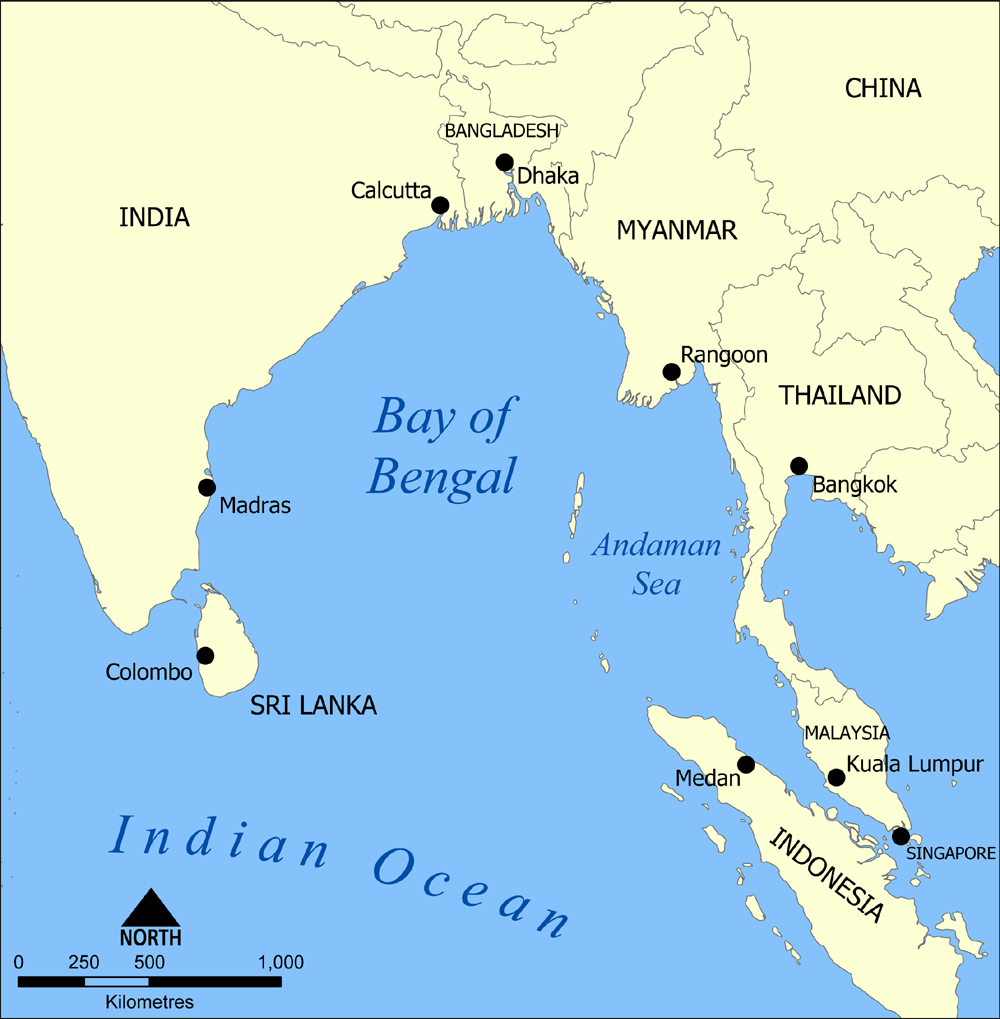
The Bay of Bengal, a sprawling northeastern arm of the Indian Ocean, is a body of water spanning 2.17 million km², bordered by India, Bangladesh, Myanmar, and…
Contents
- 🎵 Origins & History
- ⚙️ How It Works
- 📊 Key Facts & Numbers
- 👥 Key People & Organizations
- 🌍 Cultural Impact & Influence
- ⚡ Current State & Latest Developments
- 🤔 Controversies & Debates
- 🔮 Future Outlook & Predictions
- 💡 Practical Applications
- 📚 Related Topics & Deeper Reading
- Frequently Asked Questions
- References
- Related Topics
Overview
The Bay of Bengal's geological genesis traces back millions of years, shaped by the tectonic dance between the Indian and Eurasian plates, a process that also birthed the Himalayas. Ancient mariners, from the Mauryan Empire to the Chola Dynasty, recognized its strategic importance, establishing lucrative maritime trade routes that connected South Asia with Southeast Asia and beyond. Roman traders, seeking Indian textiles and spices, navigated its waters, evidenced by archaeological finds in places like Kaveripattinam. The arrival of European colonial powers, including the British East India Company and the Dutch East India Company, transformed the bay into a theater of imperial competition, with naval battles and the establishment of key ports like Kolkata and Chennai. The partition of British India in 1947 and the subsequent Bangladesh Liberation War in 1971 further reshaped the geopolitical contours of its littoral states.
⚙️ How It Works
The Bay of Bengal's dynamics are driven by a complex interplay of monsoonal winds, major riverine discharge, and oceanic currents. The annual South Asian Monsoon dictates its weather patterns, bringing heavy rainfall and influencing circulation. The colossal discharge from rivers like the Ganges, Brahmaputra, and Irrawaddy, carrying vast amounts of sediment, significantly impacts salinity and nutrient distribution, creating fertile deltas and supporting unique estuarine environments like the Sundarbans. The bay is also a breeding ground for cyclonic storms, fueled by warm sea surface temperatures, which can unleash devastating winds and storm surges upon coastal communities. Oceanographic research, often conducted by institutions like the National Institute of Oceanography, India, continuously monitors these intricate processes.
📊 Key Facts & Numbers
Spanning an immense 2.17 million km², the Bay of Bengal is the largest bay in the world. It is fed by a drainage basin covering over 2 million km², with river systems like the Ganges-Brahmaputra-Meghna system discharging an estimated 1.3 million cubic meters per second of freshwater annually, more than any other river system on Earth. The bay's coastline stretches for thousands of kilometers, featuring some of the longest natural beaches, such as Cox's Bazar in Bangladesh, extending over 120 km. The Sundarbans mangrove forest, a UNESCO World Heritage site, covers approximately 10,000 km² across Bangladesh and India. Annually, the bay experiences an average of 5-6 tropical cyclones, with some years seeing significantly more.
👥 Key People & Organizations
Several nations hold significant geopolitical sway over the Bay of Bengal, with India, Bangladesh, and Myanmar being the primary littoral states. Sri Lanka also borders its southern extent. Major port cities like Kolkata, Chennai, Visakhapatnam, Chittagong, and Yangon serve as critical hubs for trade and naval operations. International organizations such as the Indian Ocean Rim Association facilitate cooperation among member states. The Indian Navy and the Bangladesh Navy maintain significant naval presences, reflecting the bay's strategic importance for maritime security and resource management.
🌍 Cultural Impact & Influence
The Bay of Bengal has profoundly shaped the cultures and economies of its surrounding regions. Its waters have been arteries of trade and cultural exchange for millennia, facilitating the spread of religions like Buddhism and Hinduism across Southeast Asia. The bounty of its fisheries supports the livelihoods of millions of people along its coastlines, forming a cornerstone of regional cuisine and economies. The dramatic weather patterns, particularly cyclones, have instilled a deep respect for nature and a resilience in coastal communities, influencing folklore, art, and architecture. The bay's influence is evident in the maritime traditions and seafaring histories of peoples from Odisha to Pegu.
⚡ Current State & Latest Developments
In recent years, the Bay of Bengal has become a focal point for increased maritime activity and geopolitical maneuvering. India's Act East Policy and Indo-Pacific Strategy emphasize its connectivity with Southeast Asia. China's Belt and Road Initiative, particularly the China-Myanmar Economic Corridor, has also heightened strategic interest in the region, with projects like the Kyaukphyu deep-sea port in Myanmar. The region continues to grapple with the increasing frequency and intensity of tropical cyclones, exacerbated by climate change, leading to greater investment in early warning systems and disaster preparedness by organizations like the National Disaster Management Authority of India.
🤔 Controversies & Debates
The Bay of Bengal is a site of significant environmental and geopolitical debate. Ecologically, the impact of industrial pollution, overfishing, and the degradation of mangrove ecosystems due to coastal development and aquaculture are pressing concerns, debated by environmental groups like Nature Conservation Foundation, India. Geopolitically, the bay is an arena for competing strategic interests, particularly between India and China, concerning naval presence, port development, and resource access. The management of shared fisheries resources and the demarcation of maritime boundaries, especially between India and Bangladesh, have also been subjects of protracted negotiations and occasional disputes, often mediated by international maritime law.
🔮 Future Outlook & Predictions
The future of the Bay of Bengal is likely to be defined by the escalating impacts of climate change and evolving geopolitical dynamics. Projections indicate a rise in sea levels and an increase in the intensity of tropical cyclones, posing an existential threat to low-lying coastal areas and densely populated deltas, particularly in Bangladesh. This will necessitate significant investment in climate adaptation measures, including enhanced coastal defenses and resilient infrastructure. Strategically, the bay is poised to remain a critical nexus for trade and power projection, with continued competition for influence among regional and global powers. Innovations in sustainable fisheries management and renewable energy, such as offshore wind farms, may also play a larger role in the region's development.
💡 Practical Applications
The Bay of Bengal serves as a vital conduit for international trade, with its major ports handling a significant volume of cargo, including oil, manufactured goods, and agricultural products. It is a critical fishing ground, providing sustenance and economic opportunities for millions across South and Southeast Asia. The region's extensive coastline and unique ecosystems, such as the Sundarbans, attract significant ecotourism, contributing to local economies. Furthermore, the bay is a crucial area for scientific research, particularly in oceanography, meteorology, and marine biology, with ongoing studies by institutions like the National Centre for Polar and Ocean Research in India.
Key Facts
- Year
- Ongoing geological formation, significant human interaction from c. 3rd Century BCE
- Origin
- South Asia / Southeast Asia
- Category
- nature
- Type
- place
Frequently Asked Questions
What is the primary geographical significance of the Bay of Bengal?
The Bay of Bengal is the largest bay in the world, forming the northeastern part of the Indian Ocean. It serves as a critical maritime link between South Asia and Southeast Asia, bordered by countries like India, Bangladesh, and Myanmar. Its vastness, covering 2.17 million km², and its role as a recipient of major river systems like the Ganges and Brahmaputra make it a geologically and ecologically significant region.
What are the major environmental features of the Bay of Bengal?
The bay is home to the Sundarbans, the world's largest mangrove forest, a UNESCO World Heritage site crucial for biodiversity and coastal protection. It also boasts exceptionally long beaches, such as Cox's Bazar in Bangladesh. However, it is also a notorious zone for intense tropical cyclones, fueled by warm sea surface temperatures, which frequently cause devastating storm surges and flooding along its densely populated coastlines.
How has the Bay of Bengal historically influenced trade and culture?
For millennia, the Bay of Bengal has been a vital artery for maritime trade, connecting ancient civilizations like the Mauryan Empire and Chola Dynasty with Southeast Asia and beyond. This facilitated the exchange of goods, ideas, and religions, including Buddhism and Hinduism. Major port cities like Kolkata and Chittagong grew into significant cultural and economic centers due to their strategic locations on the bay.
What are the current geopolitical tensions surrounding the Bay of Bengal?
The Bay of Bengal is a region of increasing geopolitical focus, particularly due to China's growing influence through initiatives like the Belt and Road Initiative, which includes port development in Myanmar. India views the bay as crucial to its Indo-Pacific Strategy and maintains a strong naval presence through the Indian Navy. Competition for maritime access, resource control, and strategic positioning makes it a key area for international relations.
What are the primary economic activities in the Bay of Bengal region?
The primary economic activities revolve around maritime trade through major ports like Kolkata, Chennai, and Chittagong, handling vast quantities of cargo. Fisheries are a critical sector, supporting millions of livelihoods and regional diets. Ecotourism, particularly around the Sundarbans and coastal beaches, also contributes significantly to local economies. Offshore oil and gas exploration is also present in certain areas.
How is climate change impacting the Bay of Bengal?
Climate change is exacerbating existing threats in the Bay of Bengal. Scientists predict an increase in the frequency and intensity of tropical cyclones, leading to more severe storm surges and coastal erosion. Rising sea levels pose a significant threat to low-lying delta regions, especially in Bangladesh, potentially displacing millions and impacting agriculture. Warmer sea temperatures also affect marine ecosystems and fisheries.
What is the significance of the major rivers flowing into the Bay of Bengal?
The major rivers, including the Ganges, Brahmaputra, and Irrawaddy, are vital to the Bay of Bengal's ecosystem. They discharge enormous volumes of freshwater and sediment, creating vast, fertile deltas that support dense populations and crucial agricultural activities. This sediment load also influences the bay's salinity, nutrient cycles, and coastal morphology, contributing to the unique environments like the Sundarbans. The combined discharge from these rivers is among the highest globally.