Atomic Bomb | Vibepedia
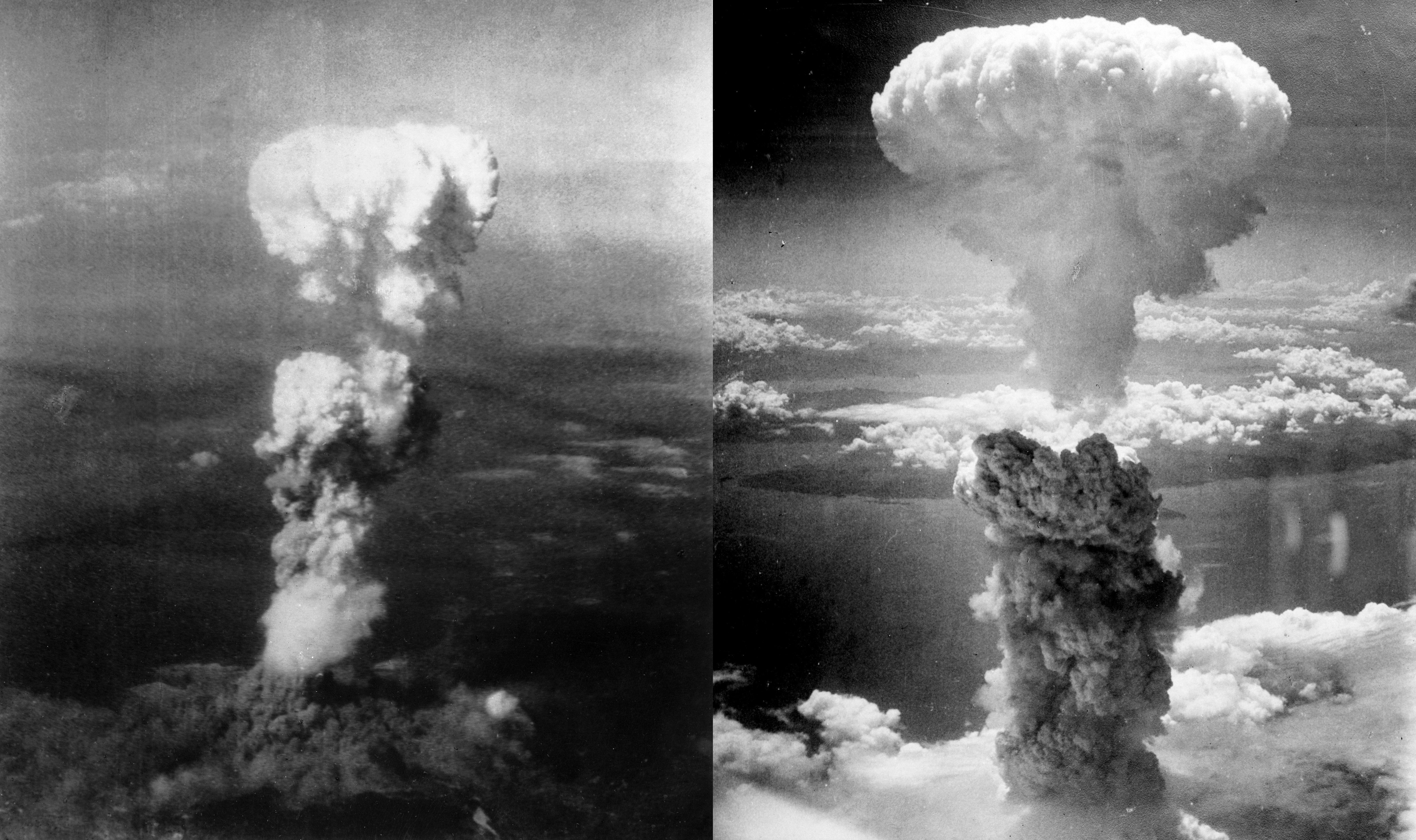
The atomic bomb, a weapon of unprecedented destructive power, harnesses the energy released from nuclear fission or fusion reactions. Its development…
Contents
Overview
The atomic bomb, a weapon of unprecedented destructive power, harnesses the energy released from nuclear fission or fusion reactions. Its development, primarily during World War II's Manhattan Project, culminated in the August 1945 bombings of Hiroshima and Nagasaki, forever marking the first and only use of nuclear weapons in warfare. These events, which killed an estimated 150,000 to 246,000 people, primarily civilians, ushered in the Nuclear Age, a period defined by the existential threat of nuclear annihilation and the geopolitical landscape of nuclear deterrence. The science behind the bomb, involving critical mass and chain reactions, represents a profound, albeit terrifying, application of quantum mechanics and nuclear physics, with ongoing debates about its ethical implications and future proliferation.
🎵 Origins & History
The genesis of the atomic bomb lies in the early 20th century's burgeoning understanding of nuclear physics. Driven by fears that Nazi Germany might develop such a weapon first, the United States launched the top-secret Manhattan Project. This monumental undertaking, headquartered at Los Alamos, New Mexico, brought together leading scientists and engineers under the direction of General Leslie Groves and J. Robert Oppenheimer. The project's culmination was the successful Trinity test, which proved the viability of the implosion-type plutonium device, codenamed "Fat Man." This paved the way for the subsequent wartime deployments.
⚙️ How It Works
At its core, the atomic bomb operates on the principle of nuclear fission, where the nucleus of a heavy atom, such as uranium-235 or plutonium-239, is split into lighter nuclei when struck by a neutron. This splitting releases a tremendous amount of energy and more neutrons, which can then split other nuclei, creating a self-sustaining chain reaction. For a bomb, a 'critical mass' of fissile material must be rapidly assembled. In 'gun-type' weapons like "Little Boy," two sub-critical masses are fired together to achieve criticality. In 'implosion-type' weapons like "Fat Man," conventional explosives are used to compress a sub-critical sphere of fissile material, increasing its density and initiating the chain reaction. Fusion bombs, or hydrogen bombs, achieve even greater yields by using a fission explosion to trigger a fusion reaction between isotopes of hydrogen.
📊 Key Facts & Numbers
The destructive power of atomic bombs is staggering. The "Little Boy" bomb dropped on Hiroshima on August 6, 1945, caused widespread destruction within a 1.5-mile radius. Three days later, "Fat Man" was dropped on Nagasaki. By the end of 1945, the death tolls from both bombings had risen to between 150,000 and 246,000 due to injuries and radiation sickness. Today, the United States maintains a stockpile of approximately 3,700 nuclear warheads, while Russia possesses the largest arsenal with an estimated 4,380 warheads, according to the Federation of American Scientists' 2023 data.
👥 Key People & Organizations
The development of the atomic bomb involved a constellation of brilliant minds and immense organizational effort. Key figures include Leo Szilard, who first conceived of the nuclear chain reaction and urged Albert Einstein to warn President Franklin D. Roosevelt of the potential threat. J. Robert Oppenheimer served as the scientific director of the Los Alamos Laboratory, overseeing the bomb's design and construction. Enrico Fermi achieved the first self-sustaining nuclear chain reaction at the University of Chicago. The U.S. Army Corps of Engineers managed the vast logistical and construction efforts of the Manhattan Project, with General Leslie Groves as its military head. Organizations like the Oak Ridge National Laboratory and Lawrence Livermore National Laboratory have continued to play crucial roles in nuclear research and weapons development.
🌍 Cultural Impact & Influence
The atomic bomb's impact on global culture is profound and pervasive. It ushered in the Nuclear Age, characterized by the chilling concept of Mutually Assured Destruction (MAD) and a constant undercurrent of existential dread, vividly captured in films like Dr. Strangelove and literature such as Nevil Shute's 'On the Beach'. The bombings of Hiroshima and Nagasaki became potent symbols of the horrors of war and the ethical dilemmas of scientific advancement, inspiring peace movements and calls for disarmament worldwide. The mushroom cloud, a terrifying visual icon, represents both humanity's technological prowess and its capacity for self-destruction. The very idea of 'total war' was redefined, with the potential for complete annihilation now a tangible reality.
⚡ Current State & Latest Developments
In 2024, the landscape of atomic weapons remains dominated by the nine nuclear-armed states, with ongoing modernization programs by major powers like the United States, Russia, and China. The development of smaller, more tactical nuclear weapons and the potential for new delivery systems, such as hypersonic missiles, continue to shape strategic thinking. International efforts to control proliferation, such as the Treaty on the Non-Proliferation of Nuclear Weapons (NPT), face persistent challenges, particularly with nations like North Korea pursuing nuclear capabilities. The ongoing war in Ukraine has also reignited discussions about the potential use of nuclear weapons, highlighting their continued relevance in geopolitical conflicts.
🤔 Controversies & Debates
The ethical implications of the atomic bomb are perhaps its most enduring controversy. The decision by President Harry S. Truman to use the bombs on Japan remains hotly debated: proponents argue it hastened the end of World War II, saving more lives than it cost by averting a costly invasion of the Japanese mainland. Critics contend that Japan was on the verge of surrender and that the bombings constituted a war crime due to the targeting of civilian populations and the indiscriminate nature of the weapon. The long-term effects of radiation exposure, including increased cancer rates among survivors (known as hibakusha), add another layer to the moral calculus. Furthermore, the proliferation of nuclear weapons to more states raises concerns about accidental use or falling into the hands of non-state actors.
🔮 Future Outlook & Predictions
The future of atomic weapons is a complex interplay of technological advancement, geopolitical strategy, and international diplomacy. While some envision a world free of nuclear arms, the reality is that these weapons continue to be seen by many nations as essential deterrents. The development of artificial intelligence in targeting and command-and-control systems, alongside advancements in materials science for more efficient warheads, could lead to a new arms race. Conversely, renewed diplomatic efforts and arms control treaties, perhaps inspired by the Strategic Arms Limitation Treaties (SALT) of the past, could steer the world away from catastrophic conflict. The ultimate trajectory hinges on the willingness of nuclear powers to de-escalate and prioritize global security over perceived national advantage.
💡 Practical Applications
While the primary application of the atomic bomb is as a weapon of mass destruction, the underlying principles of nuclear physics have led to significant practical applications. The controlled release of nuclear energy powers nuclear power plants worldwide, providing a significant source of electricity without direct greenhouse gas emissions. Radioisotopes, produced through nuclear reactions, are vital in medical imaging (like PET scans) and cancer treatment (radiotherapy). Nuclear technology is also used in industrial applications, such as sterilization of medical equipment and food, and in scientific research, including dating ancient artifacts through radiocarbon dating. The development of nuclear propulsion has enabled long-duration space missions and powered submarines.
Key Facts
- Category
- technology
- Type
- topic